Get Full Government Meeting Transcripts, Videos, & Alerts Forever!
Get email alerts on the Charter Reform topic
No spam. Unsubscribe anytime.
Working group recommends Oakland "pick a lane," favors strong-mayor model pending voter approval
Summary
SPUR and League of Women Voters presenters told an Oakland youth commission the mayor-appointed working group recommends choosing either a strong-mayor or council-manager model and urged adopting a strong-mayor structure to address fiscal stress and neighborhood disparities; any change would require a ballot measure and voter approval.
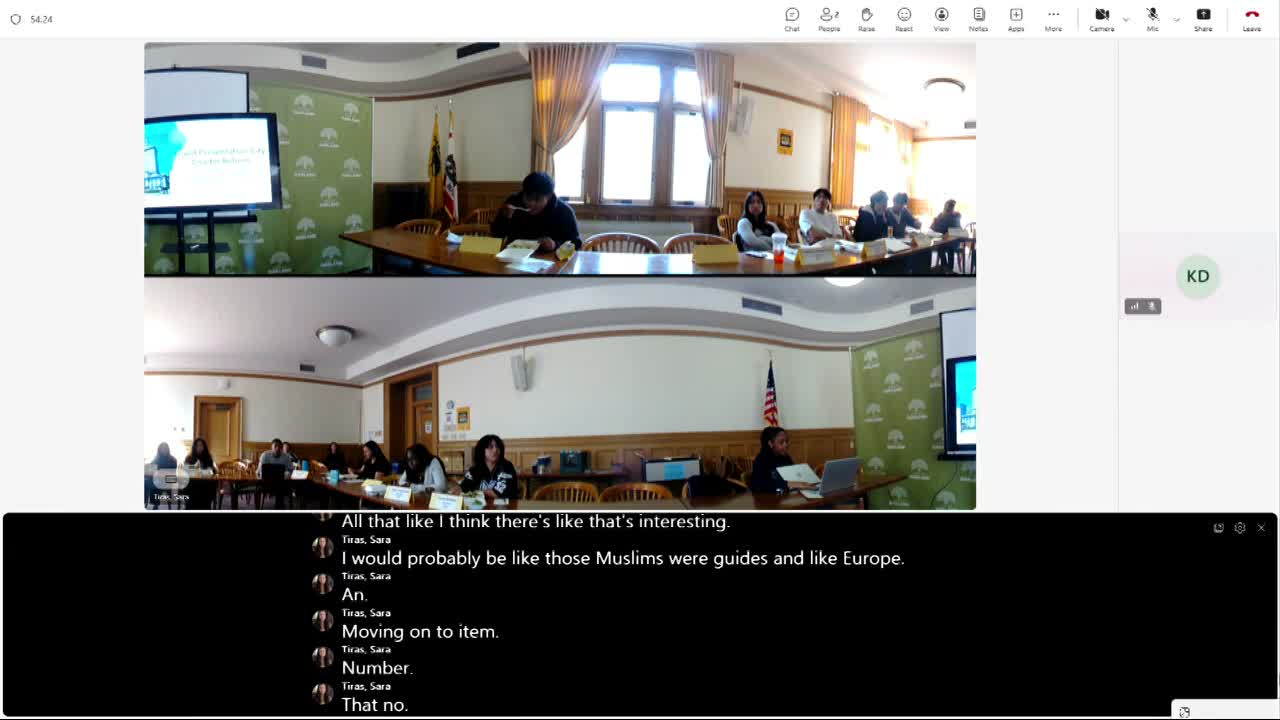
Nicole, a SPUR staff member, and a League of Women Voters presenter briefed the Oakland Youth Commission on a mayor-appointed working group that reviewed the city charter and recommended the city “pick a lane” between two governance models.
The presentation explained the working group’s charge — to clarify roles and responsibilities, improve financial management and propose limited changes to help residents understand who does what in city government — and summarized several months of public outreach and interviews. “We have a working group that came together that was appointed by the mayor…we put together a set of recommendations that was given to the mayor and to the city council,” Nicole said during the commission meeting.
Why it matters: the working group concluded Oakland’s current hybrid model blends elements of a council-manager and a strong-mayor system without delivering the benefits of either. Presenters argued that a clearer choice could reduce institutional confusion and improve accountability and financial management in a city facing structural budget pressures.
What the working group recommended: the presenters said the group’s primary advice is to choose one of the two models rather than continue the hybrid. Based on their research and community sessions, they recommended a strong-mayor model as the better fit for Oakland — a structure in which the mayor would serve as chief executive for operations, could hire and fire department heads, propose the budget and have veto power over legislation, with the city council retaining legislative and oversight roles. The presenters described safeguards the working group would pair with a strong-mayor proposal, including a city council override provision and creation of a permanent legislative and budget analyst office to strengthen council capacity.
The presenters noted trade-offs: “The benefits of a strong mayor is that you have clear accountability…[and] unified executive direction,” while a council-manager model “has professional management” and continuity from an appointed manager.
Ballot path and timing: presenters said the recommendations were delivered to the mayor and to city council members, which would decide whether to place a measure on the ballot. If the council advances a non-tax charter change, it would require only a simple majority from voters; tax measures or measures involving taxes would carry higher thresholds. Presenters identified mid-June to mid-July as the practical window for completing council readings and submitting final material to the county registrar in time for a November ballot (presenters referenced the August 7/88-day county deadline as the logistical constraint).
What was not decided: presenters said the working group did not take stances on elected versus appointed positions for the city attorney or city auditor and did not finalize implementation language for phasing in any changes. They emphasized that details — including the timing of any seat removals or transitions — would appear in any draft ballot measure and be subject to further council deliberation and public education.
Next steps: the working group’s materials, presentations and research were posted on the mayor’s charter webpage for public review, and presenters said council hearings and additional community education sessions are expected if a measure moves forward.
The commission thanked the presenters and discussed potential follow-up opportunities to share slides and materials with commission members.