Get Full Government Meeting Transcripts, Videos, & Alerts Forever!
Get email alerts on the Ice Facility topic
No spam. Unsubscribe anytime.
Spokane Valley council approves 75-year ground lease for privately funded ice sports facility
Summary
After hours of presentations and public comment, the Spokane Valley City Council voted 6–1 to authorize a 75‑year (extendable to 99) ground lease with Innovia Foundation/donor-backed LLCs for a privately financed ice sports complex at Sullivan Park; the city will fund roughly $3.03 million in infrastructure and commit lodging‑tax support for early operations.
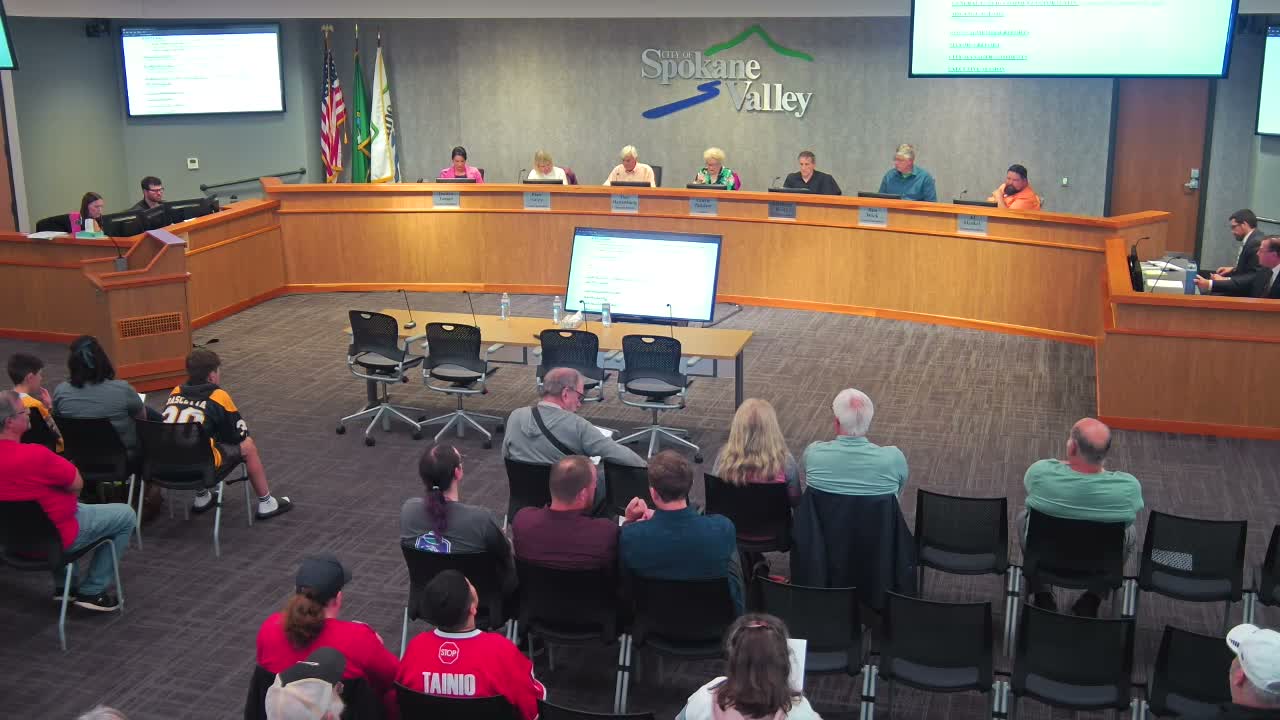
The Spokane Valley City Council voted 6–1 on April 28 to authorize the city manager to finalize and execute a ground lease that would allow a privately funded 80,000‑square‑foot ice sports complex to be built on 12 acres of city‑owned land at Sullivan Park.
City Manager John Homan, who led the presentation, said Innovia Foundation and a donor will fund vertical construction and operations, while the city’s financial exposure is limited to infrastructure work and a five‑year commitment of lodging‑tax (LTAC/TPA) funds. “All the risks for this project lie with Innovia and the donor,” Homan said during the presentation.
The deal is structured as a nominal $1‑per‑year ground lease for an initial 75‑year term, with a mutual option to extend to 99 years. City Attorney Kelly Concrete said the lease requires the lessee to design, build, operate and maintain the facility at its expense; the lease also includes protections for the city if construction fails to start or the operator defaults. “If the lessees don’t begin actual construction, the city can terminate the lease,” Concrete said, describing lender step‑in rights and the city’s right to force restoration or accept ownership of improvements.
A key public‑benefit element negotiated into the lease is a community access requirement: the lessee must provide at least 500 hours each year of free or discounted ice time targeted to economically disadvantaged residents, and must report annually on hours, net revenues and how funds were used. Concrete told council that LTAC support for operations would be capped at up to $600,000 in year one and year two, and up to $550,000 in each of years three through five.
Proponents at the podium—coaches, nonprofit leaders, parents and sports‑program representatives—urged approval, stressing persistent regional shortages of ice time. ‘‘More ice means more opportunity for camps, lessons, and development right here in our community,’’ said Sarah Becerra, a Central Valley teacher and hockey mom. Several youth and adult sports representatives described long drives and late practices because local facilities are at capacity.
Opponents and skeptics questioned transparency and the long lease term. Linda Klesh told council, “I do not want our city council voicing that they are voting before a discussion is finalized,” criticizing what she said were premature signals of support at earlier meetings. Other speakers raised concerns about the $1 annual rent for publicly owned land and urged a stronger revenue sharing element or higher upfront payment.
Council members debated the tradeoffs between long‑term community benefit and the size of the concession. Council member (and former planning commissioner) Kelly said she would support the measure after weighing the donor’s commitments and projected community impact. Council member Merkel spoke for more financial scrutiny and asked whether a revenue‑sharing provision might have reduced perceived giveaways; Kelly proposed that sharing surplus revenue if the facility becomes profitable could have been more equitable, but voted in favor after staff and partners explained protections and benefits.
When the motion to authorize the city manager to execute the ground lease was called, the council approved it 6–1. The council’s action directs staff to finalize the lease on substantially the form presented, include the related Sullivan Park improvements in the city infrastructure project, advertise the infrastructure work for competitive bids under Washington law and proceed with permit review and issuance.
Next steps: staff will finalize the lease documents, publish the city infrastructure bid package, and return to council with contract awards and any necessary further approvals. The city and Innovia representatives said they aim to begin construction as soon as permits are issued and to target a mid‑2027 opening for the facility. The council recessed briefly after the vote and later continued to other agenda items.
Notes: The lease includes an option allowing the city to purchase lessee interests for $9.4 million if debt on the property has been reduced to that level; city staff said that purchase option is unlikely to be triggered in the near term. LTAC commitments are restricted by state law to allowable operational expenses and will be dispersed on a reimbursement basis with documentation requirements, council members were told.