Get Full Government Meeting Transcripts, Videos, & Alerts Forever!
Get email alerts on the Flooding Rock Creek Kiefer Slough topic
No spam. Unsubscribe anytime.
Residents urge action on Rock Creek/Keefer Slough bifurcation as repeated floods damage homes
Summary
At a lengthy April 28 board hearing, North Chico residents described repeated flooding since the Park Fire and urged the Butte County Board of Supervisors to pursue a permanent fix — including cleaning the Rock Creek/Keefer Slough bifurcation, forming a flood control district or coordinating permits — while staff described legal and permitting limits to county intervention.
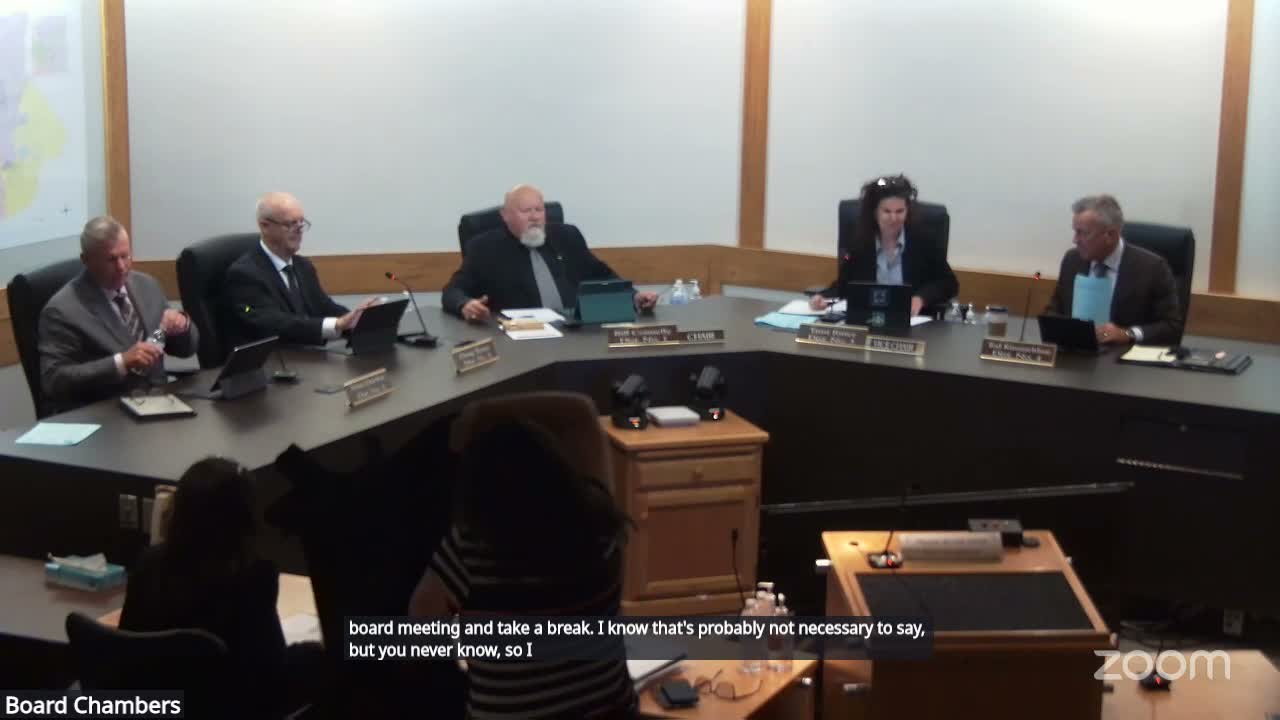
Chair Connolly opened a public hearing April 28 focused on recurring flooding north of Chico, where residents said sediment and burned debris from the Park Fire have changed flow patterns and repeatedly inundated homes.
Residents from the Rock Creek and Keefer Slough watershed described property damage, trapped roads, and repeated out‑of‑pocket repairs. “I’ve flooded three times since November 2024,” said Jessica Hoag, a Hagen Ridge Road resident, recounting displacement, repairs paid personally and damage to her home. Multiple other residents described boulders, burned logs and sediment that they say now block the original Rock Creek channel and divert water into Keefer Slough, overwhelming bridges and drainage structures.
Public Works staff told the board that the issue is long‑standing and made worse by recent wildfires and sediment loads. The department recalled a 2023 Department of Water Resources feasibility study that presented three alternatives with costs ranging from about $54 million to $371 million and said those options were previously deemed not feasible because of private property ownership and funding constraints. Staff also recounted emergency sediment removal the county performed in 2025 under immediate threat to life and safety.
Consultants and staff explained legal limits on county action. County counsel and staff noted that routine maintenance or improvements on private waterways require permits from state and federal agencies (including California Department of Fish and Wildlife and the U.S. Army Corps of Engineers) and that the county generally cannot conduct regular maintenance on private land without creating exposure to liability. Staff recommended resident‑driven governance options that would allow collective funding and permitting, including forming a special flood control district or using an existing reclamation district or community services area (CSA) to organize and fund work.
Several residents urged quicker, direct action: “Clean the bifurcation so the majority of the water goes into Rock Creek where it’s designed to go,” said Mark Owen, a longtime North Chico resident. Multiple speakers said landowners, not the county, historically removed sediment and rock but that the scale of debris since the Park Fire now exceeds private capacity.
Board members and staff discussed near‑ and long‑term options, including: (1) encouraging and assisting local landowners to form a flood control district or CSA that could levy assessments and obtain permits; (2) coordinating with the Rock Creek Reclamation District, the Vina Groundwater Sustainability Agency, Caltrans and state regulators to pursue collaborative projects; and (3) pursuing grant funding that ties flood control to recreation or habitat improvements to broaden eligibility.
Scott De Leon, an engineering consultant working on other basin projects, told the board that estimates of sediment accumulation vary with each storm and suggested current basin‑scale sediment volumes are substantial. He described permitting timelines and the need for biological studies and CEQA review for large‑scale work.
The board did not vote on a direct county maintenance action during the hearing. Instead, supervisors urged residents to explore forming a governance entity and gave informal direction for staff to work with reclamation districts and GSAs to explore collaborative funding and permitting approaches. Chair Connolly said the county can act in declared emergencies but stressed that long‑term solutions require a governance and funding mechanism that includes those who benefit.
Next steps noted by staff included follow‑up reports on permitting pathways, options for special‑district formation and continued coordination with state and federal agencies. The board also scheduled additional outreach and meetings with local stakeholders to pursue shared solutions.