Get AI Briefings, Transcripts & Alerts on Local & National Government Meetings — Forever.
West Hollywood council approves Vision Zero dashboard update, directs study of lower school‑zone speed limits
Summary
The council approved staff recommendations to pursue a data‑driven approach to lower speed limits around schools, authorize a new 20 mph zone on Harrod Street pending broader sign changes, and publish a public Vision 0 crash dashboard. Staff said the changes would follow a formal study and returned to council for implementation details.
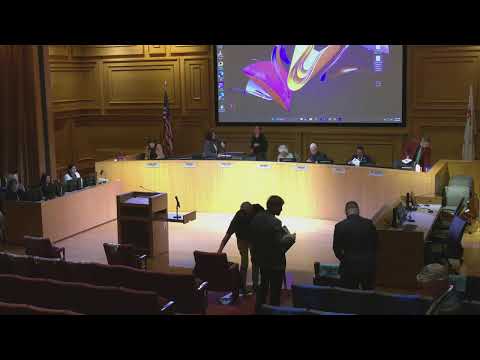
The West Hollywood City Council voted 5–0 to advance staff recommendations on the city’s Vision Zero program, including a study of lower school‑zone speed limits under state law and a public crash‑data dashboard.
Senior planner David Fenn demonstrated the new Vision 0 dashboard and said it pulls crash records from the statewide database dating back to 2014. “It’s a simple dashboard that IT was able to build in house,” Fenn said, adding that users can filter by year, crash severity and corridor to see clusters, trends and top intersections.
Fenn asked the council to direct staff to explore early implementation of AB 382 — state legislation that expands local authority to set lower school‑zone limits — and to authorize a new 20 mph speed limit on Harrod Street between Hammond and San Vicente, with implementation timed to coincide with other municipal code and sign changes.
A DKS consultant, Sean Carney, told the council what state law allows for residential and school‑zone limits: “Speed limits on residential streets can be set as low as 15 miles per hour if the data supports it,” but a typical speed survey on Harrod showed an 85th‑percentile speed of about 21 mph, which limits the immediate change to 20 mph absent the school‑period exception.
Public speakers and councilmembers pressed staff on enforcement and complementary traffic calming. Council member Erickson asked what enforcement tools would accompany lower limits; staff said the Los Angeles County Sheriff’s Department runs targeted enforcement operations and the city continues to pursue inclusion in a state speed‑camera pilot program. Staff also recommended lumping single‑street changes into a broader package because municipal code amendments, county notice filings and sign orders make isolated updates administratively costly.
Several residents urged a more aggressive approach around schools. Helen Krieger, a resident and speaker, said lower limits around schools are crucial because children are among the most vulnerable pedestrians.
The council approved staff’s recommendations and directed staff to return with a study that would define which streets qualify as school zones, evaluate 15‑ vs. 20‑mph options during school periods, and propose an implementation schedule. Staff said the study would begin early in the next fiscal year and that any final speed changes would be brought back to the council for formal ordinance changes and sign orders.