Get Full Government Meeting Transcripts, Videos, & Alerts Forever!
Get email alerts on the Sign Code topic
No spam. Unsubscribe anytime.
Raymore council weighs allowing larger temporary signs on agricultural properties
Summary
Councilmembers discussed a request to allow larger temporary signs on agricultural parcels, staff outlined current limits and enforcement concerns, and council did not take immediate action but asked staff to research options.
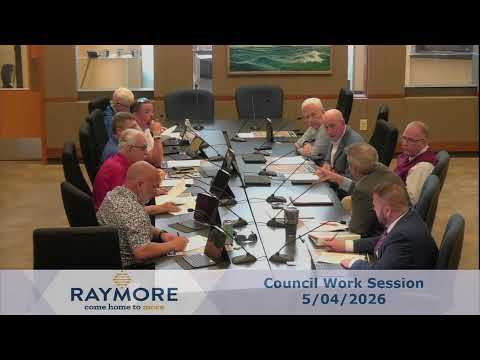
Raymore — Council members on Monday reviewed whether the city should let agricultural-property owners place larger temporary signs than the limits that currently apply to most residential lots.
David Gress of Development Services told the council the current temporary-sign maximum in agricultural districts mirrors residential rules — generally 3–4 square feet per sign with a 24-square-foot maximum for a single rigid sign — down from a 64-square-foot allowance under the city’s prior code. Gress said the updated code removed content-based restrictions, meaning the city cannot regulate messages on temporary signs, which influenced staff’s recommendation to keep size limits aligned with residential neighborhoods.
The discussion centered on two practical tradeoffs: size versus number, and enforcement. Under current rules a property may have up to four temporary signs year-round and up to three additional signs during election windows (staff said the election allowance is 30 days before and five days after). Commercial and multifamily districts can allow larger signs (commercial permits allow up to 32 square feet) but usually require permits and have time limits; agricultural properties are currently permit-exempt and have no time-frame limits outside elections.
Councilmembers raised proportionality and precedent. Director McDonald said agricultural parcels can be orders of magnitude larger than typical residential lots and suggested considering size allowances tied to parcel size. Staff and other members warned that larger banner-style materials act like sails in wind and create code-enforcement burdens on dispersed agricultural sites, where owners are not on site daily.
Director Holman opposed revisiting the recently updated sign code for a single candidate’s request. "I can't support any change to the sign code, especially for a one-time politician's request," he said, arguing repeated requests would follow if the city relaxed limits.
No ordinance or motion to change the code was taken Monday. Council members asked staff to research options and report back with specific proposals and potential enforcement requirements before any change is drafted.