Get Full Government Meeting Transcripts, Videos, & Alerts Forever!
Get email alerts on the Parking Policy topic
No spam. Unsubscribe anytime.
Council hears staff recommendations to right‑size off‑street parking and relax some on‑street restrictions
Summary
Planning staff recommended a middle approach—targeted reductions in commercial nodes combined with rightsizing across land uses—to bring Bloomington’s decades‑old parking requirements into alignment with current demand; staff also proposed easing some on‑street posting near parks and assembly uses and forming a parking management group, and several council members signaled support for options 2 and 3.
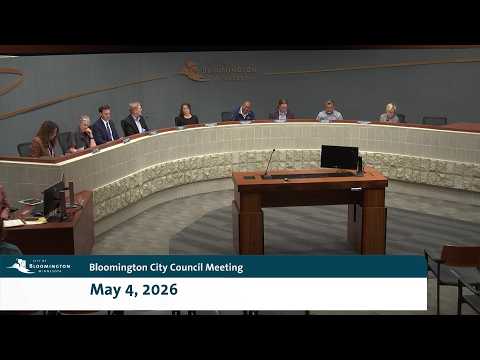
City planning and transportation staff brought two linked parking studies to the council on May 11: an off‑street parking code review and an overview of the city’s on‑street parking posting policy.
Planning presenter Miss O'Day told the council that Bloomington’s minimum off‑street parking standards were created decades ago and may no longer reflect actual demand, noting widespread use of deviations and incentives in recent multi‑family projects. Staff laid out options ranging from no change to rightsizing and setting parking maximums and recommended a combined approach: right‑size minimums across land uses while being more aggressive in targeted commercial nodes.
"Constructing parking is really expensive," O'Day said, citing staff research that a surface stall can cost $5,000–$10,000 and a structured stall $25,000–$50,000. Staff recommended evaluating targeted reductions in development districts and rightsizing code requirements more broadly.
On on‑street parking, Amy Marrone and Kirk Roberts described the current resident‑driven petition process and noted that many posted restrictions date to design choices from earlier decades. Roberts said restrictions near parks and trailheads often push demand into neighborhoods and recommended a less restrictive approach—removing many restrictions except where needed for safety or access—and creating a cross‑departmental parking management group to evaluate requests and enforcement capacity.
Council reaction: Several members voiced support for options 2 and 3 (targeted reductions and rightsizing). Council member Nelson said he supports a targeted approach and opposed setting maximums at this time. Council member D’Alessandro urged incentives for developers who pursue alternative transportation plans, and Robertson and others favored a scalpel‑not‑sledgehammer approach with robust public outreach.
What happens next: Staff will pursue option 2 and 3 as the consensus starting point, expand public outreach (including notifying neighborhoods that previously adopted restrictions), and explore expanded staff authority and a parking management group to oversee implementation and enforcement.