Get Full Government Meeting Transcripts, Videos, & Alerts Forever!
Get email alerts on the Arts And Culture topic
No spam. Unsubscribe anytime.
Consultant finds Bloomington Center for the Arts 'a great set of facilities' but recommends utilization, governance and cost‑recovery changes
Summary
A consultant's situation analysis for the Bloomington Center for the Arts described strong facilities and community support but flagged calendar complexity, limited public events, and below‑peer cost recovery; staff and the consultant outlined nine strategic directions and a 4–5 month workplan for financial modeling and stakeholder engagement.
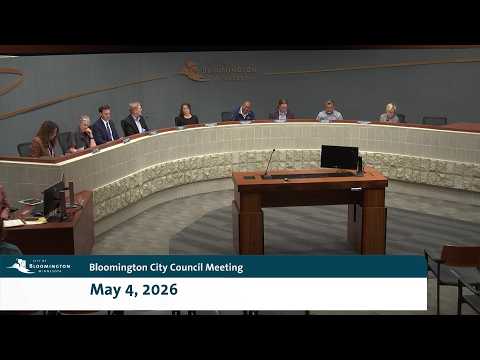
A consultant working on the Bloomington Center for the Arts (BCA) strategic plan told the City Council on May 11 that the facility’s physical assets and community support are strengths but there is room to improve utilization, accessibility and financial sustainability.
Duncan Webb of Webb Management summarized a year-long situation analysis that compared BCA to roughly 40 peer facilities, conducted interviews and performed a financial and utilization review. "The most important thing to say is that this is a great set of facilities," Webb told the council, citing two functional theaters, gallery space and classrooms. He recommended nine strategic directions, including optimizing utilization, improving cost‑recovery targets, updating agreements with resident arts organizations, clarifying roles for city versus partner delivery, and establishing equity and access goals.
Webb noted the Schneider Theatre was in heavy use—more than 330 days in 2024—but that much of that time was closed to the public for rehearsals and technical work. The analysis estimated BCA covered roughly 24% of building‑related costs in fiscal 2024 when grants and capital were included, a figure Webb said warrants further parsing to set realistic cost recovery targets.
Ian Rekke, from the Bloomington Center for the Arts, introduced the study and said staff will use the consultant’s findings to build a financial model and reengage arts partners and the Park Commission over the next four to five months. Council members asked about staffing trade‑offs, program partnerships, and mission-setting; Webb said the team will pursue partners where feasible and set measurable targets that go beyond raw revenue numbers.
Why it matters: BCA is both a cultural amenity and a community asset that drives economic activity; the study will guide how the city balances subsidy, programming access and cost recovery going forward.
Next steps: Staff will continue stakeholder engagement with resident arts organizations, refine the financial model with new assumptions for cost recovery, and return to council with targets and implementation options.