Get Full Government Meeting Transcripts, Videos, & Alerts Forever!
Get email alerts on the Water Policy topic
No spam. Unsubscribe anytime.
Highland Park approves short-window water-amnesty, greenlights sewer infiltration analysis funding
Summary
The council approved a water-account amnesty allowing eligible customers to pay 50% of past-due balances through 06/30/2025 (payment due during the program window), and accepted an MOU to fund an inflow-and-infiltration analysis with roughly $200,000 in reimbursement; councilors pressed staff on the amnesty's 10-day payment window and potential impacts on low-income residents.
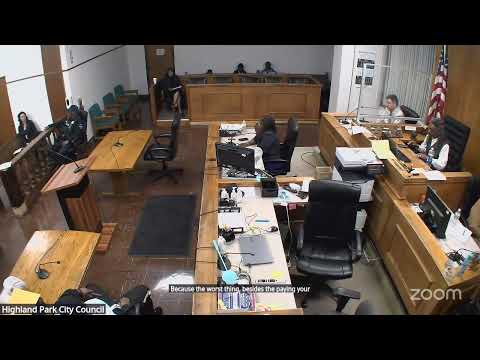
The Highland Park City Council on May 4 approved two water-related measures: a limited amnesty program for delinquent water accounts and a memorandum of understanding to fund an inflow-and-infiltration sewer analysis.
At the meeting, a water-department official explained the amnesty would apply to outstanding balances through June 30, 2025, allowing account holders to pay 50% of that past-due amount to settle the debt. The official said the program window as proposed runs from May 5 to May 15 and that payments must be received during that interval (online, by mail or in-person). “The amnesty program will be extended to all outstanding balances up through, 06/30/2025,” the official stated. Staff said unpaid balances after the amnesty period would be forwarded to the assessor to be placed on the tax roll.
Council members and the public urged staff to extend the window and improve outreach. One council member asked whether residents—especially seniors—could realistically make payments within the 10-day period, noting many prefer in-person transactions and paper receipts. The city treasurer asked that the measure be tabled for two weeks so she could review the proposal; council staff said the timeline was driven by the assessor’s deadline and that some flexibility might be limited.
Residents also warned about consequences for low-income homeowners. Council President Thomas asked staff to explain what happens when a resident with a multi-thousand‑dollar delinquency can’t afford the 50% payment; staff replied that accounts not cleared would be returned to the tax roll, which could raise property taxes or trigger collection action. The official noted the city’s larger arrears are concentrated in commercial and industrial stormwater accounts and that prior amnesty programs have focused on cleaning up older debts.
On a separate but related item, the council authorized acceptance of an MOU with the Michigan Department of Treasury to perform an inflow-and-infiltration analysis of the sewer system. A water/wastewater official described inflow as surface water entering the sewer and infiltration as groundwater entering old pipes; he said the work would include CCTV inspections and lining where needed. “We need to video these areas…so we can see where water’s coming into the pipe on a dry day,” the official said and added the MOU would reimburse about $200,000 for those costs.
What’s next: staff will return with any final edits to program timing and with implementation details; the city indicated it will bring a post-amnesty account list back to council before forwarding remaining balances to the assessor.