Get Full Government Meeting Transcripts, Videos, & Alerts Forever!
Get email alerts on the Behavioral Health topic
No spam. Unsubscribe anytime.
DCF outlines regional behavioral-health collaboratives, citing House Bill 70 21 and local work groups
Summary
Idris Gaines of the Florida Department of Children and Families described a five-phase rollout of regional behavioral-health interagency collaboratives tied to "house bill 70 21," three core local work groups and early examples such as UCF Restores that target first-responder trauma support.
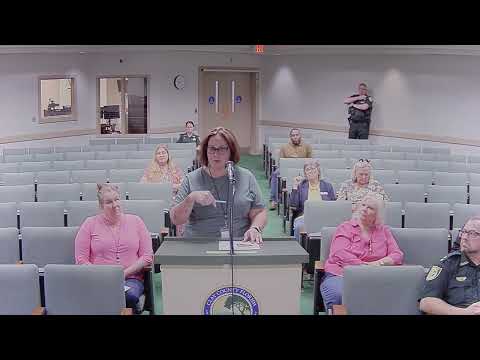
Idris Gaines, Northeast Regional Operations Manager for the Department of Children and Families's program office of substance abuse and mental health, told the Clay County meeting that the agency is implementing regional behavioral-health interagency collaboratives to move policy into local practice. "It is a significant evolution of Florida's behavioral health strategy," Gaines said, adding that the effort responds to a 2024 recommendation by the Florida Commission on Mental Health and Substance Abuse.
Gaines said the collaboratives were implemented in connection with what he referred to in the transcript as "house bill 70 21." He described three core work groups the regions will prioritize: (1) coordination of services, which will tackle data sharing across systems, interregional collaboration and coordination with co-responder units; (2) housing, transportation and capacity, which will prioritize transportation shortfalls and facility capacity; and (3) systems policy issues, which will address broader structural hurdles in the system of care.
Gaines described a five-phase rollout: information gathering to identify service gaps; adoption of a statewide framework across six DCF regions; advancing the regional collaboratives to focus on provider-specific supports; strategic planning and system-capacity work; and implementation with performance monitoring. As an example of the collaboratives' practical work, Gaines cited a recent presentation by UCF Restores, which provides trauma support for first responders and law-enforcement partners.
Gaines said DCF conducted surveys of providers, community members and stakeholders in the Northeast region to identify gaps, and that the department has pushed out grant opportunities for diversion-related programs in partnership with the University of South Florida (USF) that counties and providers can apply for.
Why it matters: Gaines framed the collaboratives as a way to tailor statewide strategy to specific local needs and to link planning to concrete programs and grants. He said the regional work will allow DCF to roll successful recommendations back to the Florida commission and, eventually, to the legislature for broader consideration.
What comes next: Gaines indicated DCF will continue regional outreach and planning and can follow up with Clay County officials on specifics they identified in the meeting. The transcript records no formal action or vote on these items during the meeting.