Get Full Government Meeting Transcripts, Videos, & Alerts Forever!
Get email alerts on the Water Quality topic
No spam. Unsubscribe anytime.
Anaheim Officials Say Tap Water Meets State Standards as Residents Demand Answers on Well 51 Timeline
Summary
City utilities, Orange County Water District and state regulators presented testing and PFAS response plans; residents and advocates pressed for clearer timelines and records after detection at Well 51 and questioned flushing and notification practices.
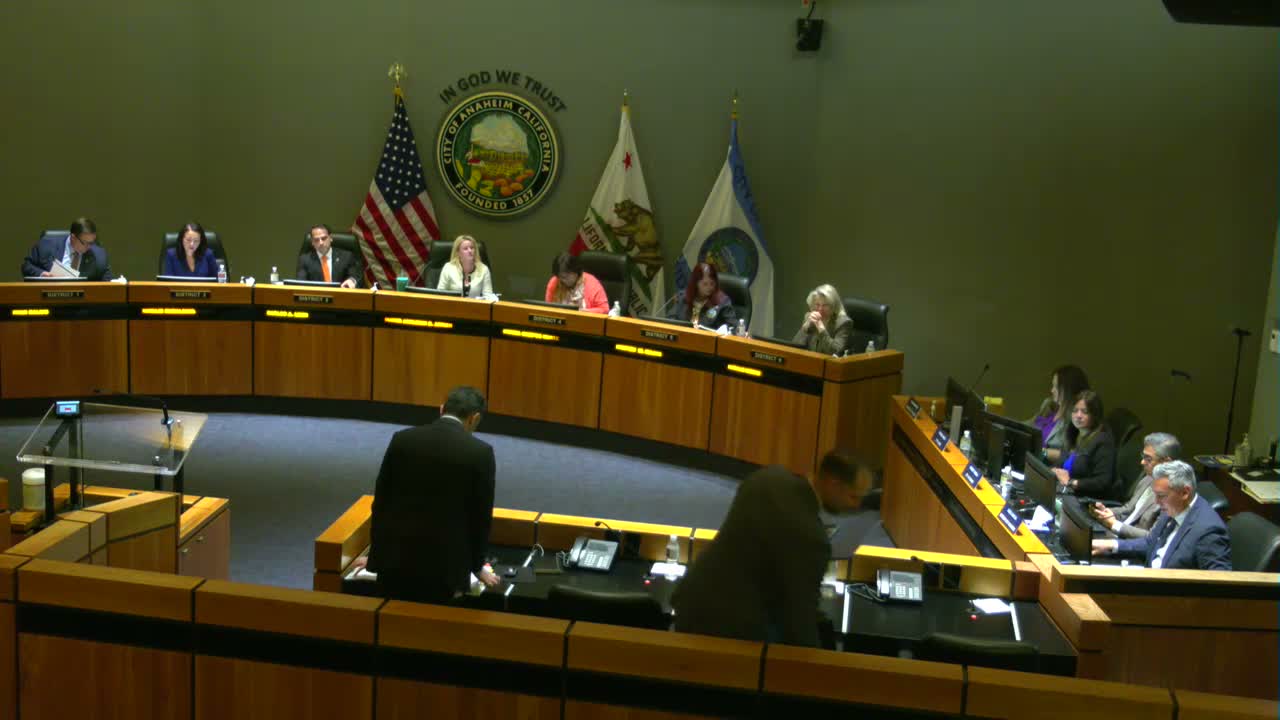
City water and regulatory officials on April 21 told the Anaheim City Council that the system meets California drinking-water standards and outlined regional efforts to respond to PFAS detections, but residents pressed for specific timelines and documents after concerns about Well 51.
Anaheim Public Utilities (APU) staff described the city’s water system sources—more than 80% from the Orange County Groundwater Basin and the balance from imported supplies—and said the city operates a state-certified lab and conducts roughly 44,000 tests annually. ‘‘We have a state-certified water quality lab ... We actually conduct 44,000 tests annually for the system and we monitor over a 100 substances,’’ APU Assistant General Manager Craig Parker said.
Representatives from the Orange County Water District (OCWD) and the State Division of Drinking Water outlined regional monitoring, PFAS treatment strategies and federal and state regulatory timelines. Jason Dantakis of OCWD described multi‑phase treatment efforts and funding partnerships to install ion-exchange or comparable treatment at affected wells; he noted recent federal PFAS rules set enforceable maximum contaminant levels with compliance dates into 2029.
The council and public focused on Well 51: speakers cited state notification in December 2025, alleged delays in taking the well offline, and asked why the city’s public materials reported different shutdown dates. Resident Mark Herbert asked the city and state to “explain decision making time” and to make available the written directives and field documentation governing hydrant flushing and sampling schedules. Much of the public called for a clearer, documented timeline of when the city was informed, when it acted, and why.
Officials said the city works with OCWD on treatment and that OCWD funded capital investment for treatment facilities; operating costs are shared. OCWD also described litigation settlements with PFAS manufacturers that will offset some capital costs for regional treatment. APU said it has retrofitted many wells with treatment and is designing additional phases to meet federal and state requirements.
State drinking-water staff emphasized that California standards are in many cases more stringent than federal rules, noted notification and response levels for PFAS and perchlorate, and described the state’s monitoring programs.
Council members asked staff to track public records requests and continue to brief the community; several asked for a written memo clarifying the Well 51 timeline and the basis for public notifications. Utilities staff said they offer free testing for residents concerned about discoloration or odors and routinely publish consumer confidence and other water‑quality reports online.
Next steps: staff said they will follow up on outstanding timeline and documentation requests and continue coordination with OCWD and state regulators as treatment work proceeds and additional wells are brought back online.