Get Full Government Meeting Transcripts, Videos, & Alerts Forever!
Get email alerts on the Energy Code topic
No spam. Unsubscribe anytime.
Erie staff urges adoption of 2024 energy code with targeted amendments to preserve local flexibility
Summary
Town staff recommended adopting the 2024 International Energy Conservation Code with electric- and solar‑ready amendments and to act before a June 30, 2026 trigger that would require at least the state model low energy carbon code; council asked technical and timing questions and staff confirmed a $600,000 grant to support implementation.
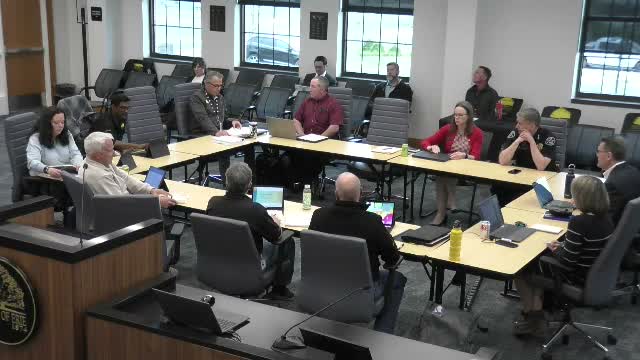
Deputy Building Official Joel Champagne told the Erie Town Council at a study session that staff recommends adopting the 2024 International Energy Conservation Code (IECC) with focused amendments — including electric‑ and solar‑ready provisions — as a practical way to improve efficiency while minimizing plan re‑submittals and retraining.
"Any updates to any codes after that date triggers requirements to adopt the state's model low energy carbon code," Champagne said, urging action before the June 30, 2026 deadline so the town can retain more locally tailored options.
Why it matters: staff described the 2024 IECC as a balanced, timely step that aligns with Erie’s sustainability and comprehensive plans while avoiding some of the compliance complexity and training burden that come with alternatives. Two alternatives—Colorado’s Model Low Energy Carbon Code (MLECC) and the Metro Regional Energy Code cohort code (MCMC)—were described as more aggressive, all‑electric‑preferred options that would impose higher optional‑point thresholds and greater enforcement complexity.
Technical counsel Troy Jones of Shumskoda summarized compliance differences: the 2024 IECC has lower prescriptive and optional point requirements for typical residential builds, while the MLECC and MCMC introduce stricter thresholds tied to house size and can move very large homes toward automatic net‑zero requirements.
Staff stressed the tradeoffs: the more stringent codes can yield higher efficiency but require specialized compliance tools and staff training that Erie currently lacks. Champagne cited builder-supplied cost estimates, noting climate‑zone examples showing varied construction‑cost impacts between code versions.
Implementation support: Erica, the town’s sustainability manager, said Erie applied for and received a Building Policy Collaborative subaward and has signed a contract for a $600,000 grant to fund an in‑house consultant, staff training and related support to navigate the code update.
Council reaction and next steps: members pressed staff on grandfathering and disaster‑rebuild questions, citing the Marshall Fire as a case study where many homeowners voluntarily built to stronger codes. Staff and council agreed the item will return as an ordinance on the April 14 council agenda for further consideration.
The study session produced no vote; staff requested feedback and will bring a proposed ordinance back to the council.