Get Full Government Meeting Transcripts, Videos, & Alerts Forever!
Get email alerts on the Wildfire Resiliency topic
No spam. Unsubscribe anytime.
Council adopts wildfire resiliency code amendments to expand scope and hardening requirements
Summary
City staff recommended amendments to Appendix K of the fire code to adopt provisions comparable to the statewide Wildfire Resiliency Code. Council approved amendments that apply new Class 1 and Class 2 standards and extend some protections to commercial properties; staff said the measures affect an estimated 1,200–1,500 permitting projects per year in mapped areas.
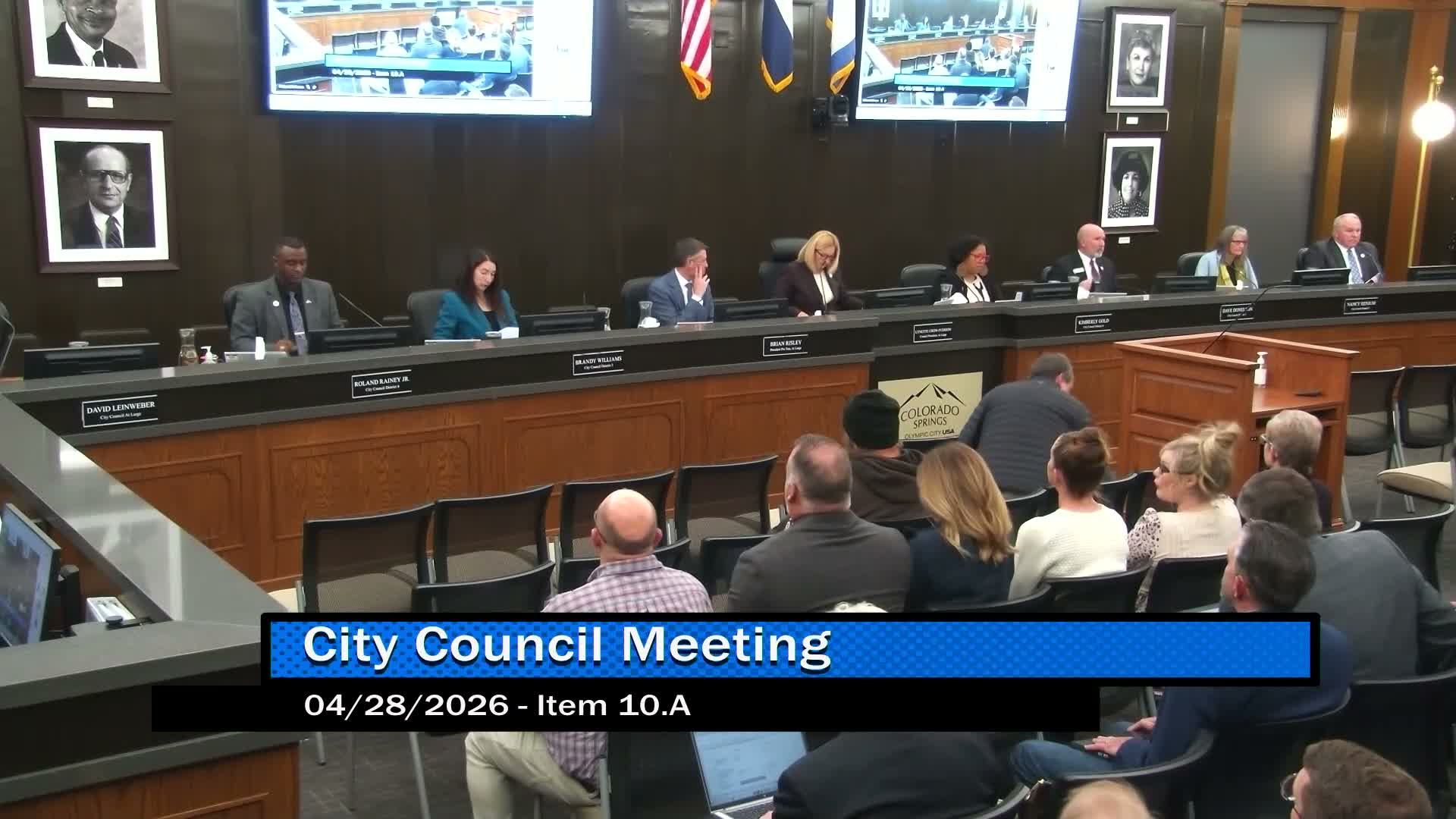
The City Council on April 28 adopted amendments to the city’s fire code appendix K to incorporate wildfire resiliency provisions aligned with the State Wildfire Resiliency Code. Fire Marshal Chris Cooper described the changes, which add Class 1 and Class 2 standards covering structure hardening (roofing, vents, noncombustible materials) and vegetation/fuels management around structures.
Cooper said the new code applies to both residential and commercial properties in mapped wildland-urban interface (WUI) areas. He reported that the city’s local map keeps the existing West-side WUI shape and adds a new eastern WUI for undeveloped lands; staff estimate the rule will affect roughly 1,200–1,500 permit projects annually in those areas as developments come through the system.
Key provisions explained by Cooper include a 0–5 foot noncombustible zone around structures, screening or listed vents for attic spaces, noncombustible decking and exterior materials in Class 2 areas, and tree/brush spacing requirements in expanded zones. Cooper also briefed council on public outreach with Homeowners Associations, builders and the Pikes Peak Regional Building Department and discussed implementation and education measures for existing nonconforming homes.
Council members asked about insurance impacts and outreach to homeowners. Cooper said industry discussions are ongoing and that the code aligns with industry standards for insurers; he emphasized there is not yet a retroactive requirement for existing homes except when they undergo permitted remodeling or additions.
After deliberation and questions, council approved the proposed amendments (motion recorded 8–0). Cooper said staff will continue stakeholder training and public outreach, and will implement monitoring and educational programs for homeowners and HOAs.