Get Full Government Meeting Transcripts, Videos, & Alerts Forever!
Get email alerts on the Playground Renovation topic
No spam. Unsubscribe anytime.
Fullerton commission recommends Innovative Playgrounds design for Independence Park, directs staff to trim scope to meet budget
Summary
The Fullerton Parks and Recreation Commission voted to recommend the Innovative Playgrounds Company concept for Independence Park’s new universally accessible playground, asking staff to reduce select items to bring equipment costs closer to a $1,000,000 target before forwarding a final design to City Council.
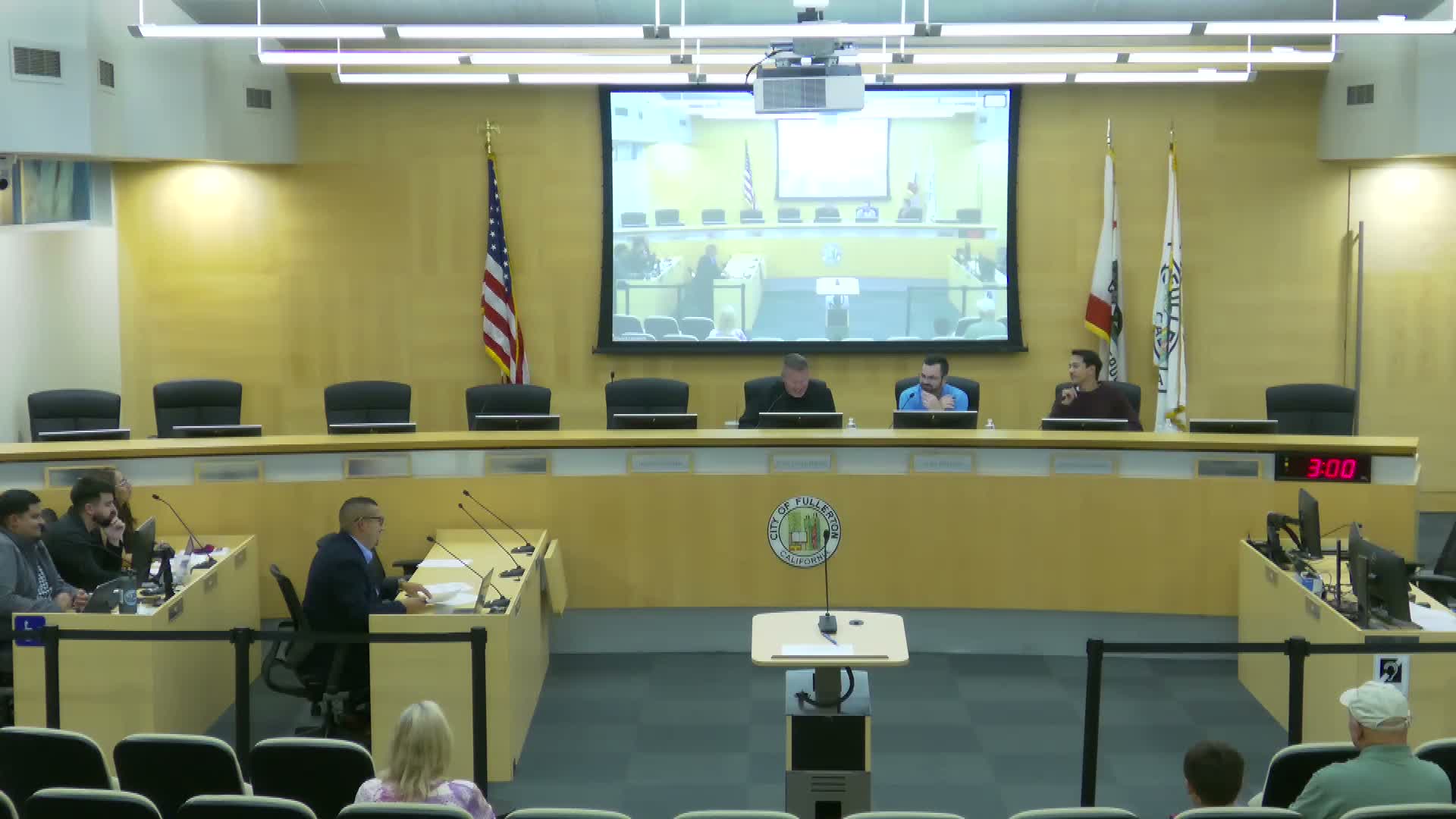
The Fullerton Parks and Recreation Commission on April 13 recommended the Innovative Playgrounds Company concept for a new, universally accessible playground at Independence Park and directed staff to identify modest scope reductions to get equipment costs nearer a $1,000,000 target.
The motion, made by Vice Chair Freeman and seconded by a commissioner, asked staff to remove or pare back nonessential elements—examples mentioned by commissioners included a standalone spinner, one swing and a shortened zipline—so the playground’s equipment cost aligns with the department’s procurement budget. The motion passed with the three commissioners present voting yes; one commissioner was absent.
Staff presented four conceptual proposals solicited from Coast Recreation (Landscape Structures), Dave Bing and Associates, Innovative Playgrounds Company and Little Tikes Commercial. The proposals were priced for play equipment only; staff said the city estimates about $1,000,000 in additional site work (grading, possible fire lane, ADA-accessible walkways and other civil work) for a total project budget closer to $2,000,000. The Innovative Playgrounds concept cited a final equipment price of $1,091,496, staff said, after including a manufacturer grant of roughly $140,000.
Commissioners emphasized accessibility and sight lines as primary criteria. Several commissioners and members of the public said they preferred inclusive designs that avoid hidden or enclosed ‘camping’ spaces and that provide play experiences for ages 0–12. One public commenter urged more natural, nature-based play elements and said a tall “wow” tower may reduce inclusivity.
Staff explained procurement will use cooperative contracts (Sourcewell or CMAS) so vendors can supply turnkey playground equipment; the manufacturer installs the play components into a city-built pit. Staff also said pour-in-place rubber surfacing drives much of the cost—rough estimates put surfacing at approximately $300,000–$325,000 of the total—and that surfacing choices affect warranties and long-term maintenance.
The commission’s recommendation instructs staff to return a final design directly to City Council after making the limited scope reductions, without bringing the amended concept back to the commission. The next steps include vendor CAD file integration, final grading estimates from the city engineer and a construction bid for the site work.