Get Full Government Meeting Transcripts, Videos, & Alerts Forever!
Get email alerts on the Airport Operations topic
No spam. Unsubscribe anytime.
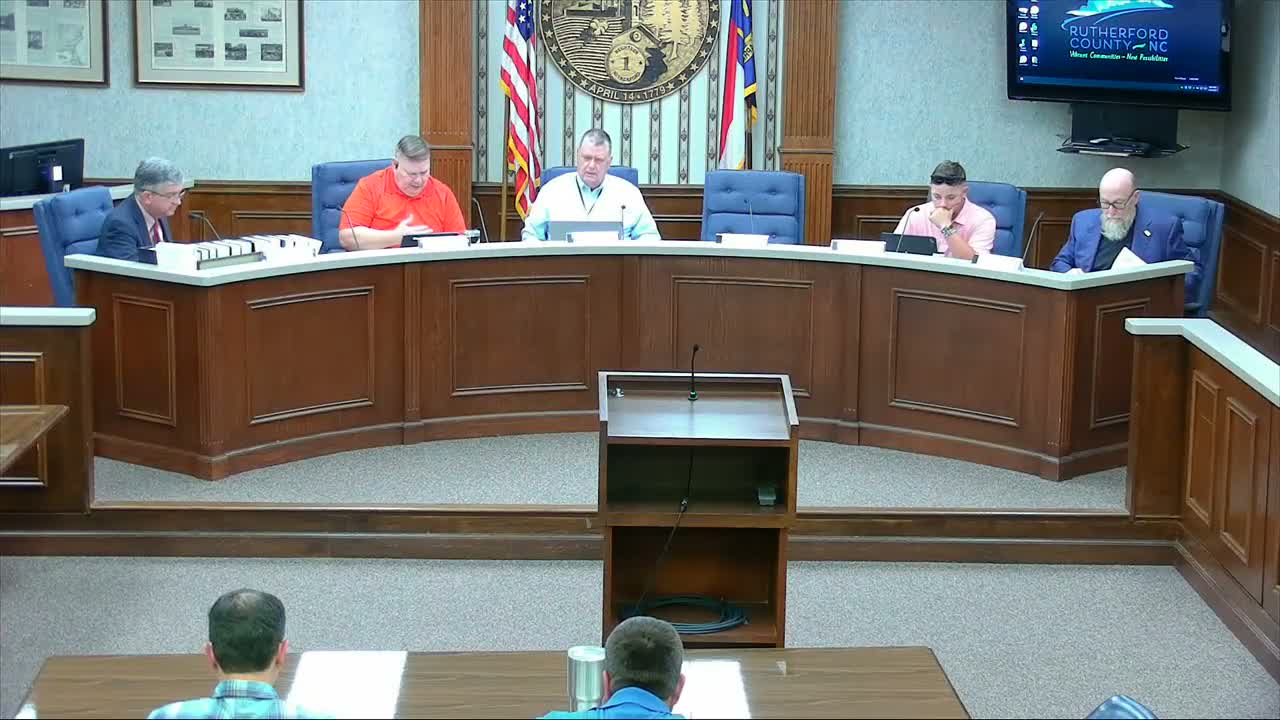
Rutherford County airport authority approves low bid for fuel‑farm generator, greenlights fencing change and OKs hangar transfer
Summary
At its May 4 meeting the Rutherford County Airport Authority authorized awarding the low bid for a storm‑resilience fuel‑farm generator, approved a perimeter fencing change order contingent on state concurrence, approved a requested hangar transfer, and adopted a budget request that includes a larger fuel buffer.
The Rutherford County Airport Authority on May 4 authorized a low‑bid award for a fuel‑farm generator project, approved a change order to replace and realign perimeter fencing, cleared a requested hangar transfer and adopted a budget request that includes an expanded fuel reserve.
Airport Director Devin Rasch told the board the generator project was prompted by recent storms and is intended to keep the airport operational and able to take in new fuel loads. "The bid was put out, RJ Tenney Electric was the one that came in, fairly well under" competing bids, Rasch said, recommending the authority accept the low bid and authorize county officials to execute associated documents.
Board members heard from Greg Kershaw, a staff member who said RJ Tenney is a qualified contractor and that staff solicited bids from three qualified vendors. "Theyare a qualified contractor," Kershaw said, noting the county has solicited bids from RJ Tenney previously and that another solicited firm did not respond. The board moved, seconded and approved the low‑bid authorization by voice vote; the motion record in the minutes shows the action carried (voice vote/tally not specified).
The authority also approved a change order to address mixed and aging fencing around airport property, including a recommended 10‑foot wildlife fence with an in‑ground skirt and an additional foot of barbed wire (described by staff as 11 feet total). Rasch said the change is intended to reduce wildlife incursions — "Currently we've had two aircraft that have had incursions with deer" — and to present a more inviting terminal approach by using a black fence and gates. Staff estimated the change‑order cost at about $10,100 and said grant funds are available; any approval by the authority was made contingent on concurrence by the North Carolina Department of Administration (NCDOA) before grant budgets are modified and reimbursements processed.
On a property matter, staff presented a letter from Kyle Hankinson requesting approval to sell Hangar 6B to Troy Tess; the submission listed a price of "3.25" (units not specified in the transcript). The board adopted a resolution authorizing the transfer.
Rasch also described requested budget adjustments reflecting recent staffing changes, equipment maintenance needs and a decision to hold a larger fuel reserve given volatile fuel markets. He said the airport often budgets around 100,000 gallons of fuel a year and that staff typically applies about a $1.50 per‑gallon upcharge to offset equipment and labor costs. The board voted to approve the budget request submitted for consideration.
At the end of the open session the board voted to enter a closed session, citing North Carolina General Statute §143‑318.11(a)(5) as the legal authority for the closed discussion; the motion carried by voice vote. The authority did not disclose details of the closed session in the public minutes.
The meeting record shows standard procedural votes (agenda, consent agenda, motions noted above) passed by voice vote; specific roll‑call tallies were not specified in the transcript.