Get Full Government Meeting Transcripts, Videos, & Alerts Forever!
Get email alerts on the Economic Development topic
No spam. Unsubscribe anytime.
Council approves TIF districts tied to Miller Farms, caps infrastructure reimbursement at $6.5 million
Summary
Canal Winchester council adopted a resolution creating three tax increment financing districts for the Miller Farms development, a 30-year incentive district that will convert property taxes into service payments and cap eligible infrastructure reimbursement at $6,500,000; the county filed objections and will be reimbursed beginning in year 11.
Canal Winchester’s council approved a resolution establishing three tax-increment financing (TIF) districts to support the Miller Farms development, creating a 30-year incentive TIF that restructures taxes for participating parcels into service payments.
Development Director Lucas Hare told council the structure is an incentive-district TIF that can include single-family properties and would operate at 100% of the property taxes for the designated period. "This is a 30 year, TIF or 100% of the property taxes," Hare said during the presentation. He added that the maximum amount of public-infrastructure improvements eligible for reimbursement is "capped at $6,500,000." The TIF would reimburse developers for infrastructure with interest from the TIF fund while making affected taxing entities whole.
Hare said the TIF includes utility extensions that will be required of the developer: stubs to Oregon Road and Hays Road to serve future parcels, and an extension along Lithopolis Road to provide service to adjacent residential parcels. He noted some parcels in the area have well and septic issues that the utility extensions would address.
Council members pressed for more detail on protected levies and county objections. Hare said the county objected to the TIF and that, under statute, the city will make payments to the county in year 11 equal to up to 50% of the county’s foregone taxes; he offered to provide a list of the protected levies. "We did file the notice with the county. The county did object to the TIF and so, statutorily, we were required to reimburse them for a portion of that," Hare said.
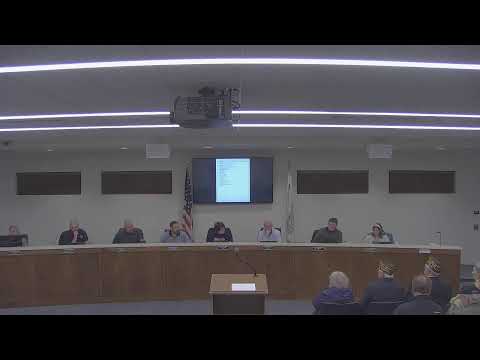
Action and next steps Council moved the resolution forward and later adopted it at the council meeting. The measure was sponsored by Councilmember Moore; the motion was seconded by Councilmember McLaughlin and passed on a roll-call vote with the majority voting yes and one abstention recorded. The resolution establishes the TIF program and a public improvement tax-increment-equivalent fund to receive service payments and reimburse eligible infrastructure costs.
Why it matters The TIF redirects property tax revenue streams for new development to pay for related infrastructure, potentially accelerating utility and road work that could enable further growth in the Miller Farms area. The 30-year term and $6.5 million reimbursement cap set the scale of public support; the county’s formal objection and the scheduled partial reimbursement to the county are notable fiscal constraints that will affect the longer-term revenue flow.
Speakers quoted or cited: Development Director Lucas Hare; council discussion recorded in meeting minutes.