Get Full Government Meeting Transcripts, Videos, & Alerts Forever!
Get email alerts on the Urban Renewal topic
No spam. Unsubscribe anytime.
Casper council advances blight study to Planning & Zoning for review
Summary
Councilors heard a consultant presentation on a proposed blight study that identifies seven potential urban renewal areas and signaled support to forward the initiative resolution to the Planning & Zoning Commission for formal review and statutory compliance.
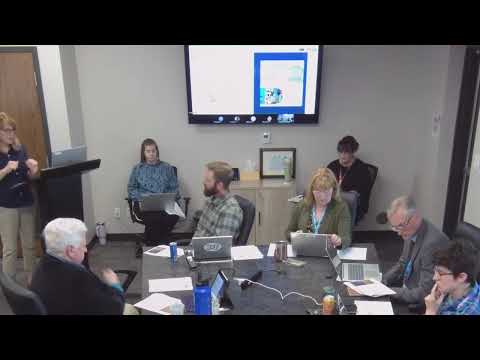
The Casper City Council on Tuesday received a consultant briefing on a proposed blight study meant to make seven city areas eligible for urban renewal tools, and signaled direction to send the study to the Planning & Zoning Commission for formal review.
The consultant, Mark Christensen of AVI/ABI Consulting, told the joint work session that the blight study uses a high‑level "windshield survey" checklist required by Wyoming law to identify conditions that allow municipalities to consider urban renewal projects. He said the designation does not attach to individual properties and “The blight designation does not devalue the property,” but it does make areas eligible for tools such as tax‑increment financing.
Community Development Director Liz Becker told council the study was funded in part by Advanced Casper ($20,000) and the downtown development authority ($3,000), and that staff seeks council direction to move the initiative resolution to Planning & Zoning on April 9. The consultant summarized findings by area: Downtown Casper (7 of 13 statutory conditions), North Casper (9 of 13), the CY Avenue Corridor (6 of 13), the East Ridge Mall area (5 of 13), the Paradise Valley Corridor (7 of 13) and the Platte River Commons (4 of 13).
Councilors asked about the scope of the designation, the possibility of condemnation under the urban renewal code and how tax‑increment financing (TIF) would work. Christensen said the urban renewal statutes include condemnation authority but stressed that use of any URA powers and any project that uses TIF would require separate planning, plan adoption and additional council oversight. He also explained that a blight finding alone does not create a TIF district; a plan and project adoption would be needed to set the base for any incremental revenue capture.
Multiple council members expressed that the step is procedural but necessary to unlock redevelopment tools. Staff proposed forming a subcommittee of council members to work with staff and the consultant on board composition, costs and prioritization of areas before any ordinance to establish an urban renewal agency is drafted. The council gave general direction to proceed to Planning & Zoning; formal votes on resolutions and any subsequent ordinances would follow the public process.