Get Full Government Meeting Transcripts, Videos, & Alerts Forever!
Get email alerts on the Energy Resilience Plan topic
No spam. Unsubscribe anytime.
WRCOG presents Energy Resilience Plan 2 deliverables; hands feasibility studies to member agencies
Summary
WRCOG staff presented final deliverables from Energy Resilience Plan 2, including microgrid feasibility studies, community resilience center analyses and a regulatory/implementation memo; 12 jurisdictions opted into feasibility studies and WRCOG will hand the work to agencies that may pursue projects and funding.
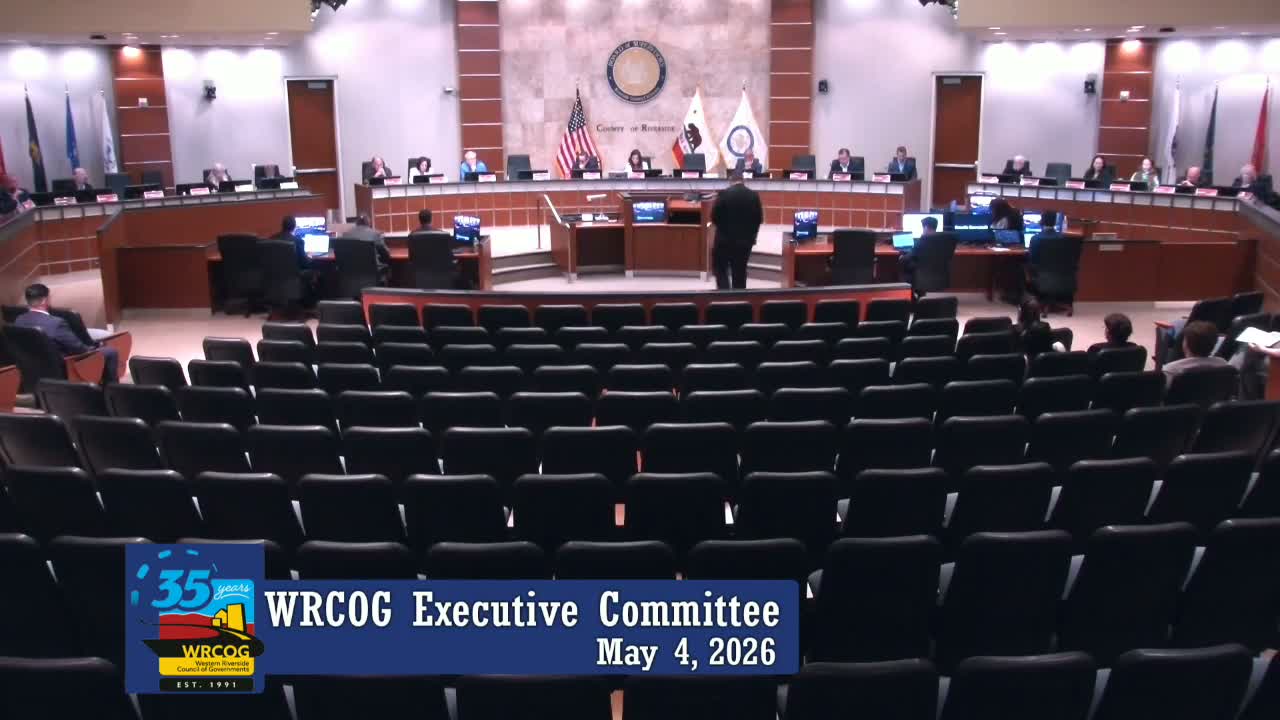
Program Manager Daniel Soltero told the Western Riverside Council of Governments Executive Committee on May 4 that ERP2 (Energy Resilience Plan 2) wraps up feasibility studies and an implementation plan intended to help member agencies evaluate microgrids and Community Resilience Centers (CRCs).
Soltero said ERP2 built on an initial 2020 study, was funded with a $471,000 adaptation planning grant from the Governor’s Office of Planning and Research (as described in the staff report), and examined multiple scenarios for site types commonly found across jurisdictions (fire stations, wastewater treatment plants and senior centers). "Some feasibility studies recommended solar only, some battery only, and some a full microgrid setup," Soltero said, adding that not every site proved appropriate for a microgrid.
ERP2 also produced a regulatory memo outlining local‑government pathways and pitfalls for microgrid adoption and an implementation chapter that summarizes engineering studies that would be required in Edison territory and options for grants, incentives and financing. Soltero said 12 cities in Riverside County opted in to receive microgrid or CRC studies and that WRCOG is turning deliverables over to member agencies; WRCOG staff will support agencies that request further assistance and will point them to the Inland Regional Energy Network (IREN) for additional technical and incentive resources.
Committee members asked whether the implementation plan included a funding roadmap; Soltero said the document contains a chapter on funding and financing, including feasibility‑level economic outlooks and a summary of grants and incentives agencies might pursue. No formal action was required; the item was received as information.