Get Full Government Meeting Transcripts, Videos, & Alerts Forever!
Get email alerts on the Health Hepatitis C topic
No spam. Unsubscribe anytime.
Committee advances bill to reduce barriers and speed access to hepatitis C treatment
Summary
AB 1843 would remove administrative barriers to timely, curative hepatitis C treatment; the author told the committee the disease is curable in over 95% of cases but still causes nearly 1,500 deaths annually in California, and proponents cited minimal premium impacts in CHBURP analysis.
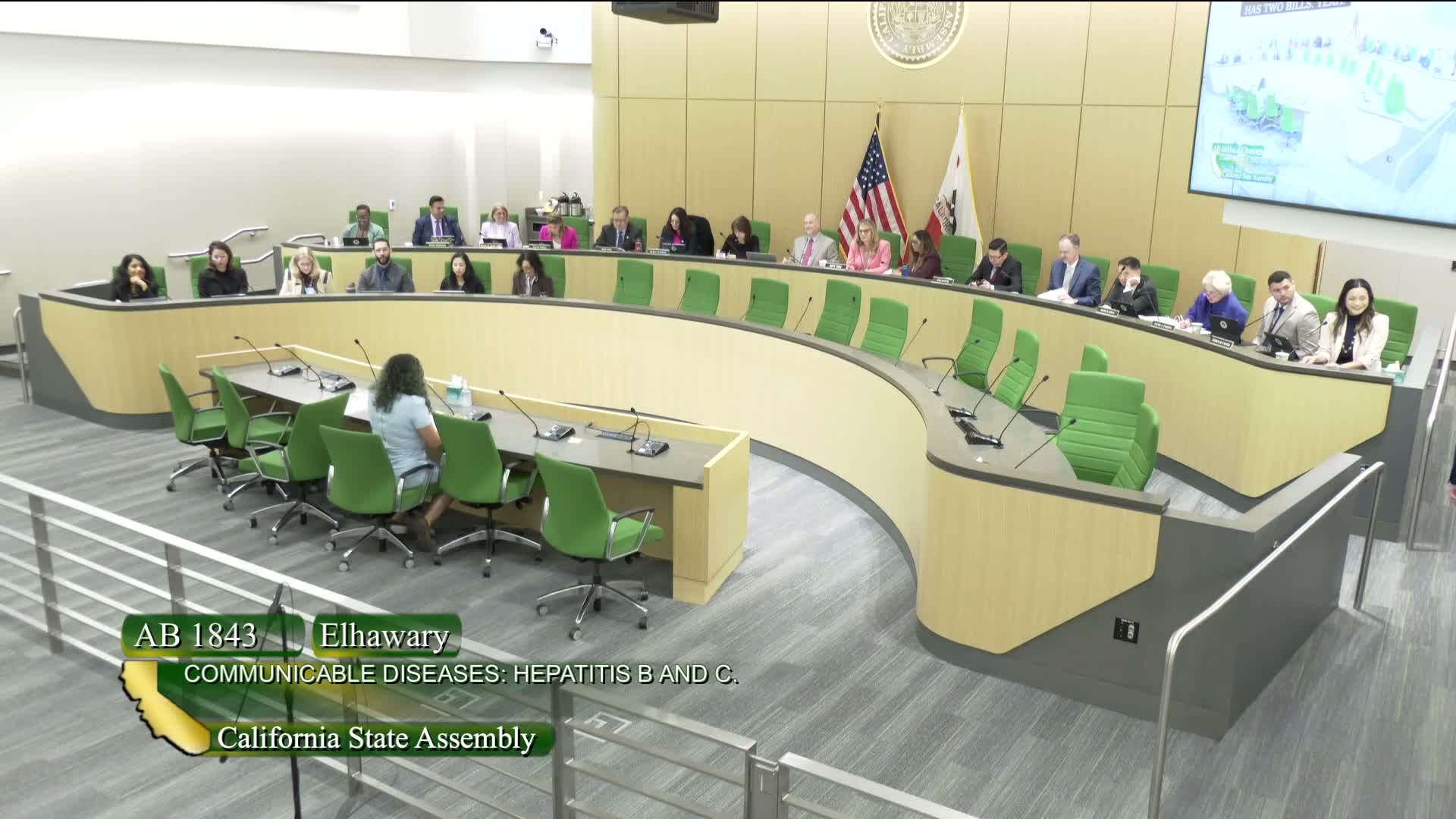
Assemblymember Elwhare presented AB 1843 to the Appropriations Committee on May 6, describing the measure as an effort to remove unnecessary administrative hurdles and speed patient access to curative hepatitis C treatment.
"Hepatitis C is curable in over 95 percent of cases," the author said, and delayed treatment contributes to about 1,500 deaths annually in California. Elwhare told the committee early treatment reduces long-term costs from advanced liver disease, hospitalizations and transplants.
The author cited the committee's health fiscal analysis (CHBURP), which estimated negligible impacts on premiums ("between two-tenths of a cent and a little over 1 cent per member per month") and identified about $18,000 in increased CalPERS health plan premium costs borne by the general fund. Proponents said the Department of Managed Health Care views these costs as minor and absorbable and argued AB 1843 builds on a 2024 Medi-Cal policy that eliminated prior authorization for hepatitis C drugs.
The bill's sponsor and witnesses framed the measure as a fiscally responsible way to reduce downstream spending by preventing costly complications and to broaden the benefits of prior-authorization reforms. The author asked for an "aye" vote and the committee recorded the motion to "do pass" on a roll call.
What happens next: With the committee's approval, AB 1843 will continue through the legislative process; fiscal details cited in committee testimony will be part of later fiscal and floor analyses if the bill advances.