Get Full Government Meeting Transcripts, Videos, & Alerts Forever!
Get email alerts on the Budget topic
No spam. Unsubscribe anytime.
Regional commission presents $1.1 billion proposed budget, plans $23.7 million draw on reserves
Summary
Agency staff presented a fiscal year 2026–27 executive summary that budgets about $1.1 billion in expenditures, anticipates a $23.7 million draw on restricted reserves to fund projects, and projects a 9% increase in toll revenue while noting a one‑time $40 million land sale.
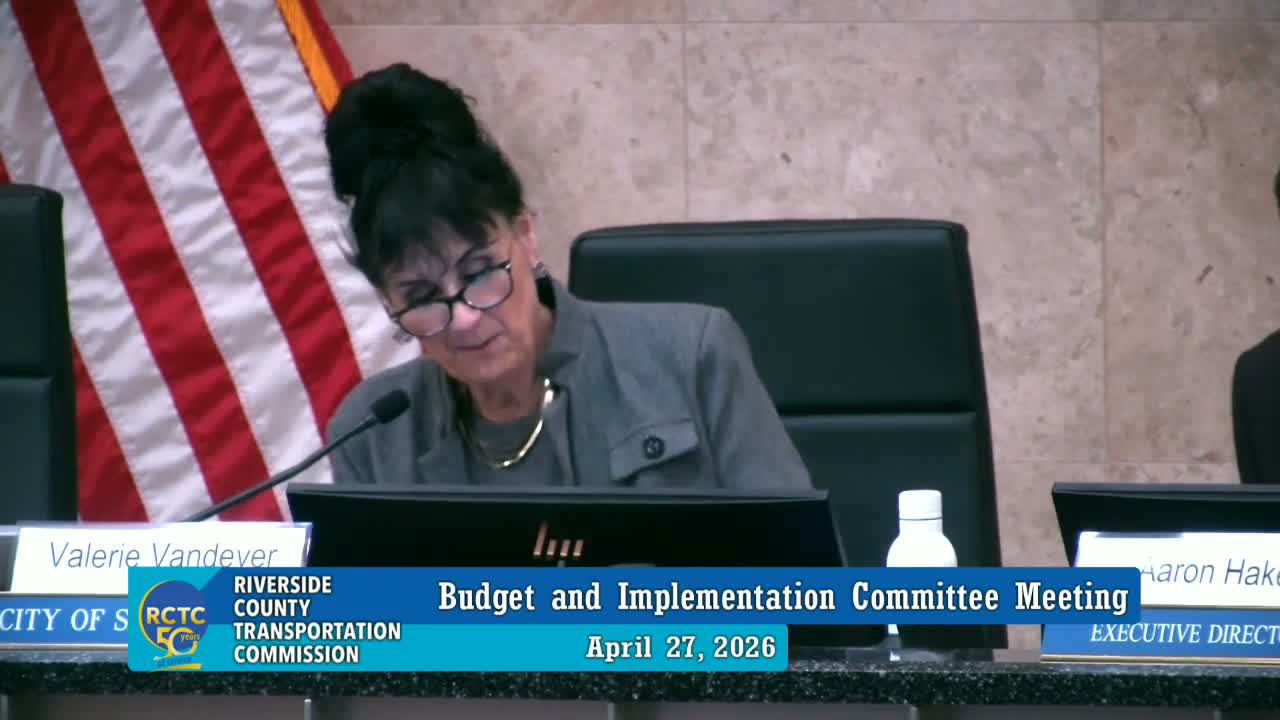
Sergio Bridal presented the commission’s proposed fiscal year 2026–27 executive summary, saying the draft budget aligns projected revenues with planned expenditures and a planned draw on previously restricted reserves.
"Total expenditures are expected to exceed annual revenues, resulting in a planned draw on restricted reserves of approximately $23,700,000," Bridal said, describing that draw as a planned deployment of funds accumulated over prior years for identified projects.
Bridal outlined the budget’s revenue structure, with Measure A and local transportation fund (LTF) sales tax budgeted at $280 million and $150 million respectively, and toll revenues forecast to increase about 9% on stronger traffic volumes. He also told commissioners staff expects a one‑time land sale of about $40 million to boost the “other revenues” category.
Why it matters: the proposed budget finances major capital commitments that are entering higher‑spend phases, including the I‑15 Southern Extension and the 91 Eastbound corridor operations project (ECOP). Bridal said staff used conservative planning assumptions to preserve fund balance adequacy while supporting the transition from peak construction levels toward maintenance and remaining program work.
Questions from commissioners focused on revenue assumptions and the timing of toll‑funded projects. A commissioner asked about a 7% decline shown on a slide; Bridal said that figure referred to state transit assistance tied to diesel‑fuel sales and not to Measure A highway sales tax. Aaron Hake, the executive director, reiterated that Measure A highway sales tax was budgeted flat and that the -7% item was specific to transit assistance revenue.
Staff also spelled out major expenditure drivers: design‑build and construction activities for Express Lane extensions, continued funding for Coachella Valley rail planning, and partner projects such as the SR‑60 Potrero Boulevard and the I‑15 Franklin Street interchange. The presentation estimated total expenditures near $1.1 billion and noted a modest year‑over‑year decrease driven by capital completion on several projects.
Following discussion, the committee voted to move the item forward and directed staff to open a public hearing at the May commission meeting and return a final budget for adoption in June.