Get Full Government Meeting Transcripts, Videos, & Alerts Forever!
Get email alerts on the Behavioral Health topic
No spam. Unsubscribe anytime.
County staff warn of major state funding cuts to alternative sentencing programs, urge legislative outreach
Summary
San Juan County’s alternative sentencing division told commissioners that legislative changes and a shift in liquor excise tax distribution have reduced expected LDWI and related grants, producing an estimated $300,000–$400,000 shortfall and prompting staff to propose using opioid settlement and other local funds while seeking state relief.
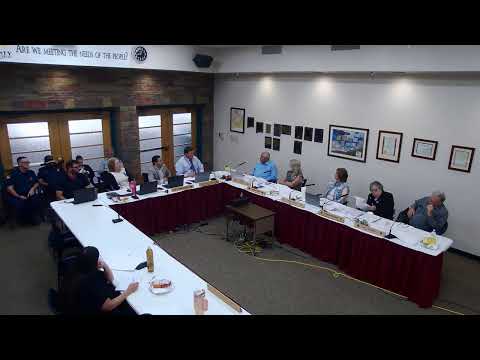
San Juan County officials told commissioners at a budget workshop that the county’s alternative sentencing programs face sizable state funding reductions and that staff plan to pursue legislative remedies while tapping local one‑time sources to maintain services.
Miss Mitchell, who presented the alternative sentencing division’s work, said the programs provide jail‑based treatment, case‑managed aftercare, peer recovery supports and reentry services. “Throughout across our 5 programs ... over 4,000 people in the last 3 years have been served,” she said, adding that about 700 individuals were served in the first four months of 2026 alone.
Mitchell said the county expects a roughly 40% reduction in funding next year for LDWI‑related programs because the legislature amended law to give DFA a larger share of liquor excise tax for statewide administration. She told commissioners the county’s competitive allocation fell to $404,461 from roughly $680,000 and that formula distribution reductions could remove another ~$120,000. “This is simply based on decreased revenue for liquor excise tax,” Mitchell said.
County staff and commissioners discussed mitigation options: the county has used opioid settlement funds and other limited revenue streams to sustain services this year, and it received $500,000 in early access funding for navigation centers that extends staffing for a year. Stark and others said they plan to engage the county lobbyist and state legislators to restore or reallocate funding, including pursuing permanent SB3 funds or other legislative fixes.
Mitchell warned that the reduction will require program adjustments and that the county is exploring internal savings, grant applications and legislative advocacy to protect reentry and jail‑based treatment services. Commissioners asked staff to continue outreach and to return budget consequences and options in follow‑up materials.