Get Full Government Meeting Transcripts, Videos, & Alerts Forever!
Get email alerts on the Urban Renewal topic
No spam. Unsubscribe anytime.
Residents urge Laramie council to reject blight designation for West Side river parcel
Summary
At a public forum, neighborhood residents and conservation groups told the Laramie City Council the West Side parcel along the Laramie River is not blighted and warned that an urban renewal declaration and tax-increment financing (TIF) would chiefly benefit the current landowner and risk wildlife and floodplain impacts; the council has scheduled a blight determination vote for April 7.
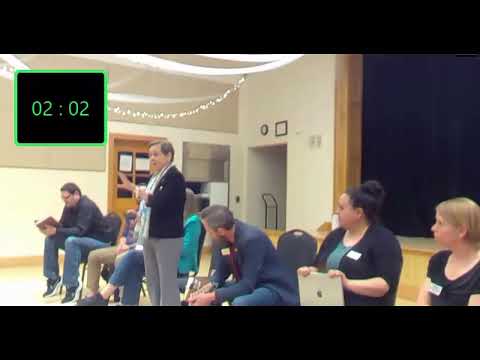
Hundreds of West Side residents and conservation advocates told the Laramie City Council at a public forum that a proposed blight designation for a parcel along the Laramie River is unnecessary and could harm wildlife, worsen flooding risk and primarily benefit the landowner.
"It's not blighted according to Wyoming law and, hence, does not qualify as an urban renewal area," said Bridal Glass, who told the council the designation would amount to a tax break that is priced into a sale and would enrich the current owner rather than guarantee community benefits. Glass urged the council to vote "nay" when the matter comes before it.
City officials including City Manager Todd Beazer described the blight determination as an eligibility step, not an automatic financing decision. Beazer told the room that a blight designation would make the area eligible for tax-increment financing but that any developer-led project, development agreement or TIF proposal would still need to come through subsequent public reviews—planning commission hearings, urban renewal agency consideration and a return to council for approval. "The property would have to sell and/or they would have to develop," Beazer said, describing the multiple public stages that must follow any designation.
Supporters of taking steps now argued the city should plan ahead for housing. "As a young professional in Laramie ... affordable housing is a big piece of this," said Lucas Fralick, who urged councilors to consider the city's persistent housing shortfall and the time it takes to move projects from concept to construction.
Speakers on both sides raised technical concerns. Residents and scientists flagged the parcel's role as a wildlife corridor and questioned whether additional impermeable surface near the river would increase flood risk, with one commenter urging councilors not to "destroy the riparian corridors" and urging more study of water carrying capacity and stormwater impacts before any development proceeds. Councilors and staff responded that the city has stormwater drainage studies and engineers working on conceptual plans and noted a work session on water planning is planned for June.
Some speakers proposed alternatives to development or TIFs. The chair of the planning commission encouraged neighborhood fundraising and collaboration with conservation groups and foundations—"write some grants," he said—to buy or place conservation easements on the land; others said the parcel has industrial contamination in places that may complicate conservation purchases.
The hearing included repeated procedural questions and trust concerns from residents who cited earlier notices and process disputes. In response, city officials emphasized the formal legal steps ahead and multiple review points that would allow continued public input.
Fred Schneimbo, who said he had discussed hypothetical concepts earlier in the outreach process, told the meeting there is presently no developer and no formal plan for the property. "There is no development, no developer," he said, and apologized for any confusion his earlier examples may have caused.
The council closed by thanking attendees for a respectful discussion and reminding the public the council will take a formal blight determination on April 7; any subsequent development proposals or requests for TIF would require separate public hearings.