Get Full Government Meeting Transcripts, Videos, & Alerts Forever!
Get email alerts on the Land Use And Right Of Way topic
No spam. Unsubscribe anytime.
Tequesta reviews unified right‑of‑way planting ordinance with grandfathering provision and enforcement plan
Summary
Staff presented a consolidated draft right‑of‑way and soil planting ordinance that sets setbacks, prohibits decorative rock and artificial turf in swales, requires root barriers for street trees, and includes grandfathering for pre‑existing lawful plantings; council sought clarifications on definitions and exceptions.
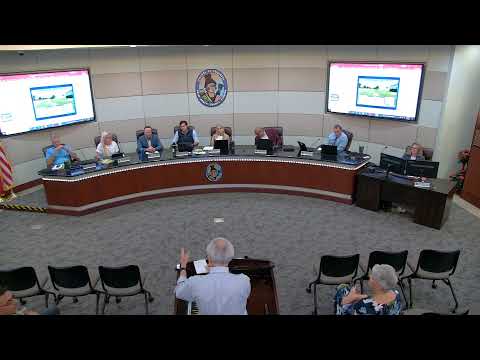
The Village Council reviewed a revised unified right‑of‑way and soil planting ordinance at its May 4 workshop that would consolidate multiple chapters into a single code section (Chapter 63) and establish clear planting and setback standards to protect drainage and underground utilities.
Doug (staff presenter) summarized the proposal: allowed plantings on the top side of a swale would require a minimum setback (3 feet from the swale slope and 3 feet from the roadway), a minimum 5‑foot separation from utilities (with American Water Works Association exceptions requiring 7–10 feet in some cases), and root barriers meeting specified dimensions for approved trees. The draft also prohibits nonliving decorative materials in the right of way ("No artificial turf in the right of way. No decorative rock mulch or boulders."), restricts maximum planting heights inside swales and establishes a permitting and inspection pathway tied to 811 locates.
Doug emphasized enforcement and a grandfathering approach: plantings installed prior to the ordinance's effective date would be allowed to remain if they are lawful and do not create a safety hazard or interfere with drainage or utilities; nonconforming installations that create hazards or are already the subject of unresolved violations would be subject to removal at the owner's expense. Doug said staff will include clear permit notes and inspection steps to make the process transparent.
Council members sought multiple clarifications. Questions included how to define "flat area" and "low to moderate height," how exceptions for odd‑shaped lots would be adjudicated in the field, whether pre‑existing but problematic plantings could be removed and who would pay for removals, and how the code would accommodate future infrastructure projects that may require utility relocations. Staff confirmed the village currently issues courtesy notices for unpermitted right‑of‑way plantings, that most current violation cases lack permits, and that the utilities fund, not the general fund, would cover the proposed utilities building if it proceeds.
Two residents commented: Pat Watkins urged more outreach and a proactive welcome/education packet so homeowners know to ask before planting; Tom Bradford (Tequesta Pines HOA) expressed concern that typical local swales often lack a 3‑foot flat area and requested explicit guidance and an 811 reminder be added to the ordinance materials.
Council did not adopt the ordinance at the workshop; staff will return with clarified language, the grandfathering clause in code text and any edits requested by council.