Get Full Government Meeting Transcripts, Videos, & Alerts Forever!
Get email alerts on the Municipal Facilities topic
No spam. Unsubscribe anytime.
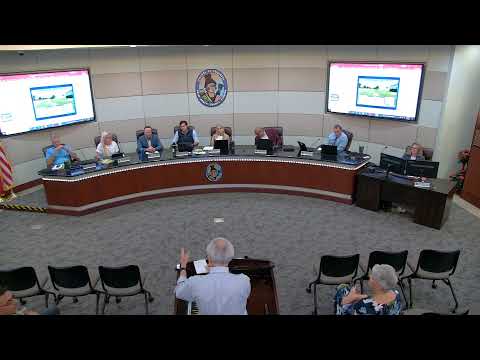
Tequesta reviews space‑needs study: minor Village Hall remodel proposed; utilities complex concept estimated at $7.9M
Summary
Architects presented options to improve Village Hall circulation and privacy with a conceptual $2.3M planning estimate; a separate utilities administration/training and warehouse concept was shown with a preliminary $7.9M project budget and multiple funding options discussed.
Song & Associates presented a space‑needs study to the Village Council on May 4 covering two primary areas: Village Hall and the water utilities site. Jill Lanigan summarized staff interviews and programming needs, identified privacy and meeting‑space shortfalls, and proposed two conceptual options aimed at improving circulation and creating a multipurpose conference/break room.
Lanigan said the Village Hall options are primarily modest remodeling measures and small additions within the existing roofline rather than a full‑scale expansion. She provided a conceptual hard‑construction estimate of about $1.5 million and a planning budget near $2.3 million after allowing for soft costs and contingencies.
The consultants then summarized a utilities plan: an approximately 10,000‑square‑foot administration and training building plus a roughly 5,700‑square‑foot warehouse on underused property at the water plant. Lanigan said the training spaces could host 30–75 attendees, serve as a public education center or emergency operations center and help centralize scattered field assets in a conditioned warehouse. The conceptual hard cost for the utilities site was listed near $5.0 million; with soft costs and contingency the planning estimate reached about $7.9 million.
Council discussion centered on need versus priority and funding. Several council members described Village Hall changes as desirable but argued the project is largely a "want" rather than an urgent need; others recommended pursuing efficiency gains in the existing footprint. On the utilities project, staff and council agreed the water‑plant construction may carry higher priority because it supports operational needs and can be funded in part from the utility fund; staff also mentioned exploring hazard‑mitigation and other grant programs.
No formal decisions or appropriations were made at the workshop; staff was asked to refine scopes, confirm parking and layout assumptions for training events, and pursue funding avenues before returning with recommended next steps.