Get Full Government Meeting Transcripts, Videos, & Alerts Forever!
Get email alerts on the Homeowners Association Reform topic
No spam. Unsubscribe anytime.
Senate passes HOA 'Bill of Rights' after floor debate over vetting, debt-collection and Safe at Home protections
Summary
The Minnesota Senate voted to concur with House changes and passed Senate File 1750, a homeowners association 'resident bill of rights' package that limits late fees and interest, requires disclosure of certain bids and provides dispute-resolution routes. Supporters called it consumer protection; critics urged wider vetting and raised legal concerns including potential conflicts with federal debt-collection law and Safe at Home confidentiality.
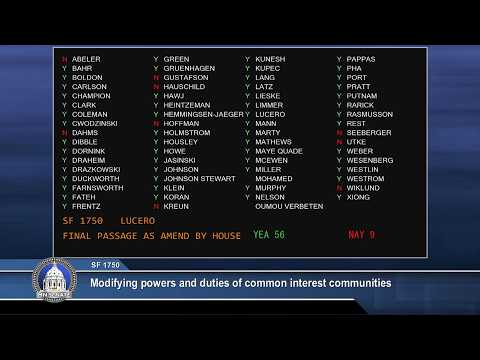
The Minnesota Senate passed Senate File 1750 on May 6, 2026, sending to the governor a package of changes aimed at increasing transparency and consumer protections for homeowners in common-interest communities (HOAs). The motion to concur in the House amendments carried on a roll call and the bill cleared final passage in the Senate later that day.
Sen. Tony Lucero, sponsor of the measure on the floor, summarized the House changes before members voted, saying the package strengthens protections while preserving homeowners’ rights. He highlighted higher thresholds for dissolving an association (changed from 60% to 67%), limits on late fees and interest (late fees capped at $20 or 5% and interest on unpaid common expenses limited to 8%), and new requirements that associations provide lists of common fines and limit certain resale-document fees to cost. "The HOA Bill of Rights ... is achieving transparency, best practices, and it is a consumer protection bill," Lucero said.
Supporters framed the bill as a response to constituent complaints about excessive fines, surprise fees and conflicts of interest in contract awards. Senate proponents said the bill requires a minimum of three bids for many contracts (with exceptions), requires written records of disclosures when a board member or related party bids for work, and creates avenues for homeowners to seek advice or dispute resolution without unduly restricting association governance.
Opponents urged more scrutiny of newly inserted House language. Several senators pressed sponsors on whether specific provisions had been vetted by lawyers specializing in the Fair Debt Collection Practices Act (FDCPA) and whether new payment-priority language—requiring payments to be applied to assessments before fines and fees—could put boards or collectors at risk of federal FDCPA violations. "This language has a mandatory order of priority," a critic said on the floor, adding that the consequence could be litigation or unintended violations of federal law.
Sen. Lucero and co‑sponsors responded that the text had been reviewed widely by advocates, attorneys and stakeholders and that the changes clarify current practice rather than create new conflicts. He said collection agents and collections attorneys already accept partial payments, and that the bill preserves a homeowner’s right to negotiate payment agreements. Another sponsor, Sen. Pa, said the Safe at Home program rights were preserved and that the bill merely added a remedy if confidentiality protections were violated.
Lawmakers also debated a House‑inserted requirement to refer unresolved homeowner grievances to the common interest community ombudsperson. Critics warned the referral language could overwhelm an ombudsperson's office that currently lacks intake capacity; they urged the language be changed to 'may refer' or to require notice of available resources rather than mandatory referral. Supporters said the intent is to inform homeowners of resources and create a pathway for dispute resolution.
A roll‑call on the motion to concur produced 59 ayes and 8 nays; the motion prevailed. After additional floor remarks and final debate, the bill passed final passage in the Senate (56 ayes, 9 nays). The sponsor urged members to support what he called a balanced, vetted package of homeowner protections; critics urged future technical clarification and careful statutory cross‑checks with federal laws and Safe at Home confidentiality rules.
What happens next: The bill will be transmitted to the governor following the Senate’s final action; enforcement dates and specific sections may have staggered effective dates set in the bill text. The debate on the floor highlighted questions that stakeholders and legal experts may review if litigation or administrative challenges arise.