Get Full Government Meeting Transcripts, Videos, & Alerts Forever!
Get email alerts on the Jury Instructions topic
No spam. Unsubscribe anytime.
Defense urges new trial in Hudgins case, says jury lacked crucial causation instruction; prosecutor says issue was waived
Summary
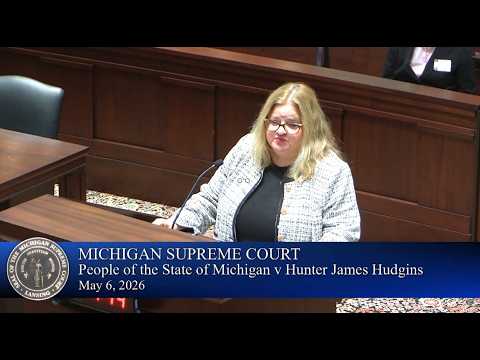
At oral argument in People v. Hudgins, defense counsel Christine Pajak told the court jurors were not given clear, stepwise instructions on causation and intervening cause and asked that Hunter Hudgins’s convictions be vacated; the prosecutor, Heather Bergman, said trial counsel accepted the instructions and the argument is waived. The court submitted the case for decision.
At oral argument in People of the State of Michigan v. Hunter Hudgins, defense counsel Christine Pajak told the court the jury that convicted Hudgins was not given the clear, stepwise instructions necessary to decide causation and intervening cause, and she asked the court to vacate the convictions and order a new trial.
"Miss Broderick's death was a tragic, tragic accident, but the jury was not given the tools that needed here to decide whether or not it was a crime," Pajak told the court, arguing judges must instruct jurors first on but-for causation, then on proximate causation (the "direct and natural" result), and finally on whether any intervening cause superseded the defendant's conduct.
Pajak criticized the trial instructions as a "confusing hodgepodge" that mixed now-outdated language—ordinary negligence, gross negligence and "substantial cause"—without explaining how jurors should determine whether the causal chain was broken. She said experts at trial testified the victim’s placement, the darkness and the circumstances meant a sober driver traveling the speed limit would not have had time to avoid the collision, making intervening-cause guidance outcome-determinative. Pajak confirmed she raised the issue as plain error and reserved three minutes for rebuttal.
Heather Bergman of the Kalamazoo County Prosecutor's Office, appearing for the people, urged the court to deny relief. Bergman said the record shows trial counsel accepted the instructions through form 16.2 and that the defense never asked for the specific instruction that an "unavoidable accident is not a crime." "That issue has been waived," she told the court, and she argued the instructions were consistent with People v. Schaeffer and, in any event, any instructional error would not have produced outcome-determinative prejudice.
The justices asked multiple questions about where unavoidability and foreseeability fit into the causation analysis and whether the contested language belonged in the proximate-cause step or in a gross-negligence analysis. Pajak told the court the unavoidability question must be considered during the proximate-cause/intervening-cause determination and suggested the court could provide clearer model instructions for lower courts, particularly in driving-under-the-influence cases where those issues arise more frequently.
Bergman countered that longstanding authority (citing People v. Tims and the consolidated rulings discussed in Schaeffer and Large) does not support the defense's requested "unavoidable accident" instruction for the statute at issue and that the trial record demonstrates the jury was instructed on foreseeability and negligence distinctions.
After rebuttal and follow-up questioning, defense counsel asked the court to vacate Hudgins’s convictions and grant a new trial; the court announced the case would be submitted for decision.
The court did not announce a ruling during the argument. The application is under submission.