Get Full Government Meeting Transcripts, Videos, & Alerts Forever!
Get email alerts on the Metro Districts topic
No spam. Unsubscribe anytime.
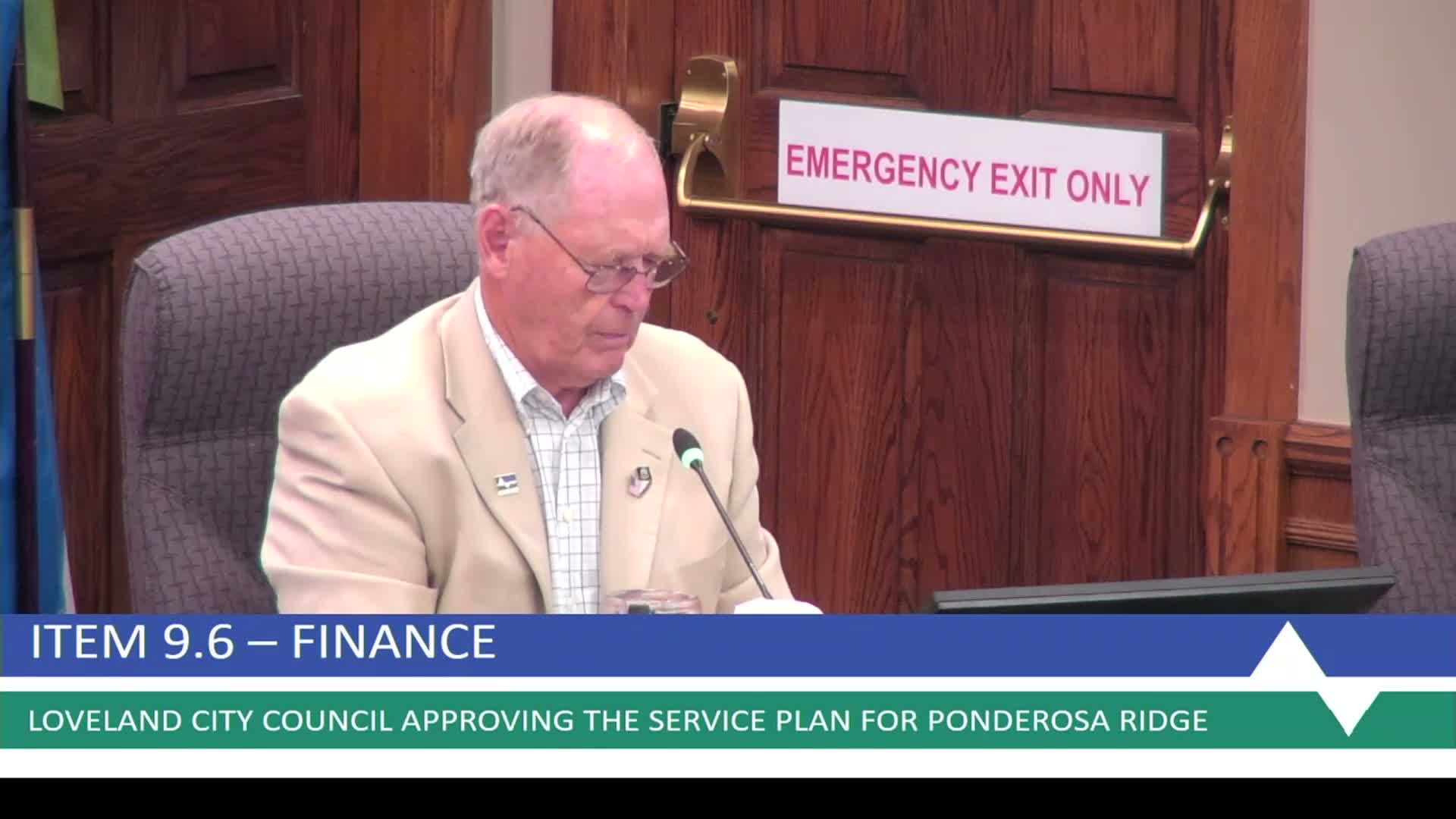
Loveland council approves Ponderosa Ridge service plan, authorizing $76M debt limit for five metro districts
Summary
The council voted 7–1 to approve service plans for five Ponderosa Ridge metropolitan districts that allow up to $76 million in public-improvement debt; proponents said the project will yield roughly 1,300 housing units while residents and some councilors raised affordability and long-term tax concerns.
The Loveland City Council voted 7–1 on Aug. 18 to approve service plans for five proposed Ponderosa Ridge metropolitan districts, clearing a procedural hurdle that allows the developer to pursue bonded financing for on-site and off-site infrastructure estimated at $76,000,000.
Developer representatives said the roughly 279‑acre project north of West 43rd and east of Wilson Avenue will include multiple housing product types — single-family detached, duplexes, townhomes and multifamily rental — and could yield about 1,300 units across the five districts. The proponents said the service plan aligns with the city’s model service plan and the council’s recently updated criteria.
City staff and third‑party financial reviewer Hilltop Securities told council the plan is "reasonable and capable" of extinguishing debt within the proposed terms. The service plan sets mill-levy caps consistent with city policy: a maximum of 50 mills for debt service and 10 mills for operations and maintenance, with a maximum debt term of 40 years and a debt-repayment deadline that cannot exceed 45 years from issuance.
During public comment, residents questioned whether metro-district financing increases housing affordability or shifts long-term costs to homeowners. "Metro taxes are a burden on the citizens," said Megan Eliehzer (remote commenter), who urged the council to pause metro-district approvals until after the November election. Bruce Robinson, a nearby metro-district board president, told council he calculated a large projected property valuation and asked for more detail on bond structures and resale pricing.
Several council members pressed proponents on parks, school impacts and how amenity choices affect long-term ownership costs. Councilor Sampson secured a developer commitment to include playgrounds and neighborhood greenways; the developer said trails, playgrounds and open space are planned and that detailed amenities will be finalized in later development plans.
Mayor Jackie Marsh cast the lone no vote, saying she opposed authorizing additional metro-district debt and was skeptical of the mechanism. "I don't like metro districts," Marsh said during debate, and she voted against the service-plan approval. The final roll call was 7 yes, 1 no.
Next steps: if the districts form, they will enter an intergovernmental agreement (IGA) with the city that establishes contractual obligations to carry out the service plan. Bond issuance and exact mill levies will be subject to market conditions and investor interest at the time of sale.