Get Full Government Meeting Transcripts, Videos, & Alerts Forever!
Get email alerts on the Civic Governance topic
No spam. Unsubscribe anytime.
Melbourne council weighs stricter rules for volunteer boards and a possible charter amendment to merge planning panels
Summary
Council debated adopting a volunteer code of conduct, tightening attendance/removal rules and asking staff to draft a charter amendment that would let council assign Zoning Board of Adjustment duties to the Planning & Zoning Board; opinions split over changes that could reduce long-serving members' roles.
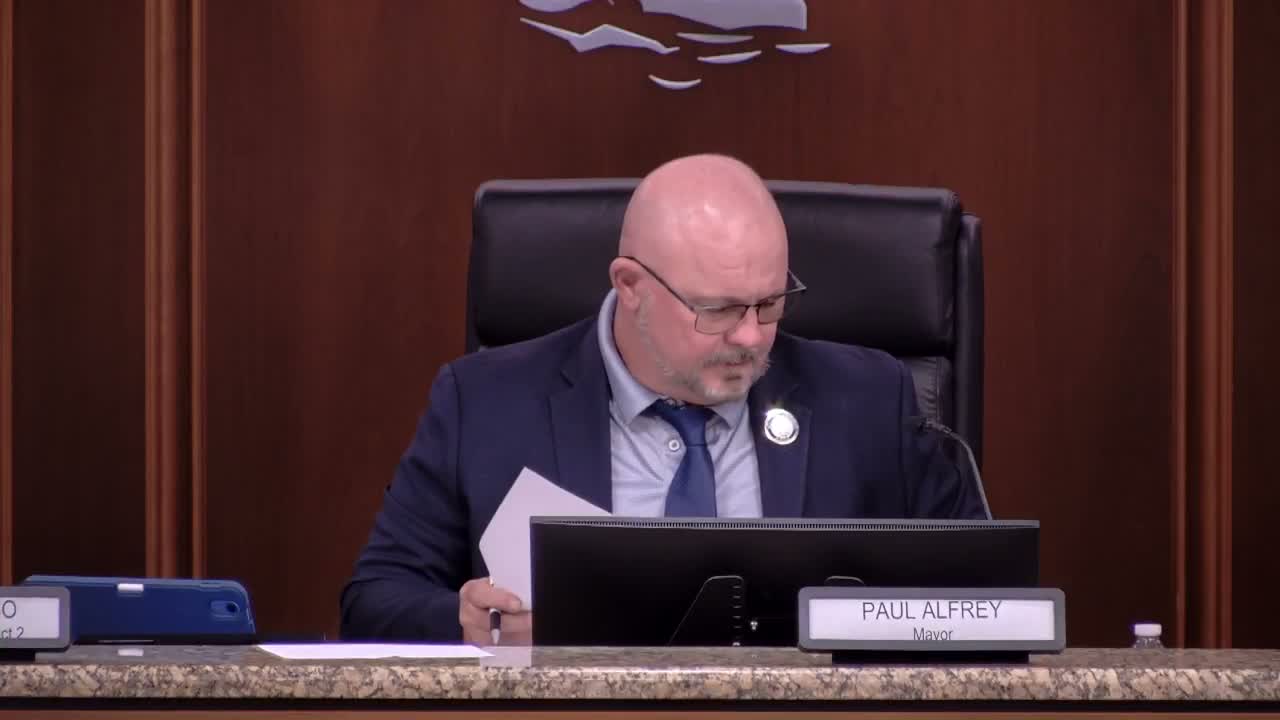
The Melbourne City Council spent an extended portion of its April 28 meeting discussing how to govern the city's volunteer advisory boards, including whether to adopt a formal code of conduct, change removal procedures for underperforming members and pursue a charter amendment that would give council flexibility to consolidate two planning-related boards.
City Attorney Adam told council the charter currently sets out the Zoning Board of Adjustment's duties and that any consolidation or change to the appeal path would require a voter-approved charter amendment. He said one option would let council assign the Zoning Board of Adjustment's responsibilities to the Planning & Zoning Board so the latter could convene 'in an ex officio capacity' when adjustment matters arise. ‘‘There are pros and cons to these approaches,’’ Adam said, urging council to weigh institutional knowledge and legal standards before moving forward.
Council Member Newman, who proposed exploring the consolidation, said staff documents showed some boards meet infrequently and that combining panels could save staff time: "It seemed like there's staff resources being involved and there might be an opportunity," he said. Council Member LaRusso and others said they were reluctant to displace long‑serving volunteers and stressed that the Zoning Board of Adjustment performs quasi‑judicial work that differs from planning board advisory roles.
Several council members supported a narrower first step: adopt a short, signed code of conduct and standardized orientation that clarifies attendance expectations. Council Member Smith suggested a light, West‑Melbourne–style statement of mutual respect that volunteers would sign when appointed. "If we have an expectation list as part of orientation, that helps communication," the mayor said.
On removal and suspension, staff described the current practice: chairs or staff contact members with attendance problems, certified letters are sent if there's no response, and council may pursue removal under state law for neglect of duty. Adam noted a charter change could allow council to remove members without a cause hearing, but warned that making board positions "at the whim of council" could politicize appointments.
Council gave staff direction to draft proposed language: a short, signable code of conduct and proposals on term durations and attendance standards for staff to return with specifics. For the merger idea, the mayor asked staff to put possible charter-language on paper for council review rather than immediately drafting a referendum measure.
The discussion ended with no charter amendment adopted; council members agreed to have staff prepare draft ordinance or charter language and to bring the items back for more detailed review and public consideration.