Get Full Government Meeting Transcripts, Videos, & Alerts Forever!
Get email alerts on the Wildfire Resilience topic
No spam. Unsubscribe anytime.
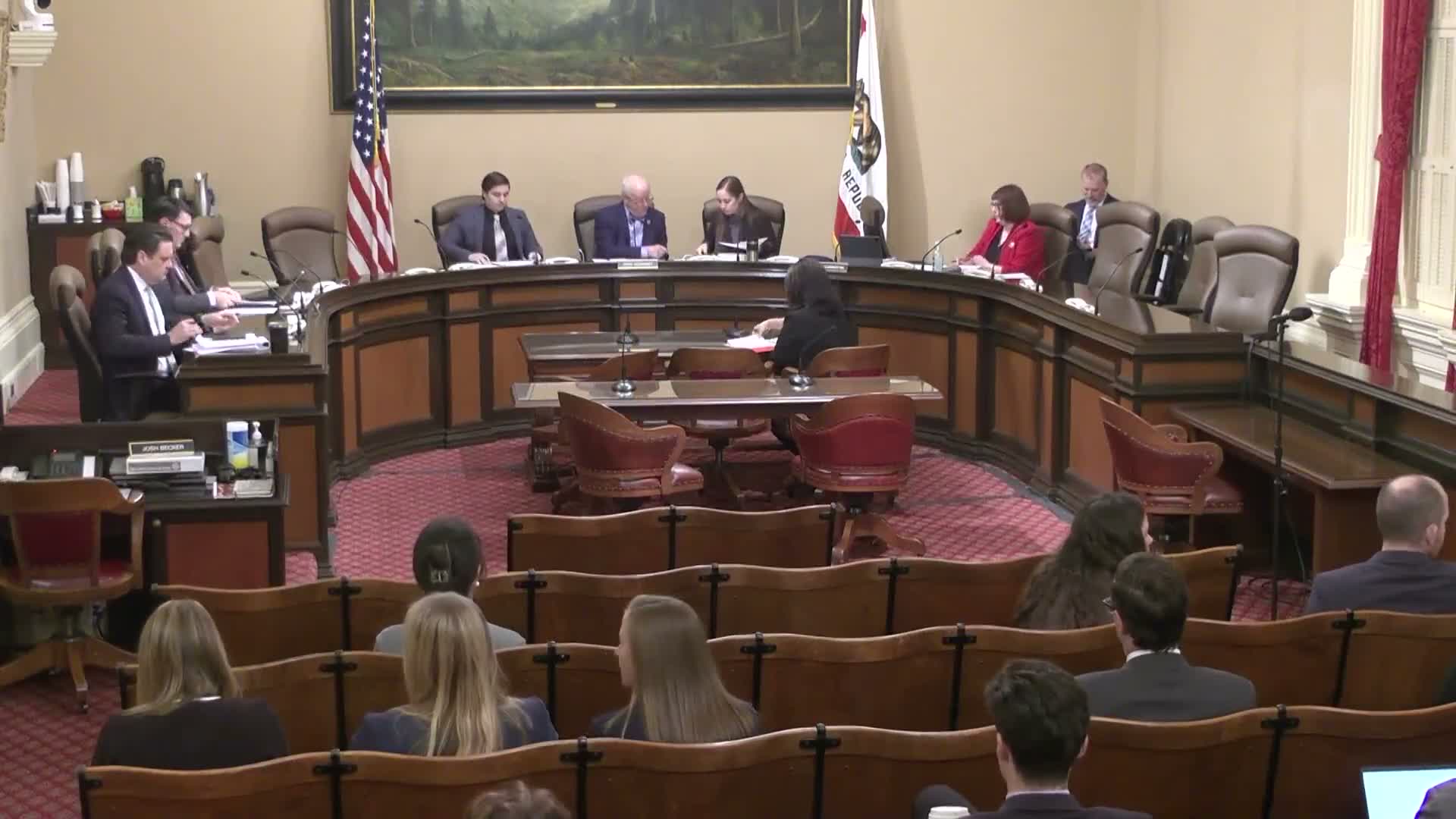
Committee advances $50 million fire-safe home tax credit concept to Appropriations
Summary
SB 1084 would authorize up to $50 million annually for a fire-safe home tax credit to support home hardening and defensible-space improvements in wildfire-prone areas. The committee advanced the bill after proponents and local jurisdictions urged targeted, accountable incentives; members asked for fiscal guardrails to protect school funding.
Senator Maria Alvarado Gill presented SB 1084, a package measure creating a "fire safe home" tax credit program that would provide up to $50 million annually to support home hardening and defensible space measures in high wildfire-severity zones.
The author framed the credit as an incentive — not a mandate — that would enable homeowners and small businesses in at-risk areas to afford vegetation clearing, ember-resistant vents, ignition-resistant materials and other retrofits that improve survivability in wildfire events. "This bill creates the fire safe home tax credit, providing up to $50,000,000 annually to support home hardening and defensible space improvements," the author said.
Supporters included the town of Truckee and the California Association of Realtors; witnesses argued credits would help keep homes insured in the regular market and reduce strain on state catastrophe funds. Committee members praised the bill's intent but pressed for clarity on budget impacts and potential effects on Proposition 98 school funding. Senator Grayson and others urged balancing cost-benefit analysis and targeted eligibility to ensure the program reaches high-risk households without unintended fiscal tradeoffs.
The committee moved SB 1084 to the Committee on Appropriations (motion recorded). The author and members agreed to continue technical work on eligibility, data collection and sunset/appropriation guardrails.