Get Full Government Meeting Transcripts, Videos, & Alerts Forever!
Get email alerts on the Public Works topic
No spam. Unsubscribe anytime.
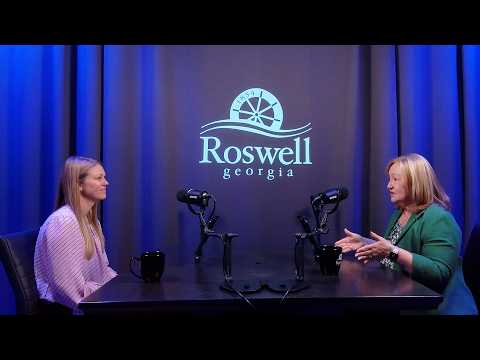
Mayor Robichaux and Roswell public-works deputy discuss aging pipes, stormwater and water stewardship
Summary
Mayor Mary Robichaux interviewed Corinne, Roswell’s deputy director of Environmental Public Works, about aging infrastructure, an asset-management plan, stormwater as a utility, conservation programs like Aqua Hawk, and recent awards recognizing the city’s water operations.
Mayor Mary Robichaux spoke with Corinne, deputy director of Roswell’s Environmental Public Works (EPW), in a podcast episode focused on the city’s water, stormwater, solid-waste and capital-improvement work, and what residents can expect as Roswell grows.
Corinne said EPW comprises seven divisions — water, stormwater, solid waste, facilities, fleet, support services and a newly added Capital Improvement Program — and that managing those assets requires both engineering and long-range financial planning. “A lot of planning is not just in the actual physical planning, but it’s also a financial planning of…what can you afford,” she said, describing trade-offs officials face when deciding which pipes and tanks to replace.
The deputy director highlighted that aging infrastructure is a nationwide challenge and said Roswell recently completed an asset-management plan to inventory assets, identify priority replacements and estimate costs. That plan, she said, guides which assets “need to be replaced, what can last 20 years” and how to set utility rates and capital priorities.
The conversation also covered stormwater management. Corinne said stormwater has shifted from being seen as ‘‘just ditches’’ to being treated as an asset and a utility, and she described Roswell’s MS4 (municipal separate storm sewer system) program and its role in addressing local flooding and drainage maintenance. She noted the city must consider regional constraints as well, referencing the long-running Tri-State water disputes and Roswell’s participation in the Metro North Georgia Water Planning District, which informs regional planning the city has adopted.
Corinne described how many residents interact with EPW’s services: most calls come when solid-waste pickups are missed or when water stops flowing. She emphasized that the city’s water operations are a 24/7 business with staff on nights and weekends to respond to leaks and outages. “We have operators at the plant all the time,” she said.
On service area, Corinne said roughly 80% of Roswell residents are supplied by Fulton County water and that Roswell’s own system serves about 20% of residents, primarily within the city’s original limits. That jurisdictional split, she said, affects planning and customer outreach.
The podcast also highlighted customer-facing programs. Corinne described an Aqua Hawk program tied to customer meters that alerts staff to abnormal usage so technicians can contact residents and detect leaks early. On conservation, she recommended residents water lawns outside peak-usage hours (before 7 a.m. and after 10 p.m.) and generally be ‘‘water wise’’ to limit irrigation peaks in summer.
On project timing, Corinne said procurement and public bidding add lead time: preparing documents and running an open bid process ‘‘is gonna eat up about 3 months,’’ and staff must ensure both the council and the community have adequate information before moving forward.
Roswell’s recent recognitions were discussed as evidence of operational performance. Corinne said the city received multiple awards for education programs and plant operations and described multi-year award streaks for the water plant and distribution system, which she characterized as a point of pride for staff.
The episode closed with both speakers urging residents to thank public-works crews when they see them in the field and noting National Public Works Week in mid-May as an occasion to recognize behind-the-scenes staff. No formal council actions or votes were recorded during the podcast.