Get Full Government Meeting Transcripts, Videos, & Alerts Forever!
Get email alerts on the Public Works And Facilities topic
No spam. Unsubscribe anytime.
Ivins council weighs $5–7M public works yard relocation as animal shelter repairs and cemetery plots become urgent
Summary
At a Nov. 7 Ivins City Council work meeting, members prioritized urgent animal-shelter repairs and a new grass cemetery section while weighing whether to relocate the public works yard to adjacent BLM land, where staff estimates relocation could cost roughly $5–7 million versus smaller, quicker upgrades at the existing site.
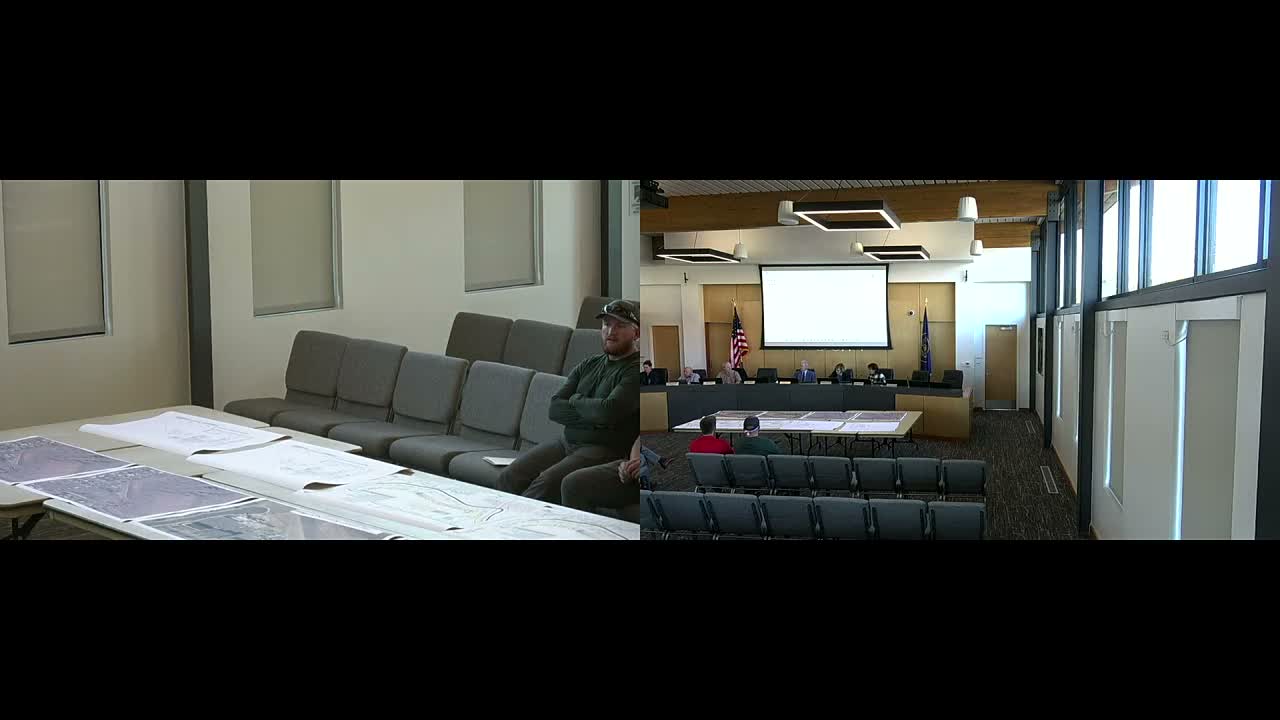
At a Nov. 7 work meeting, the Ivins City Council discussed two paths to address strained facilities: optimize the existing public works yard and animal-shelter site, or relocate the yard to roughly 80 acres of BLM land near Fitness Way and Highway 91. Mayor (speaking as Mayor) told the council the session’s purpose was to “digest and discuss” options rather than make a final decision.
Chuck, the staff presenter, described a color-coded plan for the BLM site and a phased approach for the yard’s move. “We're talking about between, 5 and 7,000,000, basically, to move the yard down to the site,” Chuck said, outlining off-site access costs (~$600,000), grading and fencing, and vertical building options (masonry versus metal) that produce the $5–7 million range depending on finish and scope.
The council framed the animal shelter as the meeting’s urgent driver. Council member Sharon Gillespie emphasized the shelter’s exterior concrete and kennel needs and said she and others had brought photographs documenting the site’s condition. The mayor said interior and storage work on the shelter would be a “sizable” project and that his own rough estimate for the interior/storage tie-in is about $500,000 if fully contracted. Staff later clarified a near-term scope for shelter and associated parking would likely be in the $700,000–$750,000 range when combined with related sitework.
Cemetery capacity was a second pressing near-term concern. Mark, a city staffer who monitors cemetery inventory, told the council, “We need grass cemetery plots yesterday. We have 1 left in the grass as far as traditional. We sell about 70 a year or so.” Staff said a proposed new grass section at the BLM-adjacent park would offer roughly 300 plots; a new desert-style section contains roughly 4–500 plots. Converting existing desert plots to grass would require redoing irrigation and be similar in scope to building a new grass section.
Councillors and staff discussed timing. Chuck and other staff estimated that obtaining access to the BLM parcel and beginning design could take six months to a year, with two to 2.5 years from design to finished construction; the mayor said a conservative end-to-end schedule might run three years. By contrast, performing the immediate animal-shelter concrete replacement and the parking reconfiguration on the existing site could be completed in roughly nine to 12 months if prioritized and staffed or contracted.
Funding and trade-offs figured prominently. Finance staff pointed to a capital plan that includes roughly $3.3 million over five years but noted one scenario to cash-flow a full yard relocation would rely on using roughly $4.6 million of water-fund savings (enterprise funds), a move that prompted concern from council members about diverting replacement reserves for water infrastructure. Council discussed alternatives: reprioritizing capital projects, seeking a development agreement and grants for access, using impact fees, or phasing projects to spread costs.
Council members also explored interim relief measures that would reduce pressure on the existing yard: creating additional parking on 200 West (estimated under $200,000), remodeling the west portion of the fire station to free vehicle bays (roughly $200,000), or shifting dumpsters and some fleet functions later if the full relocation proceeds.
Staff offered additional cost detail for cemetery amenities: a modest columbarium or retaining wall ranges from about $64,000 (40-foot example) to roughly $105,000 for a larger unit, and a new grass section was estimated at approximately 300 plots and roughly $244,000 in construction costs for a comparable previous section.
Next steps: the mayor asked staff to return with a phase-1 implementation and financing plan aimed at a roughly $1.25 million target to cover the most immediate needs (parking, animal-shelter work, and fire-station relief). The mayor said the item will appear on the next city council meeting agenda for more detailed discussion and possible decisions. A motion to adjourn was made and seconded, bringing the work meeting to a close.
Why it matters: the council must balance urgent public-safety and community needs (animal shelter and limited grass cemetery plots) against a multi-million-dollar capital choice with multi-year timelines and potential impacts to other enterprise reserves. The next council meeting will be the vehicle for prioritizing and identifying the funding path.