Get Full Government Meeting Transcripts, Videos, & Alerts Forever!
Get email alerts on the Student Learning Project topic
No spam. Unsubscribe anytime.
James A. Long fourth-graders present podcast exploring whether robots will replace jobs
Summary
Fourth-graders at James A. Long Elementary researched careers and role-played in a podcast project, concluding many students expect humans and robots to work together rather than robots wholly replacing jobs, their teacher and the superintendent said on The Pulse.
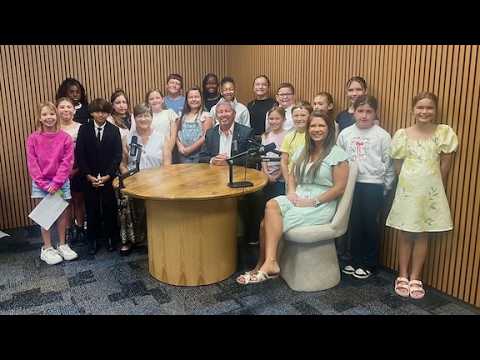
On an episode of The Pulse hosted by the Putnam County School District superintendent, fourth-grade students from James A. Long Elementary presented a classroom project titled "Will a Robot Do Your Job?" that combined research, writing and role-play.
Teacher Jessica Arnold described the project’s structure: students selected careers they want, researched required education, salary and benefits, wrote essays expressing their perspective on whether the job would be automated within 10 years, and then created a podcast in which classmates played assigned roles such as robot designer, factory worker, factory owner and news reporter. "They had to write an essay with their own perspective on that topic and then make a prediction about whether their job would be taken over by a robot within the next 10 years," Arnold said.
Students described what they learned and why the project mattered. Charlie Freeman said he enjoyed "finding out, like, if robots will take jobs and what they can help about, like, with our jobs and stuff." Several students said they would become teachers, veterinarians, construction workers, athletes and artists; Arnold said students worked together in home groups organized by career area to support each other’s research.
Both Arnold and host Rick Sernsey emphasized that the project tended to produce a focus on human–robot collaboration rather than replacement. Arnold said many students "leaned towards the side of we need to figure out how humans and robots can work together," and Sernsey said while AI is changing work, "nothing replaces a human being as far as interacting and making that personal connection."
The project used Cambridge program resources to assess automation risk and incorporated classroom literacy materials. Arnold noted students give up recess on Friday and spend early-release days on extended work for the challenge. The host also described an educational assistant called "Emera," a small one-on-one bot used in younger grades to support pronunciation and engagement, which the district uses alongside live teachers.
The episode concluded with congratulations to Arnold for being named Teacher of the Year. The podcast is a descriptive account of classroom practice; no formal policy changes or board votes were recorded during the episode.