Putnam County pilots Cambridge 'Global Perspectives' with elementary bridge program
Summary
Putnam County School District is piloting Cambridge’s Global Perspectives in four elementary schools to introduce research, evaluation and global-thinking skills early and to bridge toward the ACE diploma at secondary levels, district staff said on the district podcast The Pulse.
Rick Sernsey, host of the Putnam County School District podcast The Pulse and identified in the audio as the district superintendent, opened an episode about classroom innovations and invited district staff to describe a pilot expansion of Cambridge’s Global Perspectives into elementary grades.
Shelly Rayburn, Acceleration Pathways Coordinator in the Department of Strategic Initiatives, said Global Perspectives is taught at the secondary level and is one of the required ACE diploma exams; the district experimented this year with a pilot to introduce the course frameworks earlier. "We decided that we wanted to bring this opportunity to our elementary schools and allow a pilot type program to see how it would go having our elementary students start," Rayburn said, adding the curriculum teaches students "research and evaluation" and how to consider "issues across the world" from many perspectives.
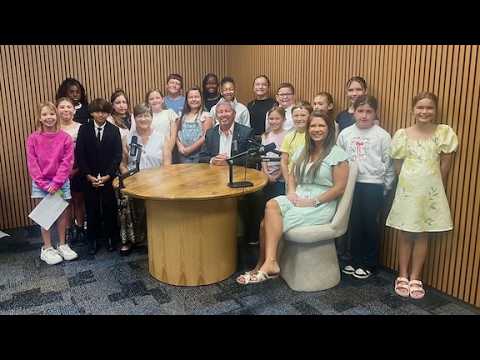
Jessica Arnold, a fourth-grade teacher at James A. Long Elementary School, described classroom implementation and student engagement. Arnold said students give up recess on Fridays and use early-release days to work on Global Perspectives challenges, and that the pilot integrates research with existing reading curriculum. "They had to write an essay with their own perspective on [robots and jobs] and then make a prediction about whether their job would be taken over by a robot within the next 10 years," Arnold said, describing the district’s approach to blending literacy and inquiry.
Rayburn identified four elementary sites that participated in the Cambridge elementary pilot this year: "Middleton Boerne, Jenkins Elementary, Kelly Smith, and James A. Long." She said projects across the sites included water-conservation challenges, questions about human–animal coexistence, and investigations of packaging supply chains tied to students’ everyday experiences.
District leaders framed the pilot as a way to build early skills that feed into secondary ACE diploma requirements and to develop students’ collaboration, presentation and critical‑thinking abilities. Rayburn and Arnold both said the pilot increased student research skills and engagement; Rayburn called the work "an incredible opportunity" and said the district will use the pilot to inform whether to expand the program.
The episode closed with the superintendent congratulating Arnold on her Teacher of the Year recognition and thanking participating students and staff. No formal district action or vote was recorded on the podcast; staff described the effort as an instructional pilot under classroom and district oversight.
AI generated
The text on this page is AI generated. Summaries, highlights, analysis, and video transcripts are all produced from the original source material.
AI can make mistakes, so if you spot one, and we will fix it for everyone.
Note: the source content is unaltered by us. Any content source we link to, be it a video, an audio recording, or a document, is presented exactly as its publisher released it. That publisher is usually a government body, sometimes an individual official or another organisation.