Get Full Government Meeting Transcripts, Videos, & Alerts Forever!
Get email alerts on the Education topic
No spam. Unsubscribe anytime.
Special‑education teachers describe expanded work‑experience programs, $2,940 grant for detailing course
Summary
Marshall Public School District special‑education teachers told the board they have expanded a three‑year progression of work‑experience classes (10th–12th grades), run a student enterprise called Tiger Cafe, and secured a $2,940 grant to add an automotive detailing enrichment opportunity.
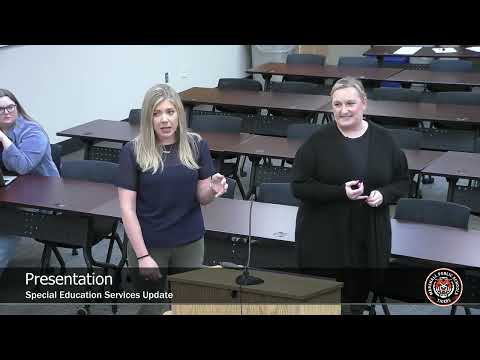
Nicole Jans, a special education teacher at Marshall High School, and Gretchen Seltzer, also a special education teacher, told the Marshall Public School District board that the district has expanded hands‑on work‑experience opportunities for students with disabilities.
The teachers described a three‑year progression: basic work skills in 10th grade, employability in 11th grade and a transition/community jobs course in 12th grade designed to tie IEP goals to practical tasks. "The mission of the Marshall Public School District is to educate, support, and prepare all learners for success," one board member read as Jans and Seltzer outlined how the curriculum connects to that goal.
Why it matters: Board members said the program gives students real‑world job exposure and raises their chances of employment after graduation. Jans and Seltzer said hands‑on placements give students opportunities to apply learned skills — from filling napkin dispensers to preparing food — and to practice soft skills such as teamwork and timekeeping.
Details of the program: Jans said students attend off‑site placements twice weekly at a regional campus dining service operated by Chartwells, where tasks have grown in complexity each year. She said the partnership with Southwest Coaches has allowed short bus‑cleaning shifts (about an hour) where students sweep and clean vehicles and offices; Jans said the district used Tiger Cafe funds to buy supplies and personal protective items for students to use while working.
The teachers described Tiger Cafe as a largely self‑sustaining student enterprise that builds budgeting, money‑management and customer‑service skills. "We keep our costs low," a presenter said, adding that students use Tiger Cafe coupons as positive behavior supports in classrooms and sometimes deliver teacher appreciation orders.
Grant and curriculum funding: Jans announced the program received a $2,940 grant from a family collaborative to purchase equipment for an automotive detailing enrichment opportunity. She said approximately $1,500 of that grant will pay for the Next Step curriculum used in employability classes, which the presenters described as a comprehensive program tailored for students with disabilities.
Opportunities and limits: The presenters said some students are paid through the private industry council when funds are available, but that council funding fluctuates. They also said the Next Step curriculum includes modules on job applications, interviewing and transition‑resource connections for after high school. Board members discussed whether parts of the curriculum could start earlier than 10th grade but noted schedule constraints in middle and ninth grades.
What comes next: Jans said the district will continue cultivating partner relationships (for example, with a local thrift store now managed by the YMCA) and pursue ways to match students with paid summer positions when possible. Board members thanked the presenters; no board action was requested at the meeting.