Get Full Government Meeting Transcripts, Videos, & Alerts Forever!
Get email alerts on the Maternal Recovery Housing topic
No spam. Unsubscribe anytime.
Roanoke program uses insurer and opioid-abatement funds to open maternal recovery home, residents say it restores hope
Summary
A maternal recovery home in Roanoke, The Grove On Patterson, combines substance-use treatment, prenatal care from Carilion and peer support; presenters said Aetna and the Opioid Abatement Authority provided a $400,000 grant to establish the house, and participants described regained self-worth and parenting supports.
Presenter said Roanoke City faces acute needs — "we have the highest number of kids in foster care" and a neonatal abstinence syndrome rate "two and a half times" higher — and argued the community cannot "just accept what is" and must take steps to keep mothers and children together.
Staff member said the project secured funding after outreach to Aetna: "We think we can get it for $400,000 all in," and later, "I have a grant for you for $400,000." The speaker credited "the generosity of Aetna and the Opioid Abatement Authority and others" for turning the idea into a physical home.
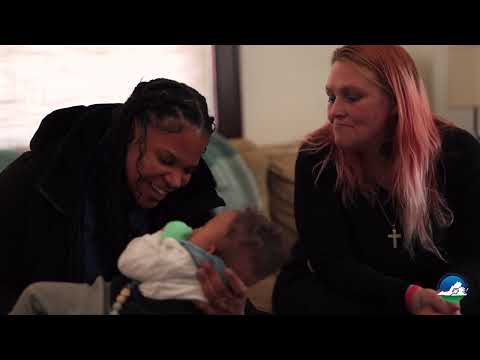
Presenter described The Grove On Patterson as a site that "brings together substance use disorder treatment and those supportive services," including prenatal and maternal health from Carilion, plus on-site or nearby community resources. "The moms here at The Grove and their babies need to know that this is a place where they can rest, feel safe, and where they are gonna grow," the Presenter said.
Two program participants gave first-person accounts. Resident 1 described staff encouragement and program requirements: "miss Ali, miss India, they all told me every day that I was worth it... And then I got my certificate." Resident 2 said the program offered respite from "guilt and shame" and guidance in learning to live and parent again: "we get to be on a journey, on their journey every step of the way."
The Presenter framed pregnancy as a common trigger for seeking recovery: "There's this moment when a woman who is using drugs becomes pregnant... they do it for their baby initially. And then... it becomes for themselves while they're here." The presentation emphasized trust-building through peer recovery specialists who share lived experience.
Speakers framed parental separation as highly harmful: "Parental separation from children is, so harmful. It is a primal wound that children never get over," the Presenter said, as part of an argument that keeping families intact is a central aim of the program.
The staff speaker said the initiative aims to change outcomes across generations: "we have made an impact on the current generation and the next generation... if we can help these little ones, then hopefully their children will never find themselves in that same place either."
The presentation did not record formal votes or policy actions. Organizers attributed initial funding and partner clinical services to Aetna, the Opioid Abatement Authority and Carilion; the transcript did not specify contract terms, ongoing operating budgets, or enrollment limits.
The Grove On Patterson, as described in the presentation, combines treatment, prenatal and maternal care, peer support and housing to keep mothers and infants together; staff and residents said they see the model as a way to break intergenerational cycles linked to substance use.
The program's next steps, as stated in the presentation, focus on providing housing and services and continuing outreach to funders and clinical partners. The speakers did not state a formal timeline for operations or specific metrics for success.