Get Full Government Meeting Transcripts, Videos, & Alerts Forever!
Get email alerts on the Higher Education Financial Aid topic
No spam. Unsubscribe anytime.
Sen. Scott Martin: Grow PA scholarship offers up to $5,000 to students who commit to work in Pennsylvania
Summary
Sen. Scott Martin described Grow PA as a state scholarship program that awards up to $5,000 to students in designated high-demand fields in exchange for a commitment to live and work in Pennsylvania for 12 months per grant year; he said the program drew roughly 11,400 applicants in year one, with about 5,900 receiving funds.
Sen. Scott Martin, a Republican representing Pennsylvania's 13th Senate District, described Grow PA as a state scholarship and retention program that offers students up to $5,000 per year to pursue majors the Commonwealth labels "high demand," provided recipients commit to living and working in Pennsylvania for 12 months for every year they accept the grant.
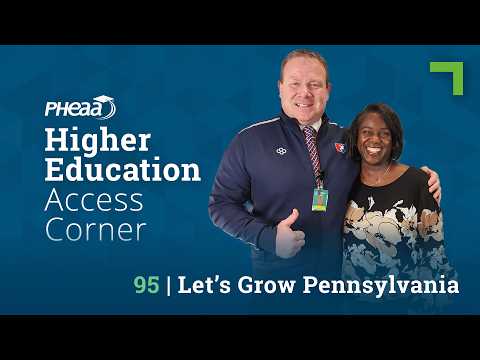
Martin, who helped sponsor the legislation, said the program is intended to counter demographic decline and fill workforce gaps. "We wanted to invest in our kids where there's actually a return," he said on the Higher Education Access Corner podcast. He said lawmakers passed the measure with large bipartisan margins; in the interview he described the roll call as "50 to nothing" in the Senate and "203 to nothing" in the House.
The senator said the program's first-year intake was substantial: he estimated roughly 11,400 applicants and the host cited about 5,900 students who received funding in the 2025—26 academic year. Martin cautioned the figures are approximate and said recipient students represented more than 100 schools. "To see a bill pass the general assembly, you know, 50 to nothing in the senate and 203 to nothing in the house," he said, adding that the initial takeup helped secure additional funding in subsequent state budgets.
Martin outlined core program mechanics: the grant is available to students enrolled in majors on a published high-demand list; recipients who accept funds must commit to working in that field and residing in Pennsylvania for 12 months for each year of grant support. "If they're working in a high demand area, then they will never have to pay that $5,000 for a year back," he said, describing the workforce-retention element as a repayment alternative tied to employment.
He also described a companion tuition-waiver program that uses the same list of high-demand programs but provides in-state tuition rates (rather than direct grants) for eligible students attending in-state institutions.
Martin credited outreach partners and on-campus counselors for spreading the opportunity but said promotion was uneven: some schools did not prominently post program information on their websites, which prompted outreach efforts to ensure counselors and students saw the opportunity. He praised the work of the application administrator team that supported rollout and troubleshooting during year one, while noting the transcript referenced that team as "FIA" without expanding the acronym on the recording.
Context matters, Martin said: he cited a recent executive action by Governor Josh Shapiro that removed degree requirements for many state jobs as evidence that employers and government are reconsidering credential definitions, making pathways other than four-year degrees important to workforce planning.
On advice to students, Martin urged exploration: "Expose yourself to as many different types of career paths ... ask questions," he said, adding it can be acceptable to start in one area and later shift into another. He also encouraged families and counselors to consult the program resources available at pheaa.org and the administrator sites referenced on the podcast.
The episode closed with a reminder that the application for the upcoming 26—27 academic year was open and a request that schools and counselors promote the program to students.