Get Full Government Meeting Transcripts, Videos, & Alerts Forever!
Get email alerts on the Arpa Reallocation topic
No spam. Unsubscribe anytime.
Finance committee divides over ARPA reallocation; holds decision for further talks
Summary
Committee debated three competing reallocation proposals for roughly $6.17 million in unspent ARPA funds, including $300,000 for a guaranteed-cash maternal stability pilot and more than $300,000 for right-to-counsel eviction defense. Members split over concentrating funding vs. spreading it across youth jobs, energy upgrades and down-payment assistance; the committee held the item for another meeting.
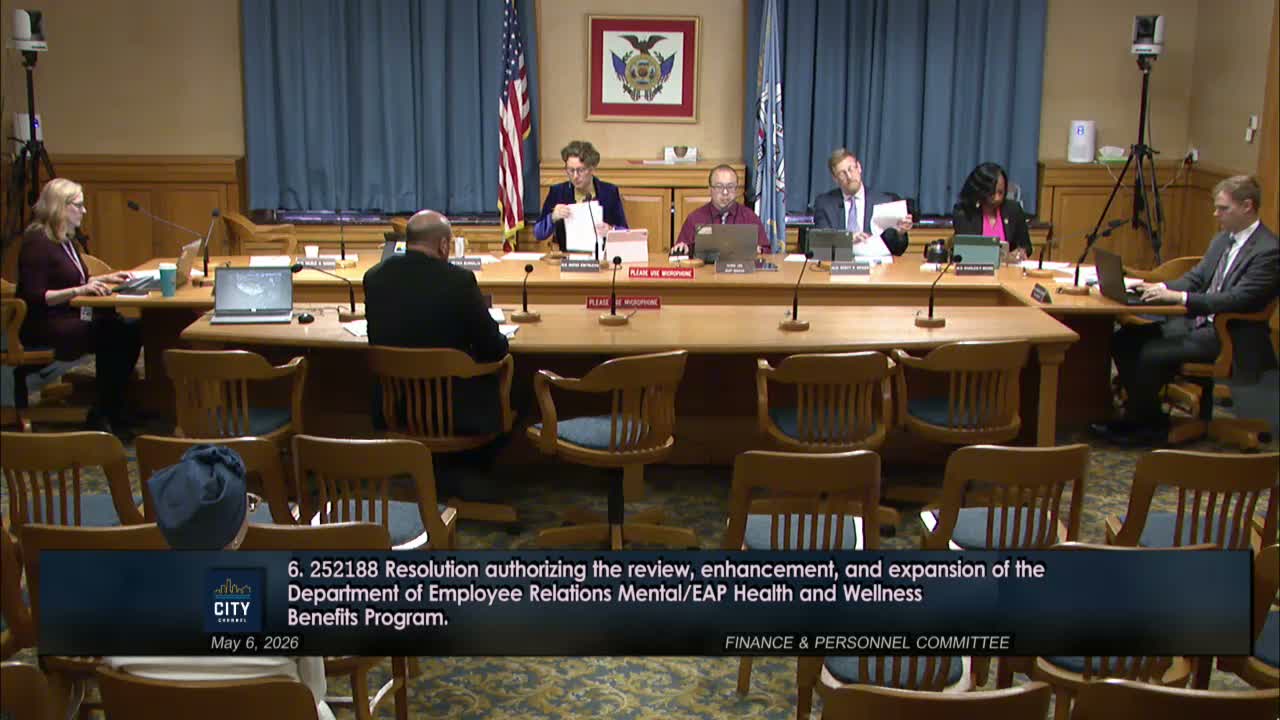
The City of Milwaukee's Finance and Personnel Committee spent much of its May 6 session debating how to spend roughly $6.17 million in remaining American Rescue Plan Act funds, dividing sharply over whether to concentrate the money on a few proven programs or spread it across many smaller initiatives.
Committee members first considered "Substitute A," which would have directed $300,000 to the Bridal Project (an unconditional-cash program for pregnant Milwaukee residents) and $317,214 to the Legal Aid Society's Eviction Free MKE right-to-counsel program. The Bridal Project's local representative, identified at the meeting as Ms. Bishop, told the committee the program produced a 67% drop in housing instability in its evaluation and that the Zilber Family Foundation has committed to cover 150 of 200 planned participants. "Receiving consistent monthly income gave me stability for the first time in a long time," the program read on behalf of a participant.
Legal Aid's Colleen Foley described what the program does in court and afterward: "In 2025 we served 2,088 city residents," she said, adding that eviction default rates fell and that the program has served more than 31,000 individuals since 2021. Foley cited an independent evaluator (Stout) that found a $4.66 return for every dollar invested.
Because members could not agree on the full Substitute A package, the committee divided it into two votes (one for the Bridal Project and one for Eviction Free MKE). The clerk recorded roll calls on each piece; the chair later announced that Sub A would not move forward as a single substitute at that time.
Sponsors then offered an omnibus alternative, "Substitute E," that would spread funding across eviction prevention, the Bridal Project (at a reduced level), youth employment programs (Employ Milwaukee's Earn & Learn and the city's SYIP placements), energy-efficiency housing retrofits tied to lead abatement, and a down-payment assistance allocation. Proponents argued the E package reaches more neighborhoods and priorities; opponents said splitting dollars reduces the impact of proven programs.
A central procedural point for members was ARPA's timing: administration staff confirmed that funds must be spent by the end of 2026 and that projects generally should be previously ARPA-funded or be substantially the same activity to qualify for reallocation. Committee members pressed sponsors and department leads for evidence that recipients could spend the new dollars before the federal deadline; program leaders said they had plans to do so and described past drawdowns.
After hours of testimony and questioning, members chose not to adopt Substitute E on the spot. Instead they voted to hold the item to the call of the chair to allow sponsors and administration to reconcile priorities and deliver precise spending and implementation details in advance of a special follow-up meeting. The chair said she would convene the special session so the council can act promptly and avoid losing the funds.
What's next: Committee sponsors and budget staff will work to clarify which projects already meet ARPA eligibility rules, provide precise estimates of slots or households served by the proposed allocations, and return to a special finance meeting before the full Common Council takes up the file.