Get Full Government Meeting Transcripts, Videos, & Alerts Forever!
Get email alerts on the Zoning Committees topic
No spam. Unsubscribe anytime.
Dearborn County to create citizens review committee to study solar, battery storage and data center zoning
Summary
Commissioners reviewed a draft resolution to appoint a citizens review committee to evaluate proposed zoning changes for solar energy systems, battery storage and data centers; staff will produce a revised resolution and application and commissioners discussed a smaller committee (six appointees plus a commissioner) and public‑record and Open Door Law implications.
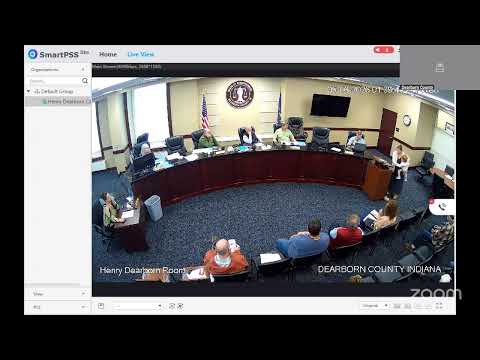
A staff member presented a draft resolution May 6 establishing a citizens review committee to examine proposed amendments to the county zoning ordinance for solar energy systems, battery energy storage systems and data centers. The committee would make nonbinding recommendations to the Dearborn County Board of Commissioners and report monthly to the Board.
The staff member said the committee’s duties would include reviewing Planning and Zoning’s proposed changes to Article 19 and any new article on data centers, and invited technical experts and state agencies to advise the group. The draft calls for meetings to be open to the public, compliance with the Indiana Open Door Law and the Indiana Access to Public Records Act, and an automatic dissolution upon ordinance adoption or the expiration of current moratoriums on Feb. 24, 2027.
Commissioners debated composition and selection. One commissioner proposed a smaller panel—six appointed citizens plus a commissioner as the seventh member—rather than the planning commission’s earlier 11‑member model, citing attendance and manageability concerns. Staff proposed an application form and outreach through the county administrator to identify interested residents and to record whether applicants are “pro,” “against” or “neutral” on solar, batteries and data centers to help balance appointments.
The Board discussed procedural safeguards: whether meetings held in the commissioners’ meeting room must be livestreamed, that committee email exchanges and application materials would be public records, and the draft’s provision that committee meetings would not include an in‑person public comment period but would accept written or emailed input for distribution to members.
Staff was asked to revise the resolution and prepare an application for commissioner review at the next meeting. Commissioners said they may call special meetings if needed to review Planning and Zoning submissions within the statutory 90‑day review window once recommendations are certified.
Public comment at the meeting addressed selection safeguards and representation. One resident suggested requiring a threshold number of resident signatures for committee nominations to demonstrate community support; another landowner urged that the county include outside technical experts and seek a balanced panel; a resident urged that leaseholders who would profit from solar not serve on the “pro” side and raised fire‑fighting and safety training concerns for local responders.
Next steps: staff will circulate an updated resolution and a draft application for commissioner review; the commissioners will decide the final composition and appointment process.