Get Full Government Meeting Transcripts, Videos, & Alerts Forever!
Get email alerts on the Land Use Car Wash topic
No spam. Unsubscribe anytime.
Planning commission approves Stone Creek Quick Quack after heated debate over traffic and safety
Summary
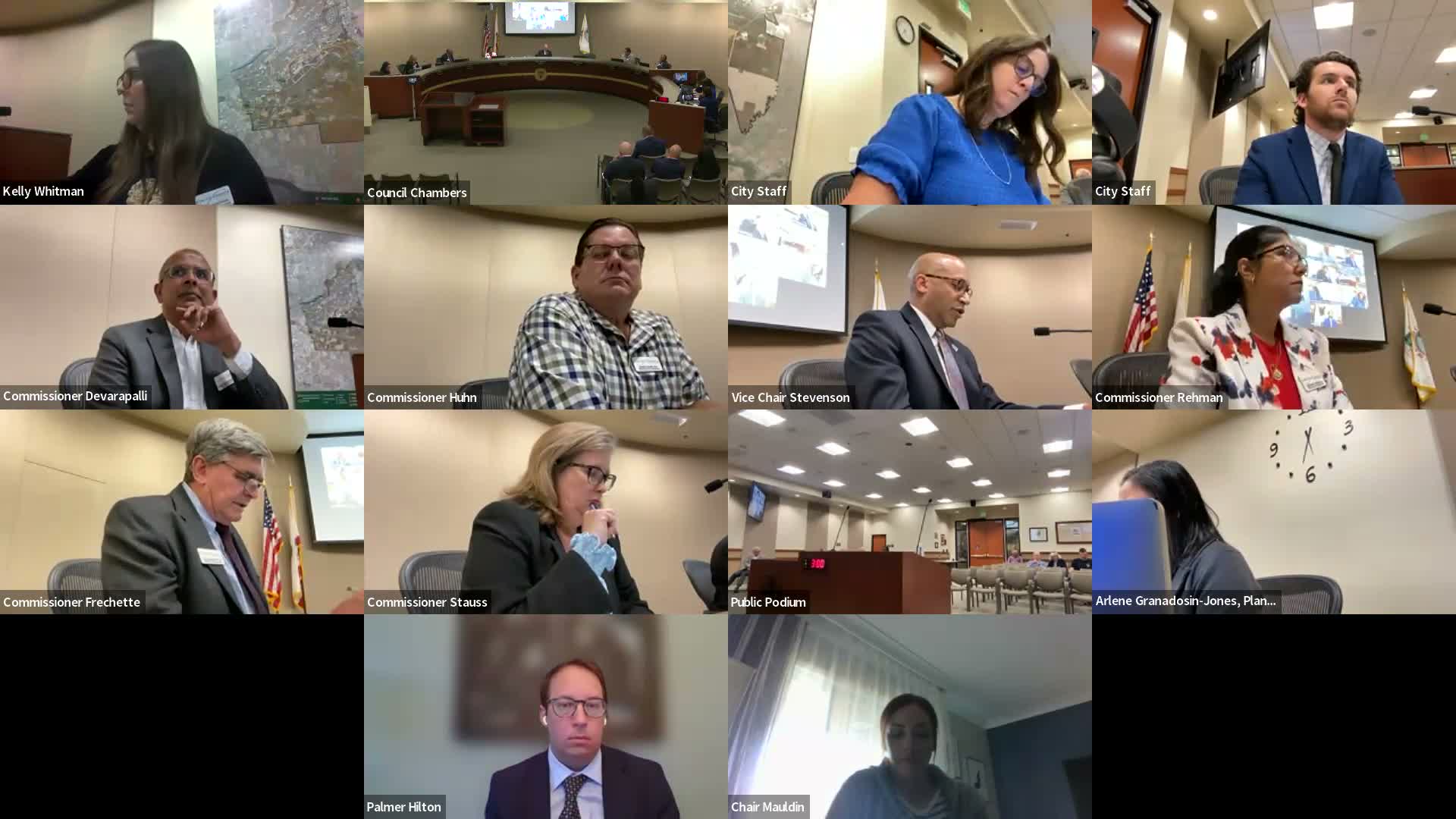
The Rancho Cordova Planning Commission voted 4-3 to adopt prior findings of approval for a Quick Quack car wash at Stone Creek Village, reversing an earlier tie and after weeks of dispute over trip-generation figures, internal circulation and neighborhood impacts.
The Rancho Cordova Planning Commission voted 4-3 on April 8 to adopt findings of approval for the proposed Stone Creek Quick Quack car wash, resolving a previous 3-3 split and setting conditions the commission said would mitigate traffic and noise concerns.
Staff presented the item as a follow-up to the Feb. 25 meeting, telling commissioners the project site is a 1.3-acre commercial pad in Stone Creek Village Shopping Center with a proposed 3,300-square-foot car wash, a 108-foot wash tunnel and two queuing lanes. Chance Finley Ross of the city planning division said the commission had directed staff to return with findings of denial after an earlier motion to approve failed for lack of a majority; staff nevertheless included the prior approval findings for the commission’s reference.
Opponents, including Stone Creek resident Steven Davis, urged denial in public comment. “Stone Creek is already a highly congested area,” Davis said, adding concerns about increased wait times, safety for children walking to nearby schools and months of construction disruption. Davis questioned the traffic and noise analyses and pointed to other nearby car-wash locations.
The technical dispute centered on trip-generation estimates. Project traffic engineer Armin Hovanesi said the team used the Institute of Transportation Engineers (ITE) trip-generation rates, reporting a net daily increase of 457 trips and a total of 913 trips without a pass-by discount; he also noted that ITE provides an average rate and that Quick Quack’s business model generally projects about 400–450 daily customers. Hovanesi said comparisons with the originally contemplated gas station show the car wash would generate fewer trips in peak hours than the gas-station scenario.
Commissioners pressed staff and the applicant for clarity about how many vehicles would use the site, how many trips would circulate through the shopping-center interior and whether pedestrian safety in the lot had been analyzed. The traffic consultant said on-site queuing for the Quick Quack pad was evaluated and a nine-hour pedestrian survey recorded 90 pedestrian trips (45 people) with no observations the surveyors judged to be safety concerns.
Questions also probed drainage and noise. An engineer for the project described an on-site source-control design directing wash water to internal floor drains, then to 1,500-gallon reclaimed tanks and sand/oil interceptors before discharge; the team said tank maintenance would take place on a quarterly schedule. The applicant said blowers and vacuum equipment would be enclosed to meet the city’s decibel thresholds; a resident disputed the 58-decibel figure in the report.
Commissioner Frechette raised a procedural concern about returning the item after a tie vote in February; the city attorney explained that staff had been directed to prepare denial findings to avoid leaving the matter unresolved and potentially vulnerable to challenge, and that the commission could still vote to approve.
After deliberation, a motion to adopt staff’s denial findings failed on a 3-4 vote. A subsequent motion to adopt the February findings of approval passed 4-3 in a roll-call vote. The clerk recorded the votes as follows: Commissioner Deborah Polley — yes; Commissioner Fischet — no; Commissioner Hune — nay; Chair Malden — yes; Commissioner Raymond — yes; Commissioner Stoss — no; Vice Chair Stevenson — yes.
The approval adopted conditions and directed staff to finalize the permit documentation and any compliance monitoring required by the city’s standards. The commission closed the public hearing, offered brief final comments and adjourned at 6:43 p.m.
The matter may return to staff or to the commission only if implementation or monitoring shows the need for further action; commissioners noted options such as equipment enclosures, limits on operating hours and on-site queuing controls as ways to mitigate potential impacts.