Get Full Government Meeting Transcripts, Videos, & Alerts Forever!
Get email alerts on the Housing Homekey topic
No spam. Unsubscribe anytime.
Residents, advocates urge Riverside council to reconsider rejection of Homekey funds for University Terrace project
Summary
Dozens of residents and advocacy groups urged the Riverside City Council to reverse its decision to decline roughly $20.1 million in Homekey funds for a supportive-housing project called University Terrace, warning of legal and fiscal consequences and pressing the council for a concrete housing plan.
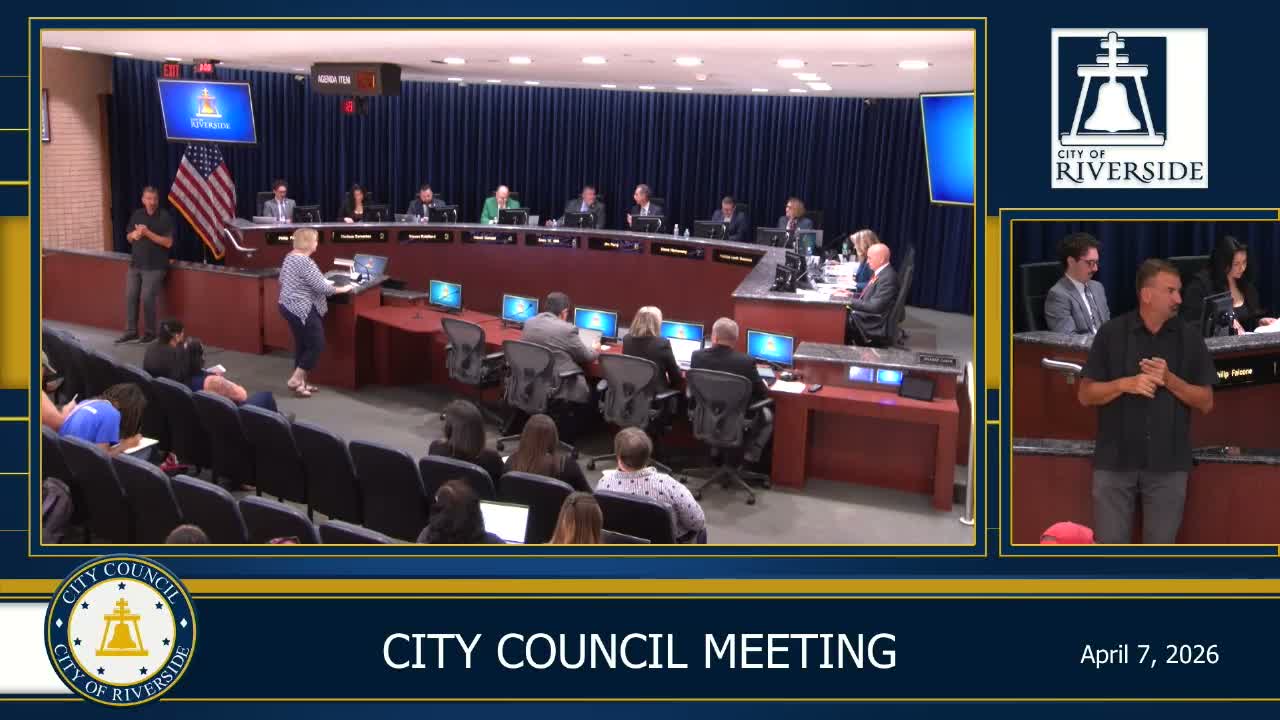
Dozens of Riverside residents, tenants and legal advocates urged the City Council on April 7 to reconsider rejecting a Homekey grant the public said would have funded supportive housing at the University Terrace site.
Speakers at the public-comment period repeatedly said the state had offered about $20.1 million for the project and argued that accepting the funds would provide permanent homes and supportive services for vulnerable residents. "It is not a warehouse for the homeless. It is a community of homes for people who need a little extra help," Becky Watley told the council, urging members to change course.
Legal advocates and service providers pressed the council on the city’s statutory obligations. Ugochi Anabara Nicholson, a staff attorney at the Public Interest Law Project, cited government-code sections and argued Housing First and supportive housing are cost-effective: she said studies show about $20,000 per unit for housing plus services compared with higher public costs for emergency responses. Nicholson also warned that public statements stigmatizing unhoused people cannot be the lawful basis for rejecting a project.
Faith and community leaders described personal visits to Housing First projects and urged officials to accept the grant. "This is a housing-first project...114 permanent homes for low-income seniors and veterans," Adam Wedekind said in his remarks, calling out prior council votes and warning that three legal organizations and the California Department of Housing and Community Development (HCD) had raised formal concerns.
Multiple speakers warned the council that rejecting the funds could cost Riverside grant eligibility and local control. Dan Hawksworth said he had spoken with HCD and cautioned that loss of the city's pro-housing designation could jeopardize other grants, including a $1.44 million award mentioned during public comment.
Several people who said they were unhoused or formerly unhoused described barriers to services and asked the council to accept funds that would house people directly. "I live in my car now," Jennifer Sampson said, asking the council to reconsider for residents whose lives could change with the funding.
Speakers and some council members referred to legal notices and a possible HCD inquiry; no council vote to reconsider the decision took place during the meeting. The mayor limited in-person public comment to a total of 45 minutes because interpreters were available only for part of the afternoon. After public comment the council moved on to other business and then adjourned to closed session.
Why it matters: Speakers said the contested decision affects Riverside’s ability to meet state housing obligations and could have long-term fiscal and legal consequences for the city. They asked the council either to reverse the vote or produce a concrete, time-bound plan to address regional housing needs.
What’s next: Public speakers urged a council member who previously voted no to call for reconsideration; the council moved into closed session for matters including litigation but did not act publicly on the Homekey funding during the meeting.