Get Full Government Meeting Transcripts, Videos, & Alerts Forever!
Get email alerts on the Taxation Roll Corrections topic
No spam. Unsubscribe anytime.
Plumas County board asks staff to triage 180 pending tax roll corrections after auditor flags improper R&T codes
Summary
Auditor Controller told the board ~180 roll corrections are pending because the assessor applied R&T codes the auditor says lack statutory authority; the board asked an ad hoc team (assessor, auditor, treasurer/tax collector and consultant Christy Redmond) to prioritize oldest corrections and return with a plan before June 30.
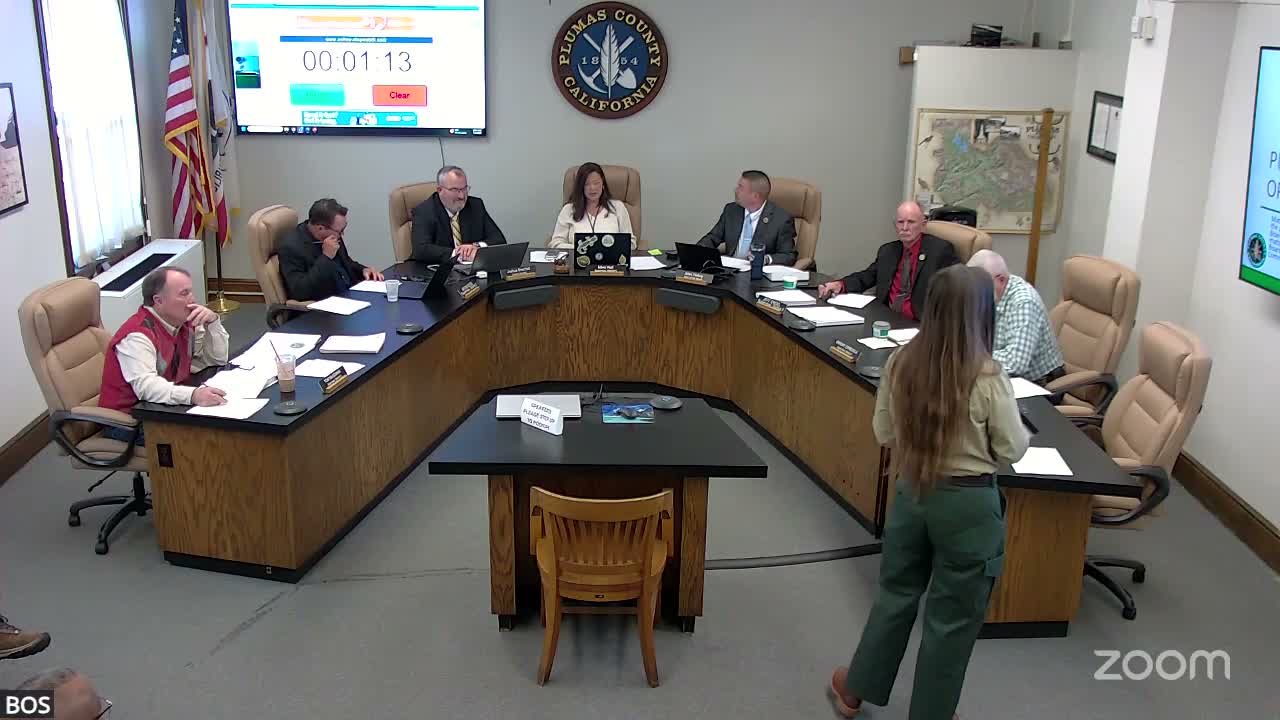
Plumas County’s auditor‑controller told the Board of Supervisors on May 5 that roughly 180 pending roll corrections are held up because they lack the revenue and taxation (R&T) code language the auditor needs to legally process refunds or corrected bills. Auditor Controller Marty Nieman said the office cannot proceed “without the correct statutory references” and is seeking board direction so she is not personally liable for processing questionable corrections.
The issue centers on which R&T code sections apply to different types of role corrections. Christy Redmond, a retired Napa County property tax manager the county contracted for technical advice, said supplemental (75‑series) codes apply to changes occurring after the lien date and have distinct payment‑plan and statutory rules compared with the regular role. “Revenue and taxation code is law,” Redmond said. “If you are using a supplemental code… you would not have the benefit of a 4‑year pay plan because 4‑year pay plans are not allowed under supplementals.”
Assessor Cindy Froggatt told the board the assessor’s office had been generating role corrections and applying R&T codes it has used for years; some of the corrections date back multiple years. Froggatt said the assessor’s office had already adjusted the process going forward and that many corrections are individual and require assessor judgment about whether an item is an escape, a change of ownership, or a supplemental adjustment.
Board members pressed both sides for practical fixes. Supervisors and staff agreed the corrections could not all be reviewed at once and that some items will require specialist review. The board asked an ad hoc team — the assessor, the auditor controller, and the treasurer/tax collector — working with Redmond, to develop a prioritized plan that focuses first on the oldest tax years and items approaching statute‑of‑limitation deadlines.
The board’s direction asked the three offices and Redmond to return with a timeline and an implementation proposal, including whether contractor assistance (the county’s tax‑software vendor, Megabyte) should be used for batch corrections. Auditor Nieman told the board she could process corrected records quickly if the assessor supplied the correct R&T codes; the assessor said identifying the correct code for each roll correction is case‑by‑case work that must be done in her office.
Action steps the board requested include: the ad hoc group to prioritize tax year 2022 and older corrections before July 1 so those cases do not lapse; a plan for grouping corrections (e.g., unsecured vs. secured) to achieve efficiency; and a status update at the next board meeting. The auditor also offered to accept written board direction and county counsel opinion to lift personal liability if the board instructs the auditor to process previously coded corrections.
Why it matters: the codes determine taxpayer options (payment plans, refund authority) and the legal basis for the auditor to issue refunds or corrected bills. Staff said failing to correct incorrect codes can create unfair outcomes for taxpayers (for example, loss of an installment plan). The board framed the action as a practical effort to protect taxpayers and the county’s fiscal position while aligning the county’s practices with state guidance.
What’s next: The ad hoc group will meet with Redmond and return to the board with a prioritized plan and a proposed timeframe; the board emphasized starting with the oldest corrections and considering using vendor tools to speed mass corrections.