Get Full Government Meeting Transcripts, Videos, & Alerts Forever!
Get email alerts on the Land Development Code topic
No spam. Unsubscribe anytime.
San Marcos advances major land‑development code overhaul after hours of debate on data centers, food trucks and bar rules
Summary
Council completed a lengthy first reading of broad Land Development Code amendments after intensive debate about definitions for data centers and power generation, whether food trucks can qualify as restaurants or bar‑equivalents downtown, parking rules, and procedures for map amendments. Staff will return with consolidated code markups for second reading.
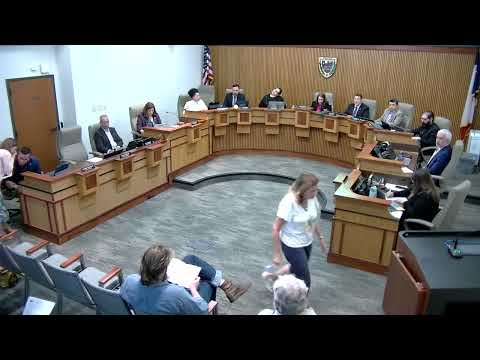
After several hours of line‑by‑line review, the San Marcos City Council advanced a large package of Land Development Code and design manual changes on first reading, adopting multiple staff and council amendments and directing staff to return with consolidated, annotated code text for second reading.
The package tackled a wide range of subjects: new and clarified definitions for data centers and major utilities; whether large power generation or large backup generator systems should be limited to heavy industrial zoning with a council‑approved conditional use permit (CUP); rules for roadway and downtown cleaning obligations for businesses; how food trucks and bar‑style mobile vendors count toward downtown alcohol quotas; and waiting‑period rules for comp‑plan or ‘preferred scenario’ map amendments.
Data centers and utilities: Members expressed particular concern about allowing behind‑the‑meter power generation and very large utility uses without higher‑level review. Public commenters—including local planners and residents—urged that proposed power plants and large on‑site generation be restricted to heavy industrial zones and require a council‑approved CUP; staff agreed to draft a new, explicit land‑use line (and an explanatory subsection) that would separate large electric generation from other "major utilities" so ordinances and the land‑use matrix are not ambiguous.
Food trucks, restaurant and bar permits: Council debated competing goals — supporting small entrepreneurial food trucks and preventing circumvention of downtown bar limits. The Land Development Code committee and staff recommended allowing food trucks to qualify as restaurants in most cases but to prohibit a food truck from meeting the definition of a bar permit (the downtown ‘bar truck’ concern). After extended discussion the council preserved food‑truck ability to qualify as a restaurant in the Central Business Area while approving a separate restriction that would prevent mobile ‘bar trucks’ from counting as a downtown bar permit; that prohibition passed by a narrow vote (4–3) for the bar‑truck carve‑out. Council also rejected a proposal to broadly prohibit food trucks downtown, preserving the status quo on food‑truck permissions.
Process, waiting periods and appeals: Council deliberated on whether a failed motion (insufficient affirmative votes) should be treated as a denial for purposes of a 1‑year waiting period on map amendments and comp‑plan changes. Council members differed over the impacts of the city’s super‑majority thresholds on whether a narrowly defeated proposal should be able to return quickly. Staff and legal agreed to draft clear language and consider carve‑outs for super‑majority situations prior to second reading.
Parking and downtown policing: Council approved making four designated downtown parking spaces permanently reserved for police during evening hours (5PM–3AM), after reviewing a six‑week pilot that produced a small number of warnings/citations and tows; council asked staff to improve signage, stripe the spaces distinctively and coordinate communications with the university and downtown businesses.
What’s next: Staff will return with consolidated, annotated LDC text that incorporates the amendments approved on first reading, clearer definitions for the new power‑generation use, refined language on food‑truck/restaurant/bar distinctions, and clarified waiting‑period rules for map amendments. Second reading is expected when those drafts are available.
Representative quote: "We did not want the food truck to be the restaurant for a bar… a food truck can be gone tomorrow," the mayor said during debate, capturing council concerns about permanence and enforcement.
Reporting note: The council made multiple, narrowly focused edits across chapters; staff committed to a single marked‑up code that will show each amendment and which first‑reading changes will carry forward to the next meeting.