Get Full Government Meeting Transcripts, Videos, & Alerts Forever!
Get email alerts on the Housing Policy topic
No spam. Unsubscribe anytime.
Riverside council adopts University Avenue density‑transfer pilot to unlock housing on city‑owned parcels
Summary
The City Council unanimously approved a pilot program allowing transfer of residential development rights within the University Avenue specific plan corridor, using both a bank and direct‑transfer method to make small city‑owned parcels more feasible for housing development while keeping the corridor's total capacity unchanged.
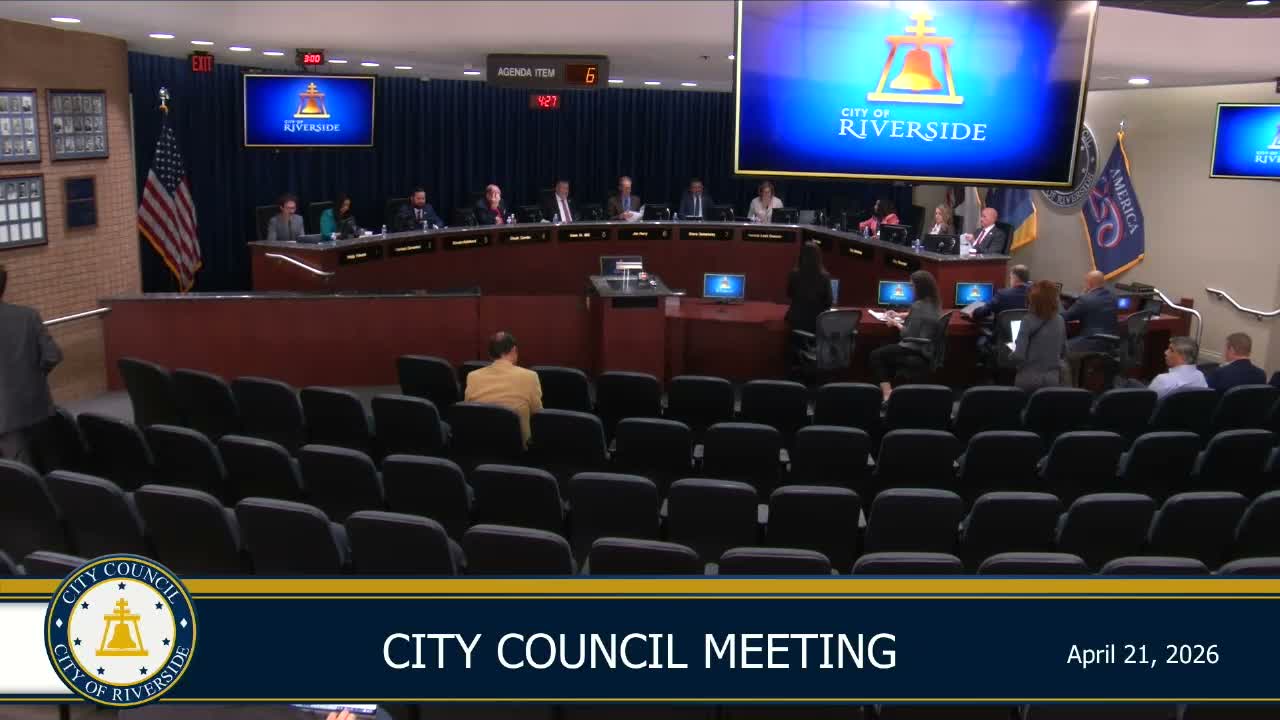
The Riverside City Council voted unanimously on April 21 to adopt a University Avenue density‑transfer pilot program intended to accelerate housing production on small, city‑owned surplus parcels along the University Avenue corridor.
Planning staff described a two‑track approach: a bank method, where underbuilt donor parcels surrender unbuilt residential capacity to a central bank and receiver sites withdraw units; and a direct transfer method, where developers negotiate transfers directly between specific parcels. Clarissa Mangus, assistant planner, said the program will allow donor parcels to record deed restrictions documenting surrendered development rights and will credit withdrawals to receiver parcels only after approval and recording.
Staff told the council the pilot is geographically limited to the University Avenue specific plan corridor and will not change the plan’s total residential capacity (6,819 units). The initial bank will prioritize city‑owned sites when concurrent withdrawal requests exceed available units. Transfers will be recorded and tracked in a program database and staff will return with a one‑year implementation report and a recommendation about continuation.
Councilmember Cervantes praised the staff work and said the pilot is a “creative opportunity” to bring more housing online on constrained sites, noting it had been vetted at the Land Use Committee. The council authorized the program by a unanimous vote; staff will now implement the recording and monitoring procedures and present a report after one year.
The pilot is designed to remove a typical barrier to development—insufficient parcel size or residential capacity—without requiring changes to the general or specific plan. By preserving the corridor’s total allowable units, staff said the transfer mechanism reallocates capacity to make specific projects financially feasible while retaining the plan’s overall buildout assumptions.