Get Full Government Meeting Transcripts, Videos, & Alerts Forever!
Get email alerts on the Landscaping topic
No spam. Unsubscribe anytime.
Council reviews overhaul of county landscaping rules; rural buffering prompts committee review
Summary
Planning staff proposed a rewrite of Article 8(d) to set clear, linear-foot-based planting and buffering standards for commercial and residential districts; rural residents and council members asked for further study of buffering for agricultural subdivisions and the item was referred to committee for more work.
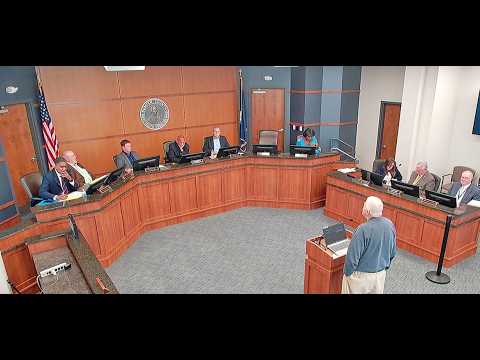
Sumter County planning staff presented a comprehensive replacement to the county’s landscaping standards at the March 24 council meeting that would replace subjective buffers with a clear matrix of planting requirements and defined Type A, B and C buffers.
Helen Rudman, planning staff, told the council the update draws on a 2013 text amendment the county paused and refines it for local conditions, with street landscaping standards of "three canopy trees per 100 linear feet" and a matrix to determine when each buffer type applies. "We're proposing finite planting standards based off of linear footage," Rudman said, adding pictographic examples and an ability for staff to grant waivers for difficult site conditions.
Several council members and residents raised concerns that the draft would leave agricultural subdivisions and other rural areas without mandatory buffering. "A residential subdivision in AC does not have to have a buffer," a council member said, summarizing Rudman’s explanation that agricultural conservation (AC) outside the highway corridor was exempted by design. Tracy Rogers, speaking during the public hearing, urged the council to reconsider buffering and stronger baseline requirements, recommending more community meetings prior to lease signings and suggesting larger setbacks for residential areas.
Council members agreed the ordinance requires additional committee review to address rural buffering and community notification. Planning staff said site-plan review and special-exception criteria still apply in specific cases; the council voted to advance the item to committee for further study rather than finalize the ordinance at this session.
What happens next: Council sent the landscaping replacement to committee for more detailed consideration of buffers for agricultural and residential subdivisions and for further public input.