Get Full Government Meeting Transcripts, Videos, & Alerts Forever!
Get email alerts on the Land Use Zoning topic
No spam. Unsubscribe anytime.
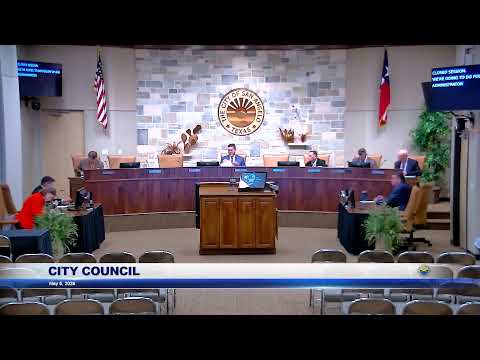
San Angelo council advances data‑center zoning rules after weeks of public concern
Summary
The City Council approved first reading of a zoning ordinance to regulate data centers via a conditional‑use process, directing staff to return with numeric edits on noise limits, residential setbacks, stormwater recapture and fencing. The debate followed extensive public comment raising water, noise and transparency concerns about a proposed hyperscale site.
San Angelo City Council on May 8 approved first reading of a new zoning ordinance that would regulate data centers through a conditional‑use process in light‑ and heavy‑manufacturing districts, directing staff to return with specific numeric edits on noise thresholds, residential setbacks and water‑use provisions.
Planning and Development Director Karen Vannoy said the measure is intended to give the city control over where and how large data‑center campuses can develop. "This is an opportunity for our city to regulate data centers," Vannoy said, describing required site plans, traffic and sound studies, screening and landscaping standards, and a 200‑foot buffer from residential uses in the draft language.
Why it matters: hyperscale data centers can be very large, consume significant electricity and water, and generate continuous noise and low‑frequency hums that neighbors fear could affect quality of life. Several public speakers cited conflicting information about the scale of a proposed Emergent/Skybox campus and pressed the council to impose strong guardrails before any approvals.
Public critics and advocates: During public comment, resident Mark Jackson raised a disputed online capacity figure for the proposed Emergent campus and urged the council to clarify energy consumption. "The new AI data center campus will consume as much power as over 1,000,000 homes," Jackson said, citing a company brochure that listed 1.2 gigawatts and contrasting it with prior city descriptions. Other residents urged wider setbacks, stricter noise and low‑frequency limits, protections for livestock and wildlife, and tighter disclosure around nondisclosure agreements for economic‑development advisers.
Technical input: Consultant Eric Hedd of Westwood Professional Services described the proposed noise standards and low‑frequency metrics the ordinance would require. He said daytime and nighttime decibel limits at property lines would be used along with octave‑band limits for low frequencies and that, in operation, sound engineers would collect ambient baselines and sampling at multiple points to distinguish site noise from roadway noise.
Council response and direction: After extensive Q&A, council members asked staff to return with adjustments including consideration of a 55 dB limit at the property line, additional review of the notification zone for very large parcels, and options for greater setback distances where data centers abut residential (several council members expressed a preference for 300 feet in some circumstances). Council also directed staff to add language encouraging or requiring stormwater capture for landscaping and to clarify fencing and screening standards for sites adjacent to RS/RM zoned properties.
Outcome and next steps: Mayor Tom Thompson moved to approve the ordinance as presented while directing staff to bring the numeric changes discussed; the motion passed on first reading by voice vote, 7–0. Vannoy and other staff said utility‑ordinance items addressing water consumption and discharge will be considered in separate docket items before second reading. The ordinance will return for further review and a second reading with revised, measurable limits and any additional protective conditions the council requests.
Context: The ordinance followed months of community meetings and a planning commission recommendation that added the 200‑foot residential setback and deferred certain fencing decisions to the conditional‑use review stage. Members of the public and some councilors urged more stringent limits for a largely rural West Texas context, while staff said the draft matches many peer ordinances and provides a conditional‑use pathway for site‑specific mitigation.