Get Full Government Meeting Transcripts, Videos, & Alerts Forever!
Get email alerts on the Housing topic
No spam. Unsubscribe anytime.
Indian Wells adopts updated ADU ordinance to comply with new state law
Summary
The council unanimously adopted a revised municipal code amendment aligning Indian Wells’ accessory dwelling unit rules with recent state legislation; staff had previously adopted the changes as an urgency ordinance in December and sought formal adoption to preserve local authority where possible.
The Indian Wells City Council on Jan. 15 adopted an ordinance updating the city’s accessory dwelling unit (ADU) rules to align with recent California legislation.
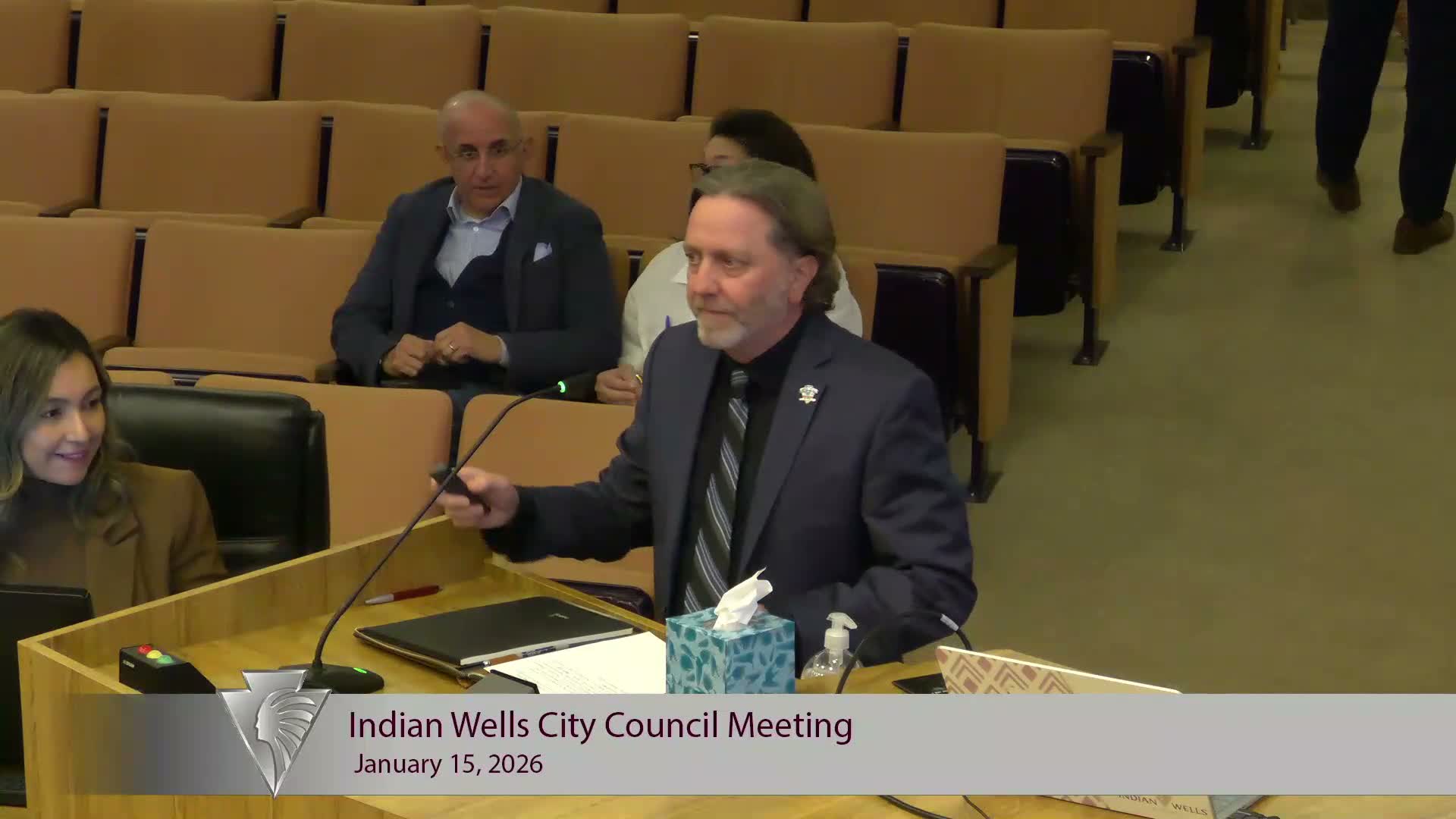
Community Development Director John Berg reviewed the changes required by state law and explained the city’s approach to maximize local control while complying with new statutory requirements. Berg said notable changes included removal of certain owner-occupancy requirements for junior ADUs and clarification that a single-family lot can contain multiple ADU types under recent state rules. He noted the urgency ordinance adopted Dec. 4 must be followed by a standard adoption so the city remains compliant and retains as much local discretion as the law allows.
Council held the required public hearing and then adopted the ordinance unanimously. City Attorney explained the adoption protects local procedures and avoids defaulting to the state’s baseline rules if the city failed to submit a compliant ordinance.
Why it matters: State ADU law has changed rapidly; adopting a compliant local ordinance preserves the city's ability to enforce locally tailored provisions (setbacks and front-yard controls) rather than ceding all authority to the state. The council’s action was procedural but important for planning and development review.
Next steps: Staff will submit the ordinance to the state housing department (HCD) for review and implement administrative updates.