Get Full Government Meeting Transcripts, Videos, & Alerts Forever!
Get email alerts on the Water Rates topic
No spam. Unsubscribe anytime.
Coachella city staff warn Chromium‑6 cleanup could drive double‑digit rate hikes; 07/01/2027 set as implementation target
Summary
A draft NewGen rate study presented to the Coachella City Council shows worst‑case water rate revenue needs that could raise bills by about 131% over five years — driven largely by Chromium‑6 compliance (a draft capital need of $49.1 million). Staff urged preparing a Prop 218 notice as a ceiling while pursuing grants to lower impacts.
City staff and consultants told the Coachella City Council on March 11 that a draft cost‑of‑service study shows large potential water and sewer rate increases if the city must fully fund Chromium‑6 treatment and related capital.
"We're talking worst‑case scenarios about fully funding Chromium‑6 improvements," said Eric Kolokia, partner at NewGen, presenting the draft. The study estimates a water operating shortfall of about $1.6 million this fiscal year and projects a five‑year revenue recommendation that, in the model’s worst case, would require up to a 131% cumulative increase in water rates above today’s levels to cover operating, capital and Chromium‑6 debt service. For sewer, the five‑year projection in the draft points to roughly a 35% cumulative increase.
Kolokia and staff framed those numbers as a ceiling. "This is an initial draft — everything in here is a draft," Kolokia said, adding the study models a $49,100,000 capital need for Chromium‑6 improvements financed at 4% over 30 years as a conservative scenario. Staff said the draft includes additional manpower, asset‑replacement and operation‑and‑maintenance assumptions tied to Chromium‑6 treatment across seven active wells.
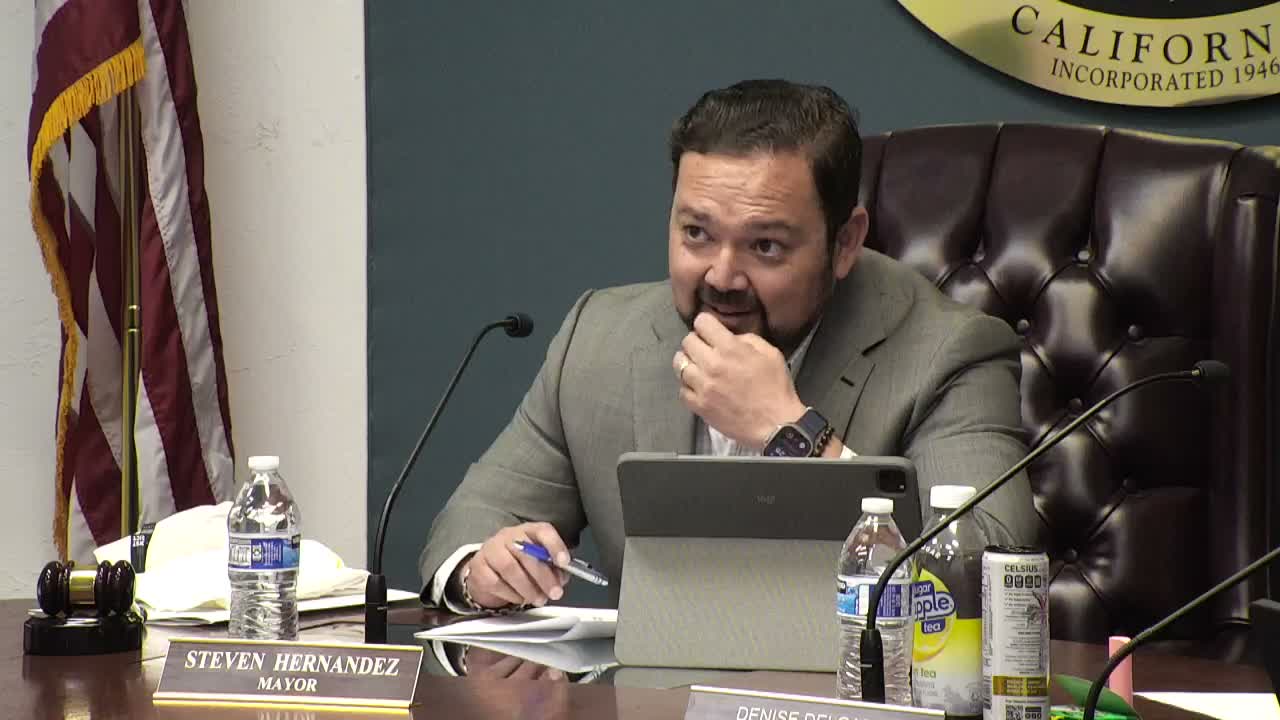
Mayor Stephen A. Hernandez stressed the political and affordability risks for residents if the council delays public outreach. "The timeline of January 2027 makes me uneasy," he said, noting a new council could face pressure and risk missing grant windows. City staff and NewGen recommended preparing a Prop 218 notice that captures the worst‑case ceiling so the city keeps authority to implement lower increases later if grants or loans materialize.
Council members pressed staff on cost drivers and options to soften impacts. A council member asked what would happen if some capital or O&M costs were deferred or if grants covered parts of the program; Kolokia and staff said they can model scenarios showing the rate effects of $5 million, $10 million or $25 million in grant support and of varying loan combinations. City staff said they will produce scenarios and the full financial model for the finance department to update annually.
Staff outlined an implementation timeline tied to grant deadlines: to be eligible for some state programs the city needs rates adopted by July 1, 2027, and therefore recommended starting outreach as early as this fall or in the first quarter of next year. "We can dial back the ceiling if we secure grant funding," said a city staff member. Council directed staff to return with scenario modeling and an outreach plan (including Spanish translation and regional coordination) within about 30 days.
What happens next: staff will supply detailed scenarios showing rate impacts under different grant and loan mixes, refine outreach messaging, and return to the council for direction on a Prop 218 notice and the outreach schedule. The council did not adopt rates or a Prop 218 mailing at the meeting; it approved follow‑up and directed staff to continue pursuing grant funding.