Get Full Government Meeting Transcripts, Videos, & Alerts Forever!
Get email alerts on the Medical School topic
No spam. Unsubscribe anytime.
Simpson University asks Shasta County for $10 million anchor investment to launch rural medical school
Summary
Simpson University presented a plan to establish a four‑year osteopathic medical school in Redding and asked the board for a $10 million county anchor investment to secure accreditation escrow and leverage fundraising and federal/state grants; supervisors requested a public business plan and contingency language before any budget commitment.
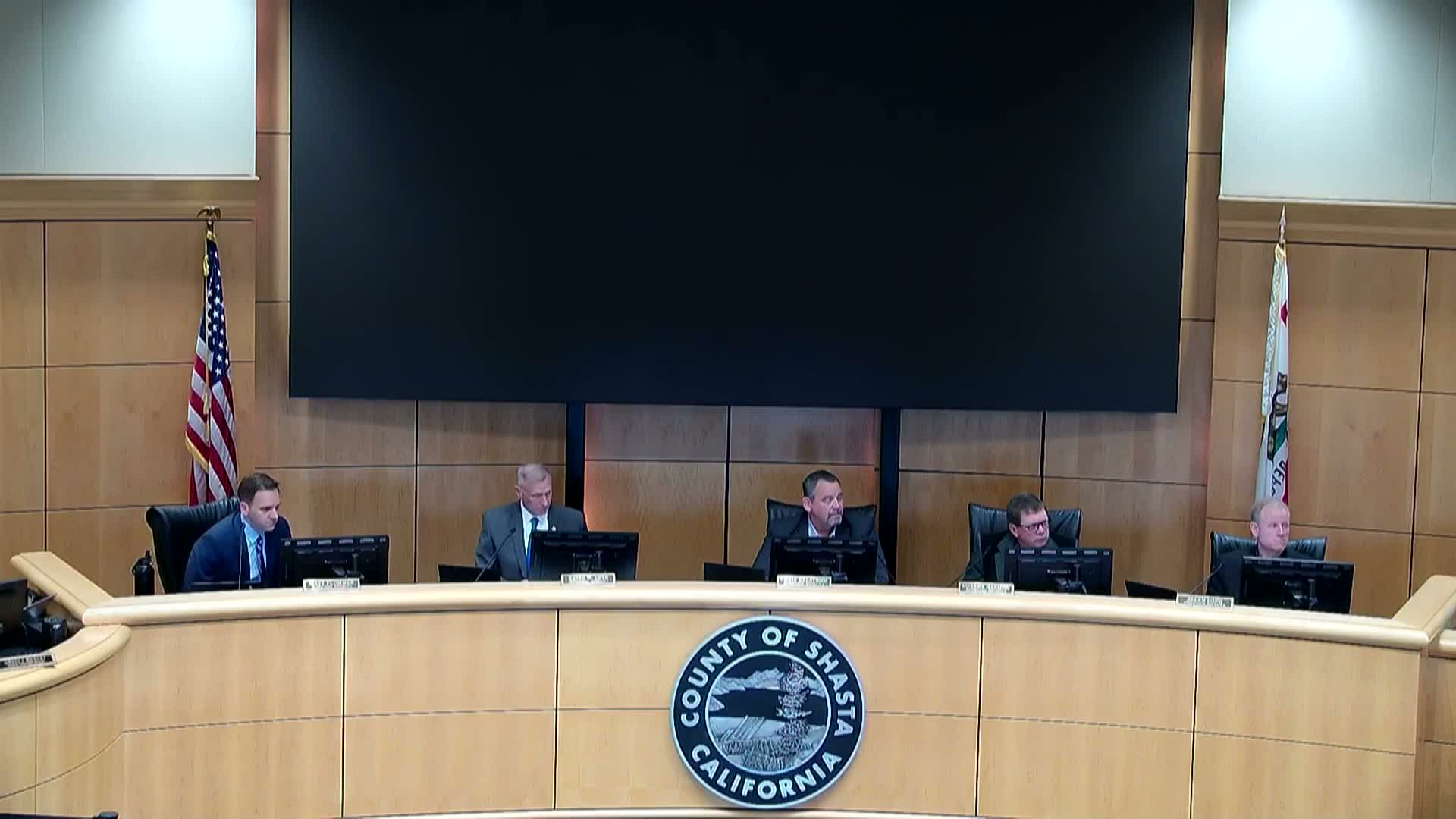
Simpson University representatives asked the Shasta County Board of Supervisors on April 21 to consider a $10 million “anchor investment” to help launch a four‑year osteopathic medical school in Redding.
“We are asking the county to consider an anchor investment of $10,000,000 to initiate this effort and position us for submission to COCA,” Norm Hall, who chaired the exploratory commission, told the board. Hall and other presenters said the commission’s conservative model assumes 150–200 students per cohort and outlined two facility pathways: a leased retrofit model that would require roughly $50 million in escrow plus $50 million to launch, and a purpose‑built Salud partnership model with a larger $150 million build‑out.
Why it matters: Presenters argued a locally based medical school would create a pipeline of clinicians who train and remain in the North State, shrinking wait times and improving access to primary and specialty care in a region they say is medically underserved.
“The solution to our physician shortage isn’t out there somewhere,” Josh Barker, Simpson’s vice chair, said after a trip to the University of Pikeville model Simpson proposes to replicate. “When you train people from here, they stay here.”
Board reaction and request for detail: Supervisors voiced broad interest but repeatedly pressed presenters for more documentation. “For us to step into it without anything essentially documented is inappropriate for this body,” Supervisor Plummer said, asking for a public, robust business plan detailing capital needs, clinical rotation capacity, residency placements and pro forma financials. Deputy county executive Amber Taine told the board the county’s committed capital fund, after known commitments, is projected to end the fiscal year with roughly $21 million; she cautioned that any allocation would need to be weighed against other capital priorities.
Presenters said escrow and accreditation requirements drive some funding timing. Hall described the escrow requirement as a common accreditation safeguard and said Simpson has retained consultants and fundraising partners who have identified multiple federal and state grant avenues and private partners; he said Simpson itself is prepared to contribute land and has raised institutional gifts previously.
Concerns from the public and legal questions: Several public commenters and speakers from the medical community strongly supported the proposal, citing workforce shortages and clinical benefits. Others raised legal and equity questions about using public funds for a private, faith‑based institution. David Halligan, a resident who spoke during public comment, cautioned that state constitutional restrictions on public funding of sectarian institutions could prompt litigation if the county were to fund a private religious university instead of a public partner such as Shasta College.
Next steps: The presentation was received as a no‑vote item. Supervisors indicated they would expect Simpson to provide a clear public business plan and proposed contingencies if the $10 million request is formally placed on a future budget agenda. Chair Kellsterman and other supervisors suggested staff and Simpson work together to bring documentation and possible contingency language back to the board before any appropriation.
The board did not take a funding vote at the April 21 meeting.