Get Full Government Meeting Transcripts, Videos, & Alerts Forever!
Get email alerts on the K3 Literacy topic
No spam. Unsubscribe anytime.
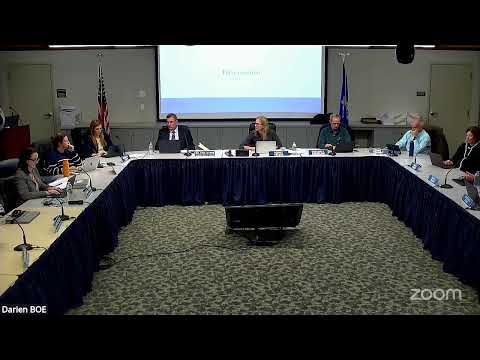
Darien School District board hears K–3 'science of reading' plan; approves consent agenda
Summary
Principals presented a districtwide K–3 literacy plan grounded in the science of reading and described implementation steps, decodable text needs and professional development; the board approved the consent agenda unanimously and added a follow-up on middle-school scheduling.
The Darien School District board on March 24 heard a multi-principal presentation on a districtwide K–3 literacy program grounded in the science of reading and discussed classroom-library needs, implementation pacing and budget support. After the presentation and questions, the board approved its consent agenda by unanimous voice vote and asked staff to place a middle-school scheduling discussion on a future agenda.
School leaders said the district has aligned instruction around five foundational components — phonemic awareness, phonics, fluency, vocabulary and comprehension — and is using a bundled materials set from HMH while providing sustained professional development for teachers. "Phonemic awareness is that skating for our students," said Natasha Tori, principal at Royal School, describing the oral-skill work that precedes letter-sound instruction. Principals said the district’s goal is consistent, evidence-based K–3 instruction across the five elementary schools.
Principals detailed each component. Paula Blakeley (Holmes) outlined a systematic phonics progression from kindergarten through second grade, including consonant blends, digraphs and multi-syllable decoding. "Foundations is just the name of a program," Blakeley said, explaining that foundations supplies the phonics scope through grade 3. Ryan Betts (Tokenique) described fluency as "the ability to read text with accuracy, appropriate rate, and good expression," and said repeated reading supports the transition from learning to read to reading to learn. Chris Milo (Oxbridge) and Ross Cooper (Henley) described explicit vocabulary instruction and scaffolded comprehension work that makes students' thinking visible.
Board members pressed on practical matters. Joanna asked whether teachers have enough decodable texts for repeated practice and small groups; presenters said HMH includes decodables but classrooms need many titles at each level and that district funds for replacement and additional decodables are included in the current budget planning. Amy, who oversees materials, told the board decodables are intended to go home with students and that the district expects a normal replacement cycle for missing books.
Several board members emphasized teacher capacity and professional development. Principals described weekly team meetings, instructional rounds and regular coaching by HMH trainers to align practice across buildings. Presenters repeatedly said the program provides materials but that teacher skill and sustained coaching are the critical drivers of successful implementation.
The board then considered a consent agenda that included approval of minutes, the financial report (no transfers), proposed policy updates (graduation requirements; attendance and truancy; child abuse response and reporting; parental access to instructional materials; social media) and multiple acceptance-of-gifts items for music, athletics and extracurricular activities. Joanna moved approval, Dennis seconded, and the chair said the motion carried unanimously; exact vote totals were not specified in the transcript. The board also agreed to add Joanna's requested discussion of middle-school scheduling and course choice to a future agenda.
What’s next: district leaders said they will continue K–5 curriculum alignment work to ensure a coherent progression into grades 4 and 5 and will return with more details about how the new K–3 scope will feed upper-elementary instruction. The board’s budget calendar calls for a Board of Finance working session on March 31 and a Board of Finance vote on operating and capital budgets on April 7.