Get Full Government Meeting Transcripts, Videos, & Alerts Forever!
Get email alerts on the Education Policy topic
No spam. Unsubscribe anytime.
School board approves one-year waiver request for careers course required under Senate Bill 3
Summary
Central SD 13J’s board voted to ask the Oregon Department of Education for a one-year waiver so seniors in 2026–27 would not be required to take the new standalone careers course while the district implements the related schedule and staffing changes.
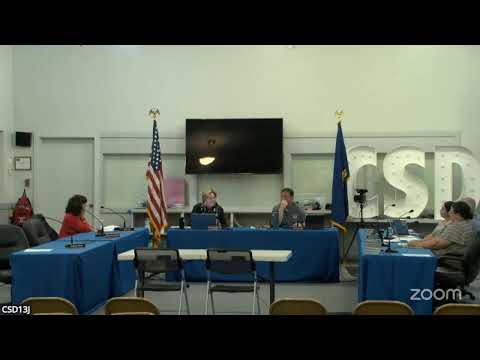
The Central School District 13J Board of Directors voted May 4 to request a one-year waiver from the Oregon Department of Education that would exempt the district’s 2026–27 seniors from the new standalone careers course required under Senate Bill 3.
Principal Dormer, who presented the item to the board, said the state law adds two half-credit requirements — a high-education and career-path skills course ("careers") and a standalone personal finance course — and that implementing both immediately would place “a little bit of an emergency situation” on the high school’s schedule and staffing. Dormer told the board the district plans to offer the careers course to all juniors next year and would pull personal finance out of economics to make it a separate senior class going forward.
Board member (mover) [speaker 2] made the motion to approve the district’s request to seek the waiver for the 2026–27 school year; Irene seconded. The board signaled approval by voice/raised-hand vote and directed staff to submit the waiver to the Oregon Department of Education; final approval rests with the state. Superintendent Kavista noted the district must inform ODE by July 1 and said the waiver would allow the district time to staff and shape the courses without forcing schedule changes that could displace students’ elective plans.
Board members asked how the careers requirement would affect elective options and credit totals. Dormer said the 24-credit graduation requirement remains the same but acknowledged the new courses would reduce elective slots for some students; he said the state provides model curricula and that much of the careers work (personal learning plans, resume building, mock interviews) is already present in the high school’s college-and-career resources.
The board’s action authorizes staff to file the waiver request; it does not change graduation requirements until ODE issues a decision.
What happens next: staff will submit the waiver to ODE and report back to the board on ODE’s response and on detailed course designs for the careers and standalone personal finance classes. If ODE denies the waiver, the district said it will need to accelerate course offerings or make scheduling adjustments so graduating classes meet the new statutory requirements.
Quote: "The careers course will be new to us and will house a lot of the work our college-and-career center already does," Principal Dormer said as he requested the board's support to seek a temporary waiver.
Ending: The board approved the motion to pursue the waiver; ODE’s decision will determine whether the district must immediately add the careers course for 2026–27 seniors.