Get Full Government Meeting Transcripts, Videos, & Alerts Forever!
Get email alerts on the Social Services topic
No spam. Unsubscribe anytime.
County official warns HR 1 changes could drop thousands from CalFresh in Yolo County
Summary
A county presenter told Woodland council members HR 1’s new work requirements and eligibility changes will begin affecting CalFresh recipients in June and project that about 5,200 Yolo County residents could lose benefits over a year unless volunteer/worksite options and outreach increase.
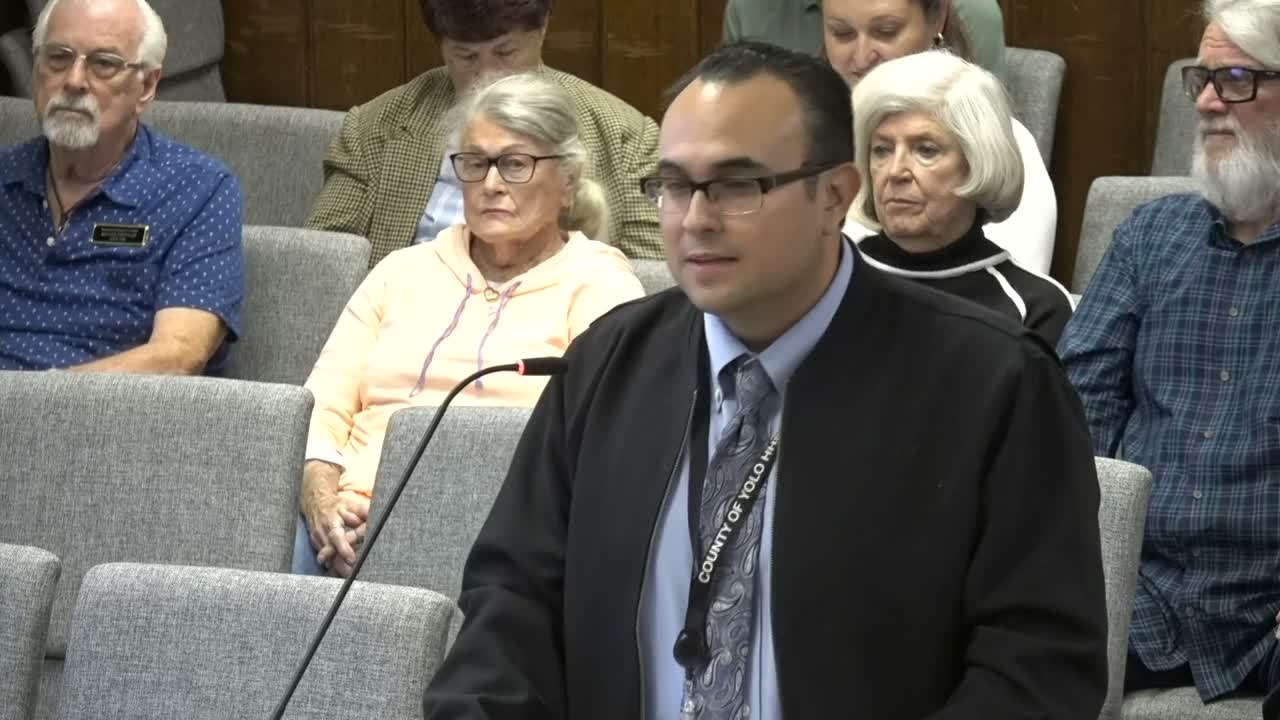
Tico Zendejas told the Woodland City Council on May 5 that changes tied to HR 1 will substantially tighten CalFresh eligibility and work requirements and that the effects will begin to accelerate in June.
Zendejas said a narrow population was already affected April 1 (about 420 recipients in Yolo County who will lose eligibility as they recertify), and he projected that “about 5,200 folks” in Yolo County could fall off CalFresh benefits over the following 12 months if the new rules remain in place.
What’s changing: Zendejas described policy elements that take effect June 1, including an expanded age range subject to work requirements (up to age 64), a narrowed child-in-home exemption (from under 18 to under 14) and stricter enforcement of ABOD (able-bodied adults without dependents) rules. He said ABOD recipients will be limited to three full months of CalFresh benefits in a 36-month period if they do not meet work or exemption criteria.
Zendejas emphasized administrative impacts: “A lot of extra work on our eligibility team, a lot of extra administrative work that’s without funding,” he said in response to a council question about tracking volunteer hours. The program’s work requirement is effectively 80 hours per month (about 20 hours per week), which can be satisfied by paid work or approved volunteer placements.
He asked city officials and local organizations to identify volunteer and work-placement sites so residents can meet the ABOD requirement and remain eligible. Zendejas offered to make brief presentations to local groups and said his office will return in the fall with more details as impacts materialize.
Why it matters: Council members pressed that tracking volunteer/work hours creates an unfunded local burden; Zendejas confirmed the eligibility team will face new administrative tasks without corresponding funding from higher levels of government.